Survey Data
Reg No
31301401
Rating
Regional
Categories of Special Interest
Architectural, Artistic, Historical, Social
Original Use
Church/chapel
Date
1845 - 1855
Coordinates
110342, 336538
Date Recorded
31/01/2011
Date Updated
--/--/--
Description
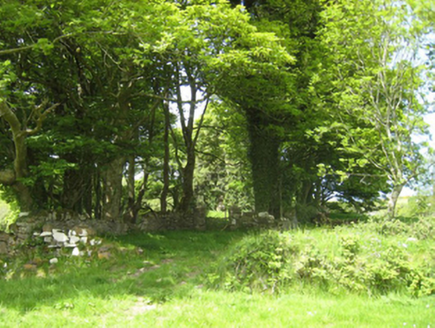
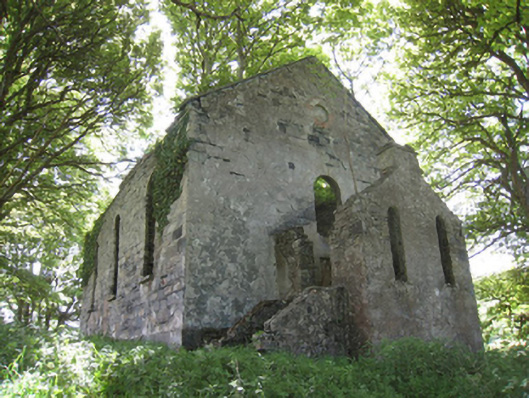
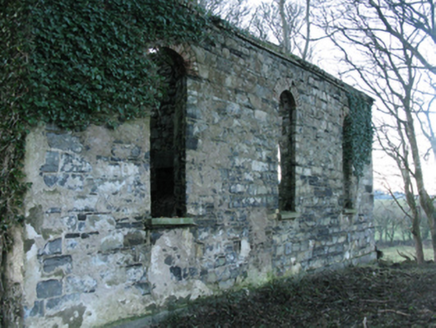
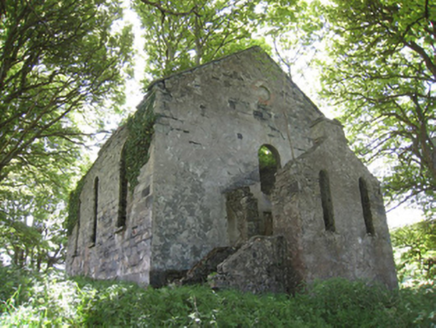
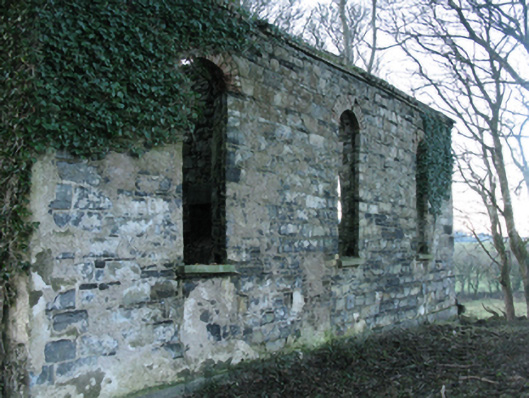
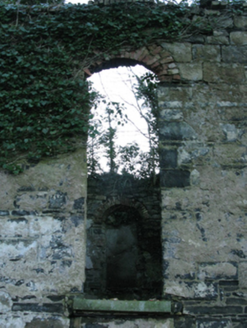
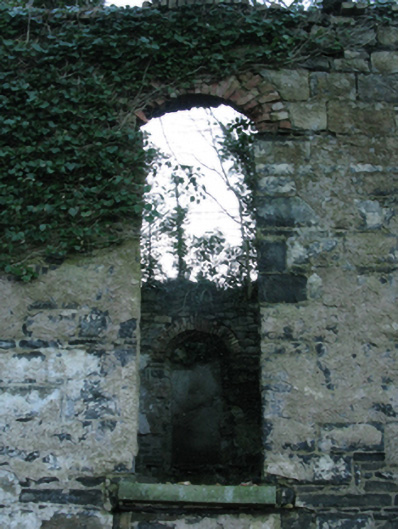
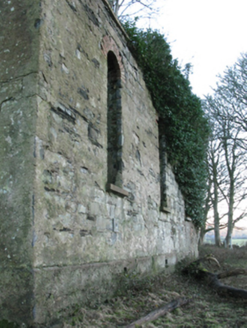
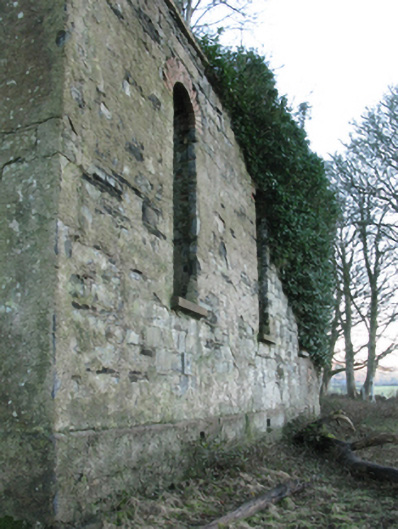
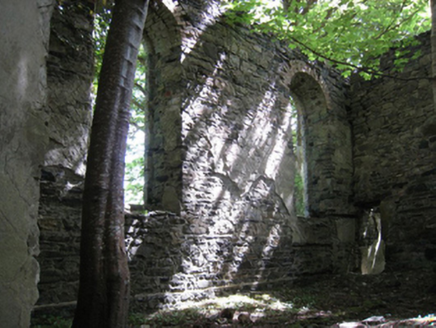
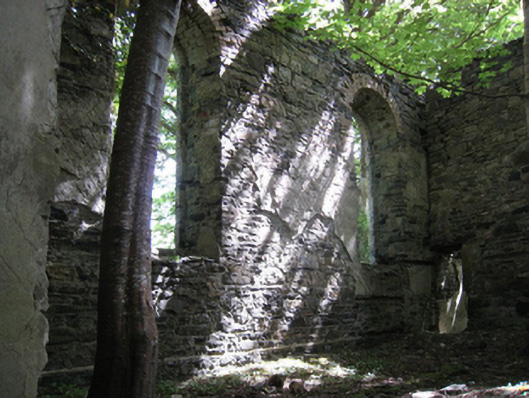
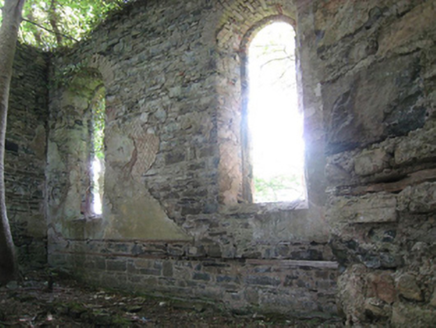
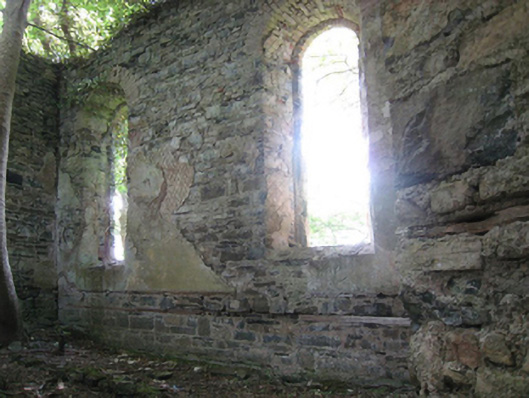
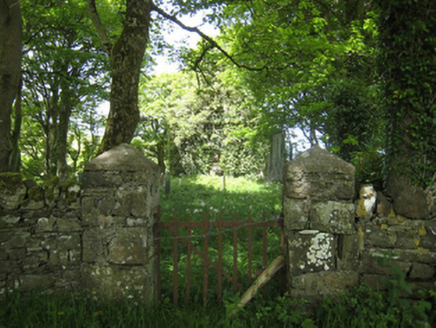
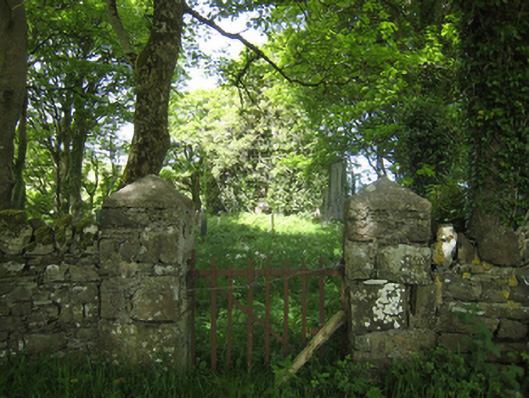
Detached three-bay double-height single-cell Presbyterian church, built 1848-50; opened 1850, with single-bay single-storey gabled projecting porch to entrance (north) front. Burnt, 1864. Reopened, 1865. In use, 1943. Closed, 1959. Now in ruins. Pitched roofs now missing, cut-limestone coping to gables including creeper- or ivy-covered cut-limestone coping to gable (south) with overgrown bellcote or chimney stack to apex[?], and no rainwater goods surviving on red brick header bond stepped eaves. Part creeper- or ivy-covered coursed or snecked limestone battered walls on limestone ashlar chamfered plinth retaining sections of fine roughcast or lime rendered surface finish. Round-headed window openings with cut-limestone sills, and creeper- or ivy-covered red brick voussoirs with no fittings surviving. Bisected round-headed door opening to entrance (north) front with step threshold now missing, and red brick voussoirs with no fittings surviving. Interior in ruins. Set in unkempt grounds.
Appraisal
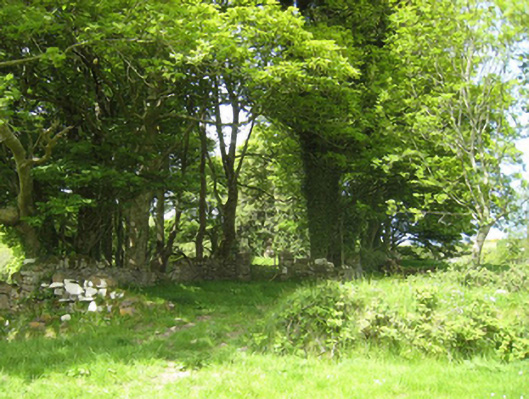
The shell of a church erected under the aegis of Reverend Michael Brannigan (1816?-74; fl. 1848-74) representing an important component of the mid nineteenth-century ecclesiastical heritage of the rural environs of Ballycastle with the architectural value of the composition suggested by such attributes as the compact rectilinear "barn" plan form; and the slender profile of the openings underpinning a streamlined Classical theme. Although reduced to an ivy-enveloped ruin following a prolonged period of neglect, the local congregation having faltered in the later nineteenth century '[as] emigration set in [and] few of the original adherents remained' (Killen 1886, 246-7), the elementary form and massing survive intact, thus upholding much of the character of a church making a picturesque, if increasingly obscure visual statement in a sylvan setting.