Survey Data
Reg No
31301101
Rating
Regional
Categories of Special Interest
Architectural, Historical, Social
Original Use
Church/chapel
Date
1830 - 1835
Coordinates
84807, 335765
Date Recorded
14/01/2011
Date Updated
--/--/--
Description
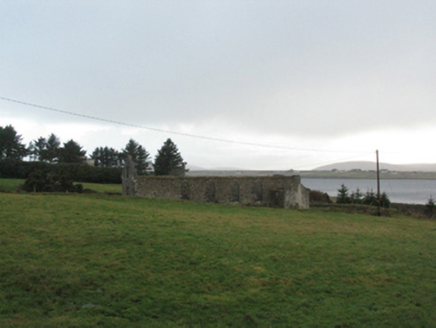
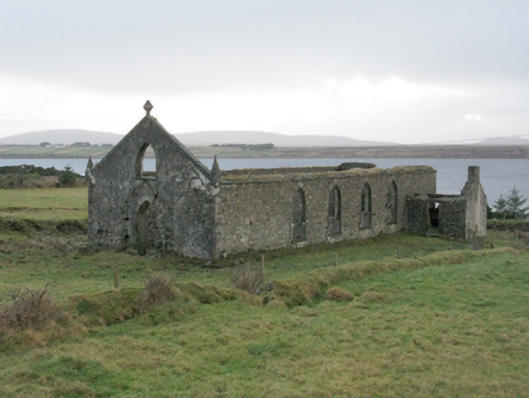
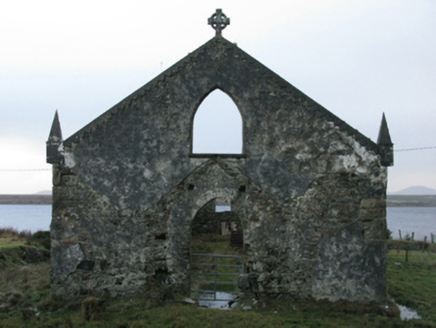
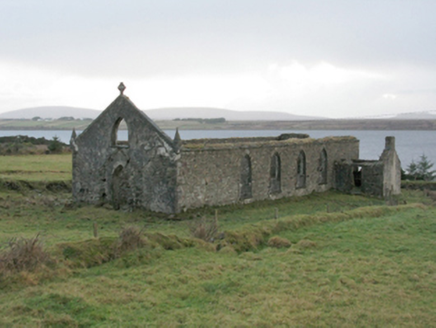
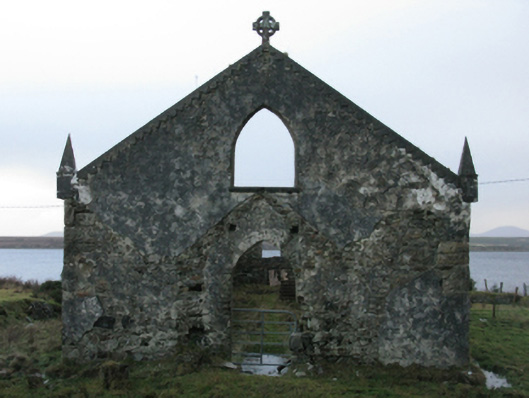
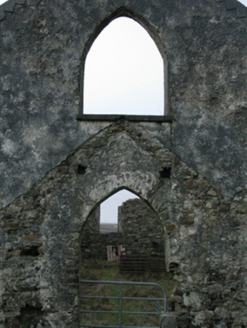
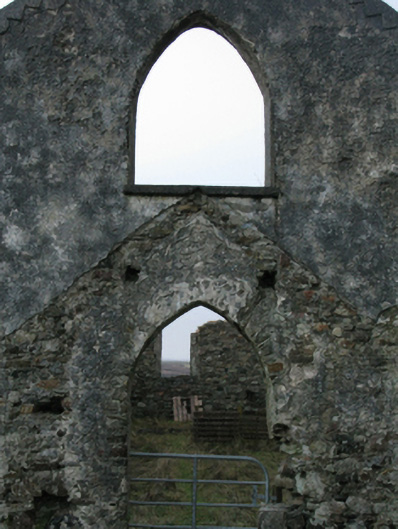
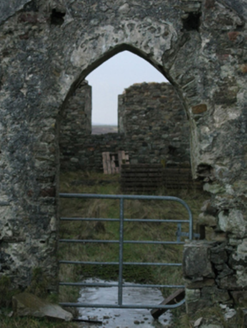
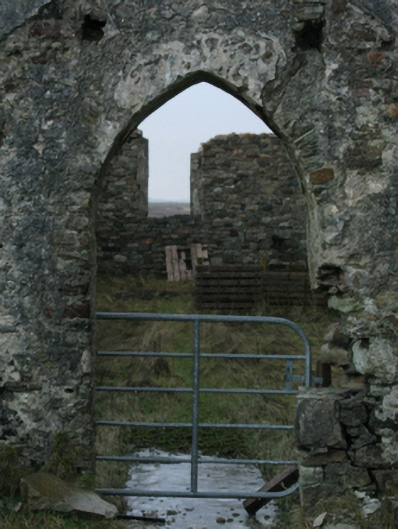
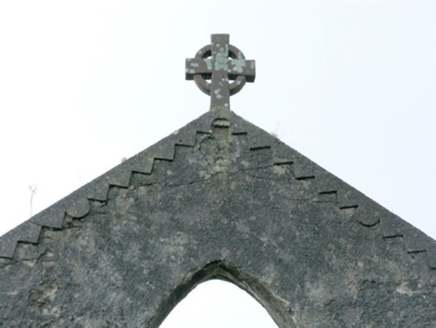
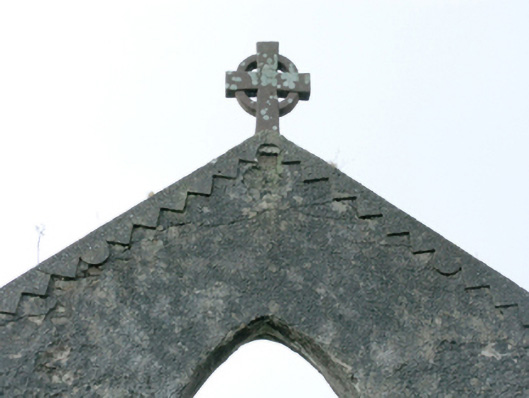
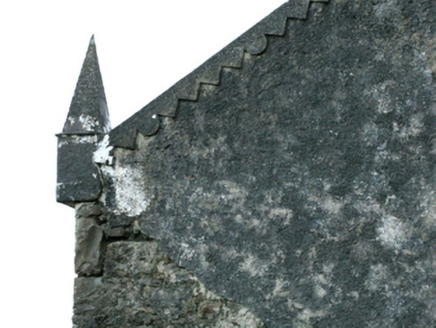
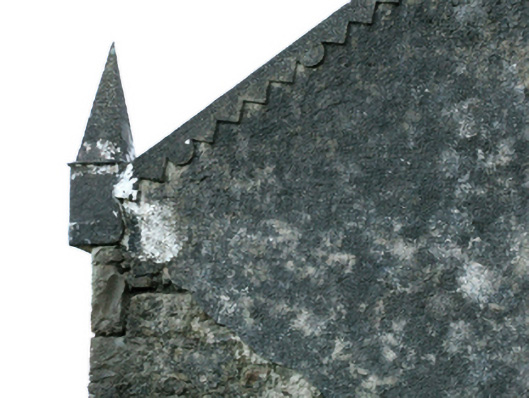
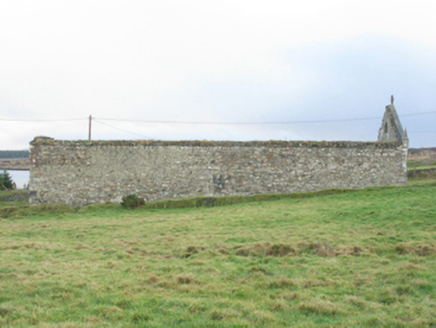
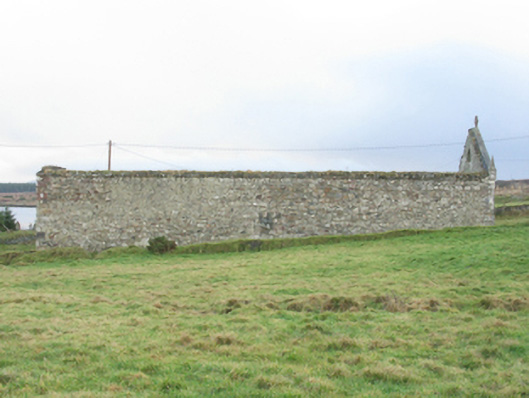
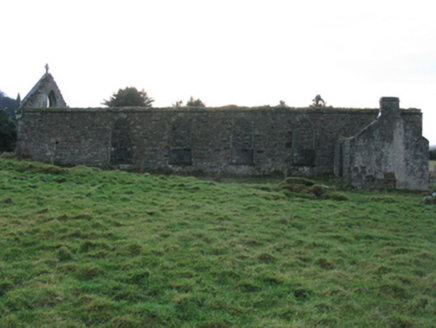
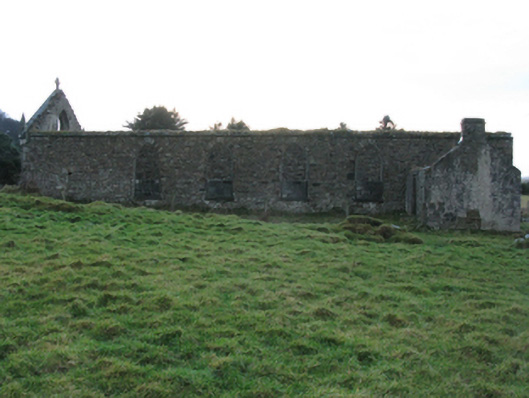
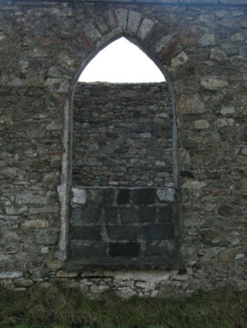
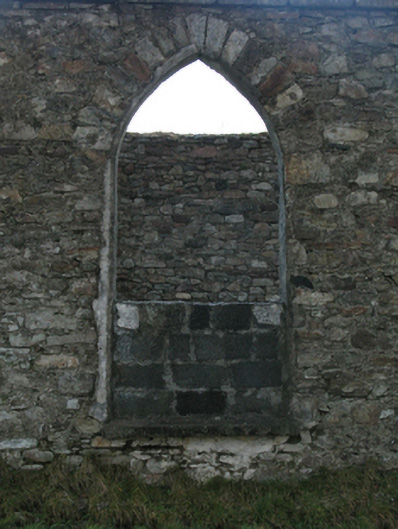
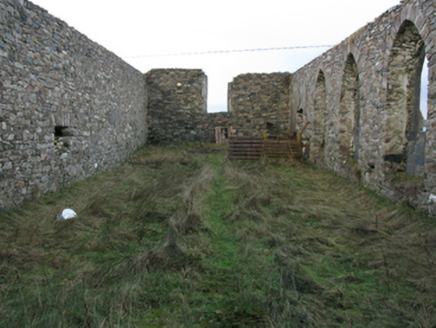
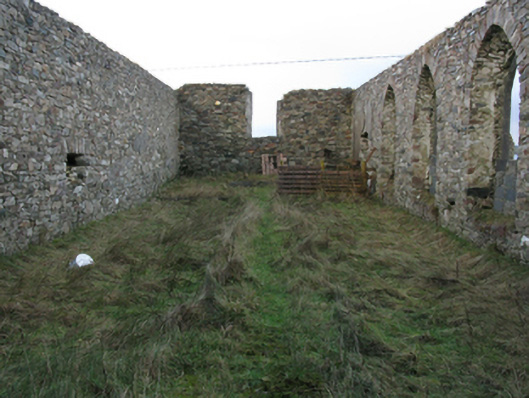
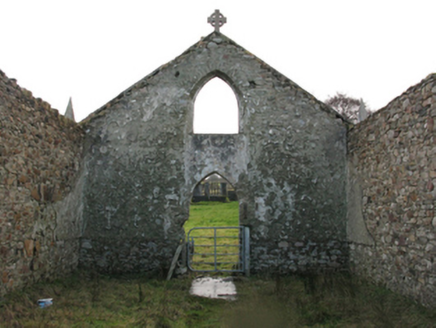
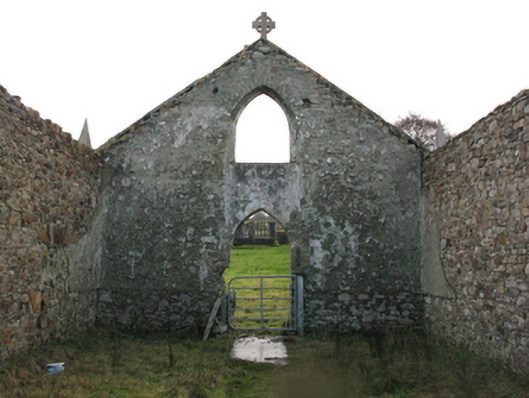
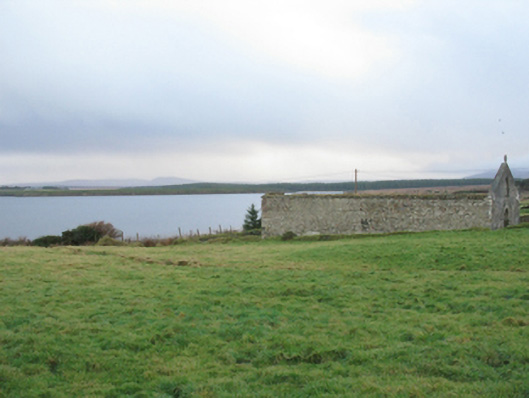
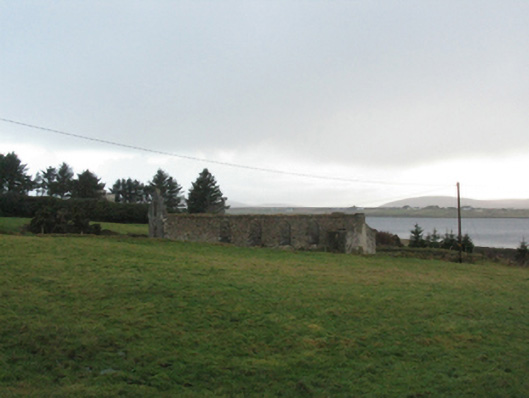
Detached four-bay double-height single-cell Catholic church, built 1832, extant 1838, originally with single-bay single-storey gabled projecting porch to entrance (south-west) front. In use, 1943. Closed, 1961. Now in ruins. Pitched roof now missing, chevron- or saw tooth-detailed rendered coping to gable to entrance (south-west) front on obelisk-pinnacled kneelers with lichen-covered cut-granite[?] Celtic Cross finial to apex, and no rainwater goods surviving on squared limestone eaves. Coursed rubble limestone walls retaining fragments of fine roughcast surface finish. Pointed-arch window openings with cut-limestone sills[?], and concealed squared limestone voussoirs framing part concrete block infill. Pointed-arch door opening to entrance (south-west) front. Pointed-arch window opening to gable with cut-limestone sill[?], and concealed dressings with no fittings surviving. Interior in ruins including overgrown stepped dais to sanctuary (north-east) with stepped "predella". Set in unkempt grounds.
Appraisal
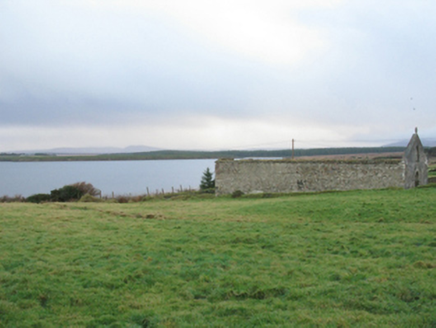
The shell of a church '[erected] by subscription' (Lewis 1837 II, 67) representing an important component of the early nineteenth-century ecclesiastical heritage of Contae Mhaigh Eo [north County Mayo] with the architectural value of the composition, one showing the hallmarks of a period of construction coinciding with the dismantling of the Penal Laws under the Roman Catholic Relief Act, 1829, suggested by such traits as the rectilinear "barn" plan form, aligned along a skewed liturgically-correct axis; and the "pointed" profile of the openings underpinning contemporary Georgian Gothic theme. Although reduced to ruins following a prolonged period of neglect, the congregation having removed to the nearby Catholic Church of Christ the King (opened 1961), the elementary form and massing survive intact, thereby upholding much of the character of a church making a picturesque visual statement on the edge of Sruth Fada Con [Sruwaddacon Bay].