Survey Data
Reg No
31300904
Rating
Regional
Categories of Special Interest
Architectural, Artistic, Historical, Social
Original Use
Lighthouse keeper's house
In Use As
House
Date
1895 - 1905
Coordinates
66889, 335958
Date Recorded
01/02/2011
Date Updated
--/--/--
Description
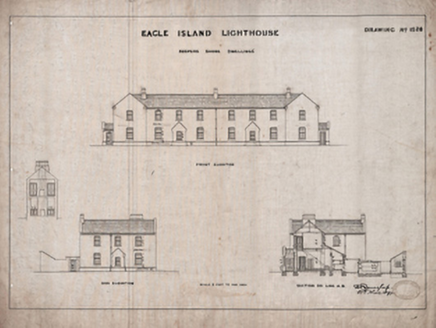
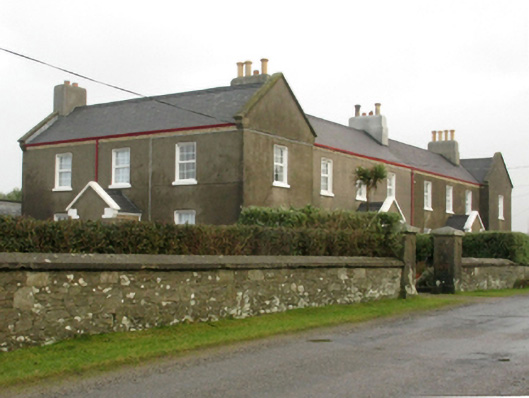
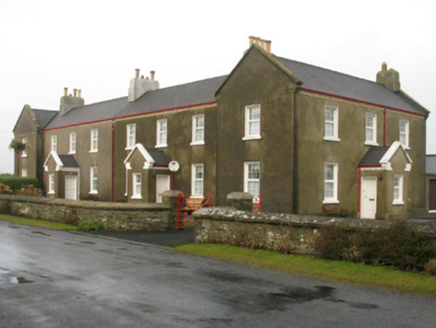
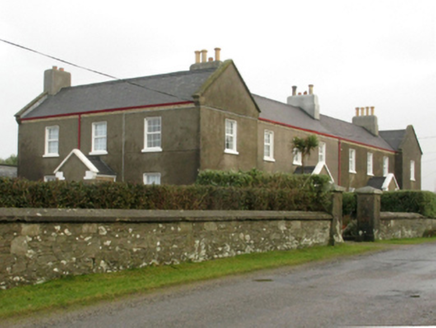
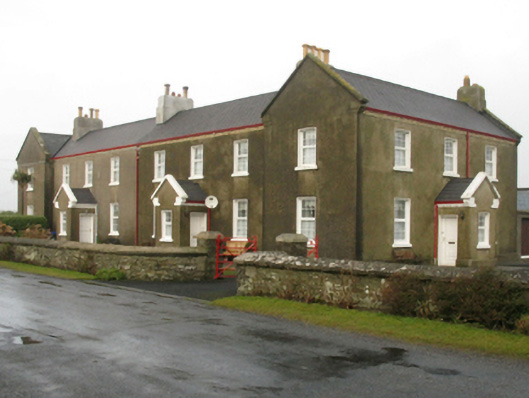
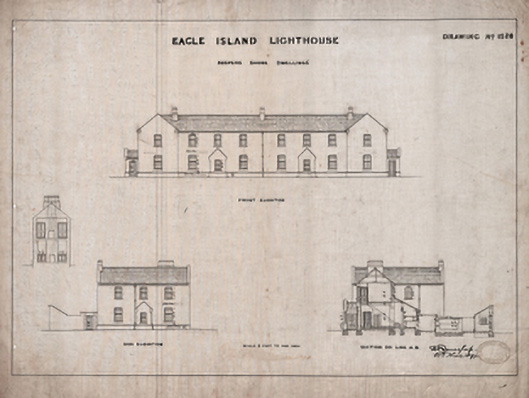
Terraced three-bay two-storey lighthouse keeper's house, designed 1897; built 1900; unoccupied 1901; occupied 1911, on a T-shaped plan centred on single-bay single-storey gabled projecting porch to ground floor. Vacated, 1955. Sold, 1956. Renovated to accommodate continued private residential use. One of a terrace of four. Pitched slate roofs including pitched (gabled) slate roof to porch with roll moulded clay ridge tiles terminating in rendered chimney stacks on rendered bases having chamfered capping supporting yellow terracotta pots, concrete coping to gable on cut-granite "Cavetto"-detailed corbel kneelers, and cast-iron rainwater goods on yellow brick header bond stepped eaves retaining cast-iron downpipes. Rendered walls on rendered chamfered plinth. Square-headed window openings with cut-granite sills, and concealed yellow brick block-and-start surrounds framing replacement uPVC casement windows replacing six-over-six timber sash windows centred on four-over-four timber sash window. Set back from line of road in landscaped grounds with rendered piers to perimeter having pyramidal capping supporting barley twist-detailed wrought iron gate.
Appraisal
A house erected to a design signed (1897) by William Douglass (1831-1923), Engineer to the Commissioners of Irish Lights (appointed 1878; retired 1900), representing an integral component of the built heritage of Contae Mhaigh Eo [north County Mayo] with the architectural value of the composition, one adhering to a standard prototype seen also at Knight's Town (1901), County Kerry; and Rosslare Harbour (1890), County Wexford, confirmed by such attributes as the compact plan form centred on an expressed porch; the very slight diminishing in scale of the openings on each floor producing a feint graduated visual impression; and the high pitched gabled roofline. Having been well maintained, the elementary form and massing survive intact together with substantial quantities of the original fabric, both to the exterior and to the interior: the introduction of replacement fittings to most of the openings, however, has not had a beneficial impact on the character or integrity of a house forming part of a neat self-contained ensemble making a pleasing visual statement in a low-lying street scene.