Survey Data
Reg No
31209073
Rating
Regional
Categories of Special Interest
Architectural, Historical, Scientific, Social
Original Use
Guard house
Date
1825 - 1835
Coordinates
114806, 290356
Date Recorded
25/11/2008
Date Updated
--/--/--
Description
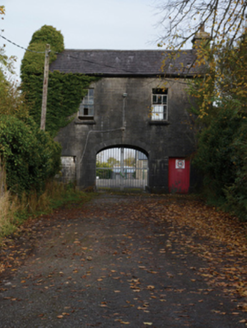
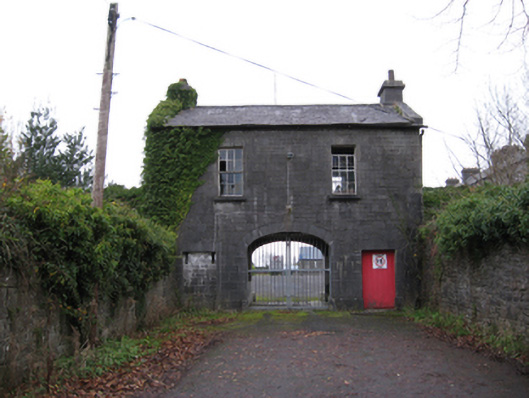
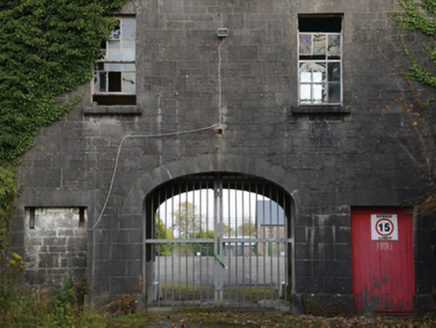
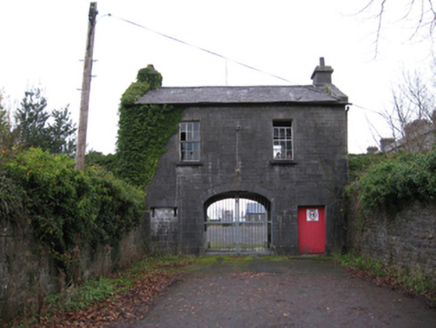
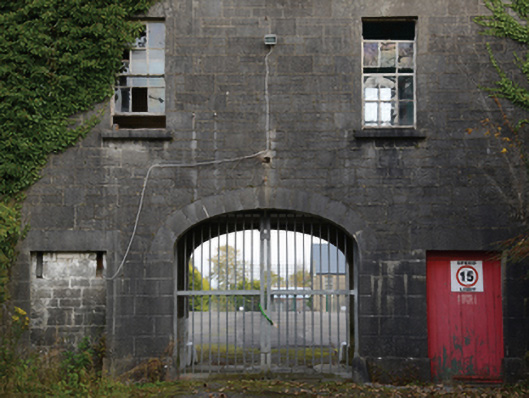
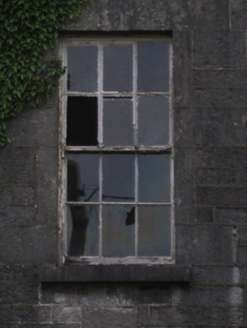
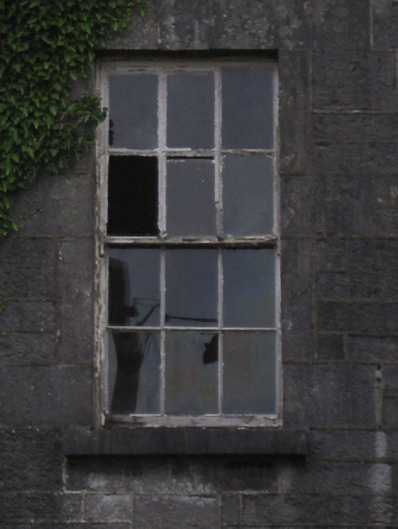
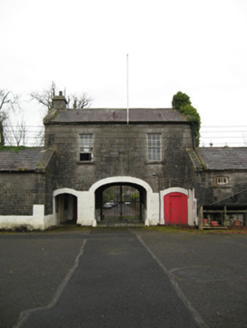
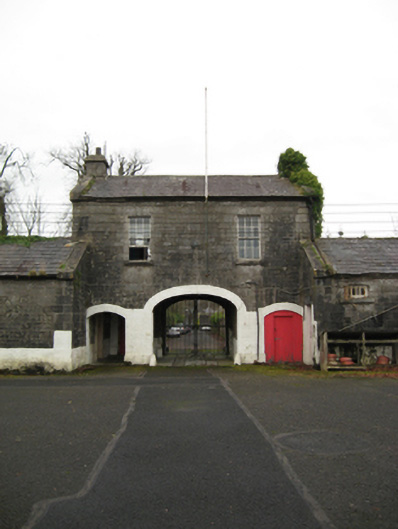
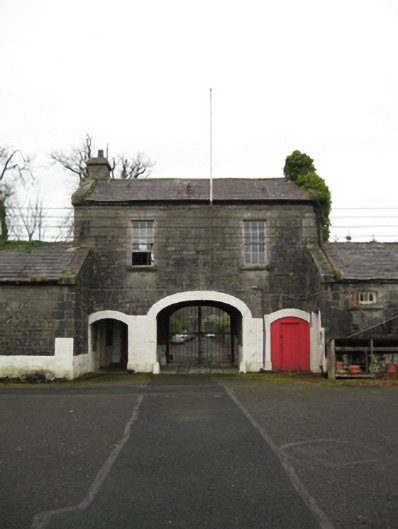
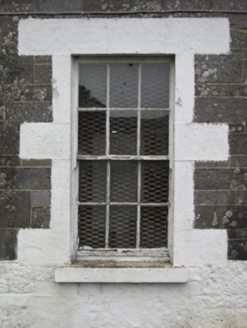
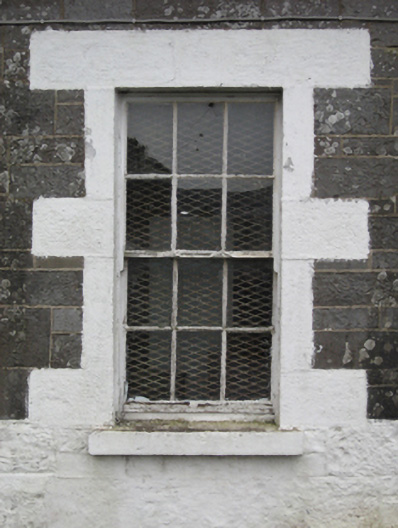
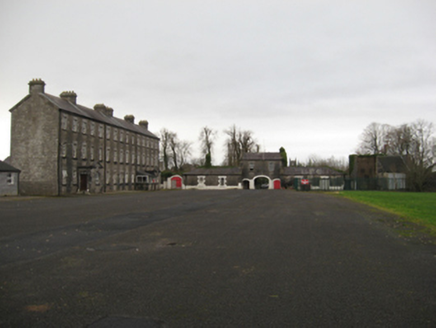
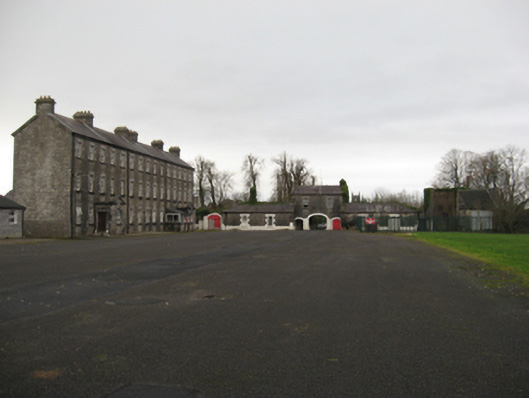
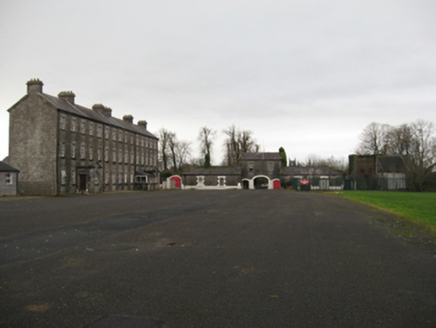
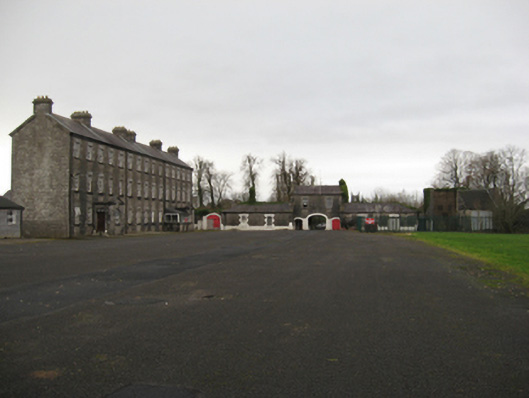
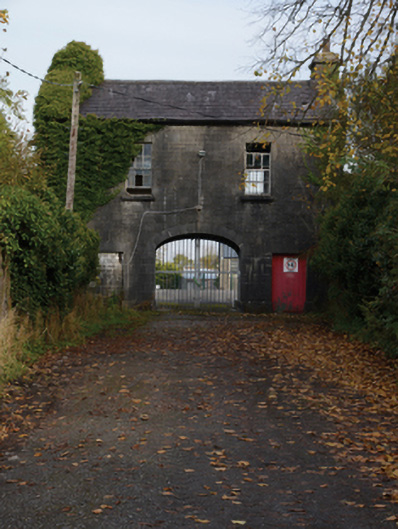
Detached two- or three-bay two-storey "Front Entrance", sanctioned 1828; under construction 1831; extant 1838, on a symmetrical U-shaped plan with two-bay single-storey flanking wings. Now disused. Hipped slate roofs centred on pitched slate roof with clay ridge tiles, creeper- or ivy-covered cut-limestone coping to gables with drag edged tooled limestone ashlar chimney stacks to apexes having cut-limestone stringcourses below capping supporting terracotta tapered pots, and cast-iron rainwater goods on cut-limestone eaves retaining cast-iron octagonal or ogee hoppers and downpipes. Part creeper- or ivy-covered tuck pointed coursed or snecked limestone walls on drag edged tooled cut-limestone plinth with drag edged tooled cut-limestone flush quoins to corners. Elliptical-headed central carriageway with drag edged tooled limestone ashlar voussoirs centred on drag edged tooled cut-limestone keystone framing replacement mild steel double gates. Square-headed flanking door openings with drag edged tooled cut-limestone lintels framing timber boarded doors. Square-headed window openings (first floor) with cut-limestone sills, and drag edged tooled cut-limestone block-and-start surrounds framing six-over-six timber sash windows. Square-headed window openings (wings) with cut-limestone sills, and drag edged tooled cut-limestone block-and-start surrounds framing six-over-six timber sash windows. Lane fronted at entrance to grounds of Castlebar Infantry Barracks.
Appraisal
A "Front Entrance" illustrating the development or redevelopment of the Castlebar Infantry Barracks complex in the early nineteenth century with the architectural value of the composition suggested by such traits as the symmetrical footprint; and the construction in a rough cut limestone offset by "sparrow pecked" dressings demonstrating good quality workmanship. A prolonged period of neglect notwithstanding, the elementary form and massing survive intact together with substantial quantities of the original fabric, thereby upholding the character or integrity of the composition: meanwhile, a discreet benchmark remains of additional interest for the connections with cartography and the preparation of maps by the Ordnance Survey (established 1824).