Survey Data
Reg No
31208024
Rating
Regional
Categories of Special Interest
Architectural, Historical, Social
Original Use
Church/chapel
Historical Use
School
Date
1855 - 1860
Coordinates
98730, 293925
Date Recorded
05/11/2010
Date Updated
--/--/--
Description
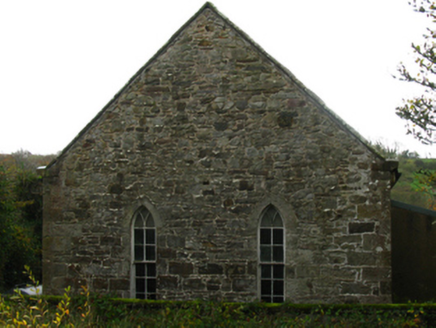
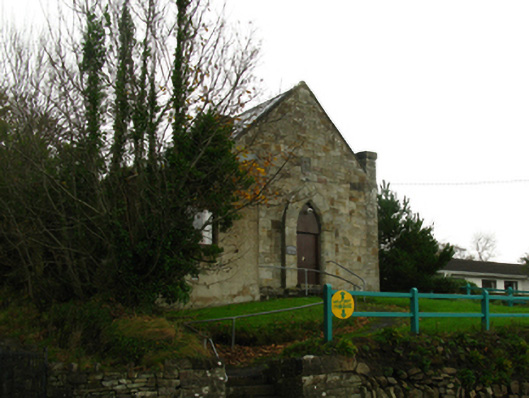
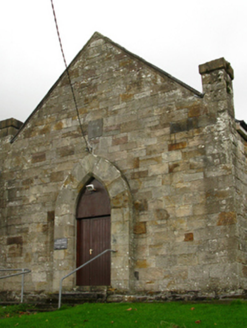
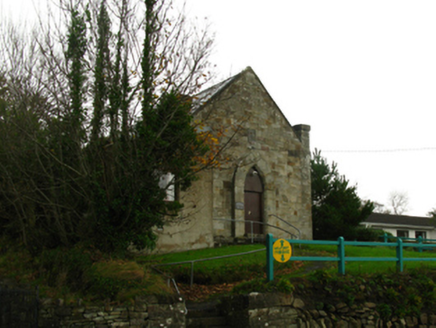
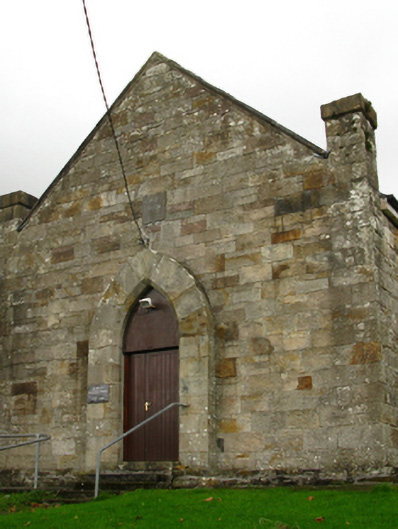
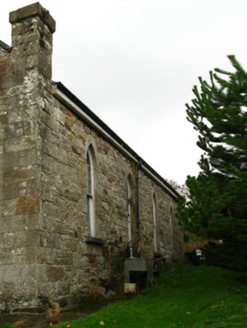
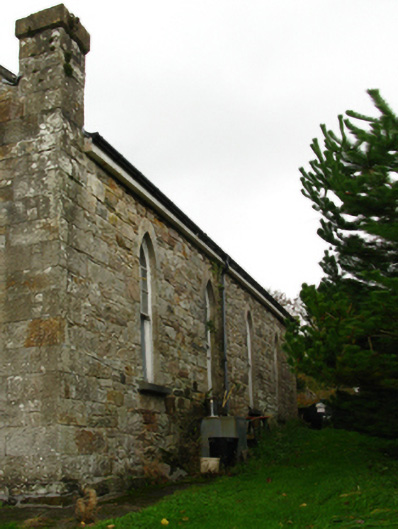
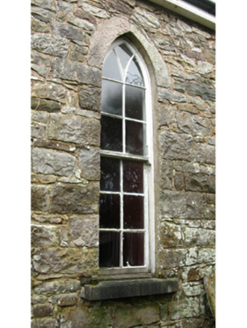
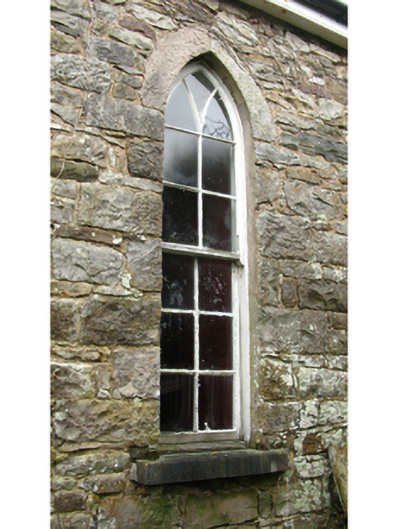
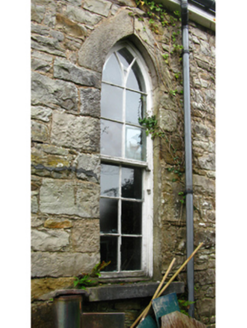
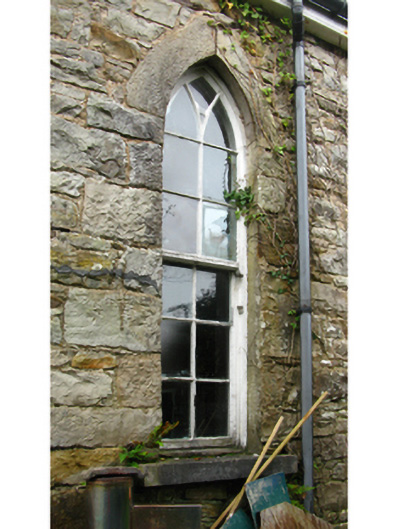
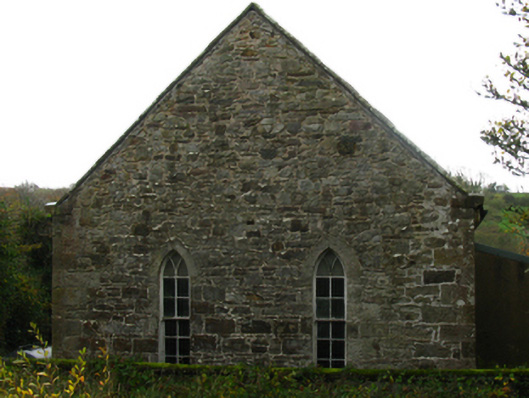
Detached four-bay double-height single-cell Presbyterian church, begun 1856; dated 1856; opened 1857; extant 1886. In occasional use, 1942. In alternative use, 1956-69. Now disused. Pitched slate roof with clay ridge tiles, lichen-covered cut-limestone coping to gables including lichen-covered cut-limestone coping to gable to chancel (north) on tooled cut-limestone "Cavetto" kneelers, and cast-iron rainwater goods on timber boxed eaves retaining cast-iron downpipes. Tuck pointed coursed or snecked limestone wall to entrance (south) front with lichen-covered tooled cut-limestone flush quoins to corners; part ivy-covered coursed or snecked rubble stone walls (remainder) with tooled cut-limestone flush quoins to corners. Pointed-arch door opening to entrance (south) front below cut-limestone shield date stone ("1856") with tooled cut-limestone surround having chamfered reveals framing replacement timber boarded or tongue-and-groove timber panelled door having overpanel. Lancet window openings including paired lancet window openings to chancel (north) with drag edged dragged cut-limestone sills, and cut-limestone voussoirs framing four-over-six timber sash windows having Y-tracery glazing bars. Set back from street in landscaped grounds on an elevated site.
Appraisal
A church erected under the aegis of Reverend George Shirra Keegan (1823-90; ordained 1854) representing an integral component of the mid nineteenth-century ecclesiastical heritage of Newport with the architectural value of the composition, one superseding temporary accommodations 'in the courthouse kindly granted by Sir Richard [Annesley] O'Donnel' (Killen 1886, 252), confirmed by such attributes as the compact rectilinear plan form; the construction in an honey-coloured limestone demonstrating good quality workmanship; the slender profile of the openings underpinning a "medieval" Gothic theme; and the high pitched roofline. Having been reasonably well maintained, the elementary form and massing survive intact together with substantial quantities of the original fabric, thereby upholding the character or integrity of a church making a pleasing visual statement overlooking Castlebar Street.