Survey Data
Reg No
31204008
Rating
Regional
Categories of Special Interest
Architectural, Artistic, Historical, Social
Original Use
House
In Use As
House
Date
1905 - 1910
Coordinates
124034, 318831
Date Recorded
09/12/2008
Date Updated
--/--/--
Description
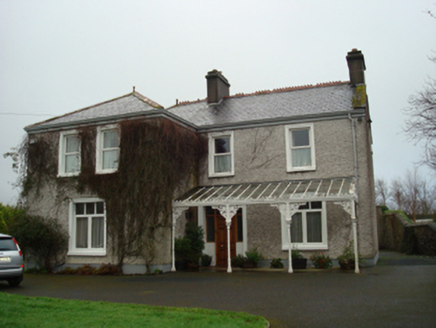
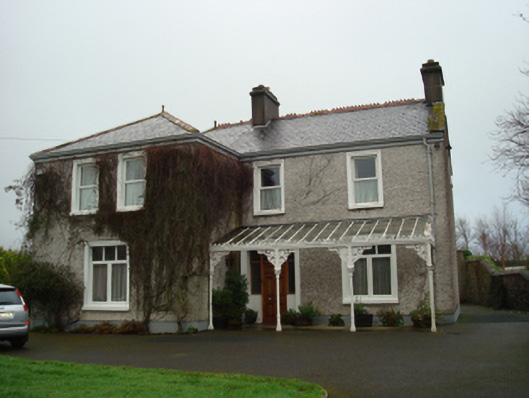
Detached three-bay two-storey house, built 1907; occupied 1911, on an L-shaped plan with single-bay two-storey projecting end bay; two-bay two-storey side (east) elevation. Part refenestrated. One of a pair. Hipped and pitched slate roof on an L-shaped plan, perforated crested terracotta ridge tiles with terracotta finials to apexes, moss-covered coping to gable with rendered chimney stack to apex having chamfered stringcourse below capping supporting terracotta pots, and cast-iron rainwater goods on rendered eaves retaining cast-iron downpipes. Part creeper- or ivy-covered roughcast walls bellcast over rendered plinth. Hipped square-headed central door opening in square-headed recess with timber mullions on threshold supporting timber transom, and moulded rendered surround framing timber panelled door having sidelights below stained glass overlight. Square-headed window openings (ground floor) with concrete sills, and moulded rendered surrounds framing timber casement windows having stained glass overlights. Square-headed window openings (first floor) with concrete sills, and moulded rendered surrounds framing replacement uPVC casement windows replacing one-over-one timber sash windows. Set back from street in landscaped grounds.
Appraisal
A house erected as one of a pair (including 31204009) representing an integral component of the early twentieth-century domestic built heritage of Ballina with the architectural value of the composition, one not only attributed to but also intended for occupation by Joseph Steen Cairns (b. 1871), 'Civil Engineer' (NA 1911), suggested by such attributes as the compact plan form centred on a restrained doorcase; and the diminishing in scale of the openings on each floor producing a graduated visual impression with the principal "apartment" defined by a polygonal bay window. Having been well maintained, the elementary form and massing survive intact together with substantial quantities of the original fabric, both to the exterior and to the interior: the gradual introduction of replacement fittings to openings, however, has not had a beneficial impact on the character or integrity of a house forming part of a neat self-contained ensemble making a pleasing visual statement in Lord Edward Street.