Survey Data
Reg No
22903709
Rating
Regional
Categories of Special Interest
Architectural, Artistic, Historical, Social
Original Use
Country house
In Use As
Country house
Date
1810 - 1815
Coordinates
210008, 83184
Date Recorded
24/09/2003
Date Updated
--/--/--
Description
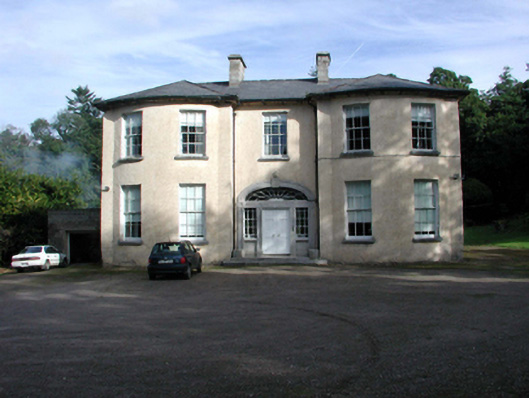
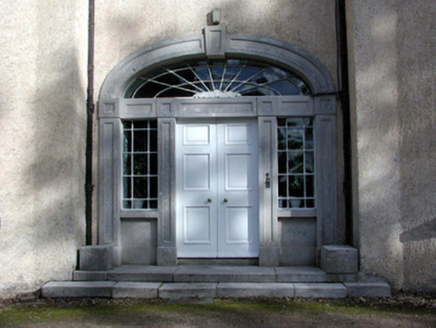
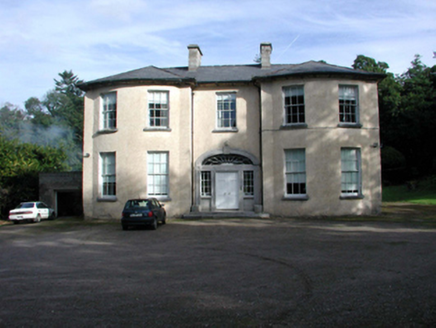
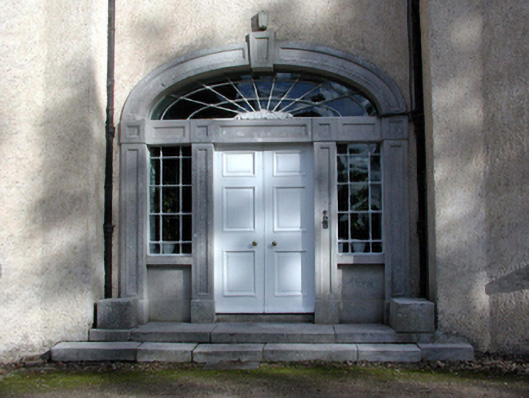
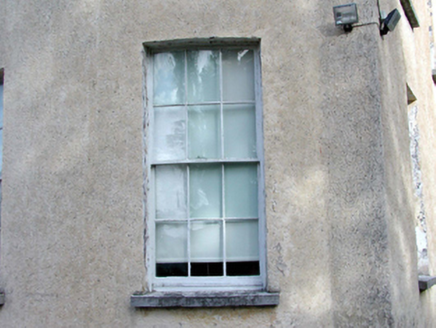
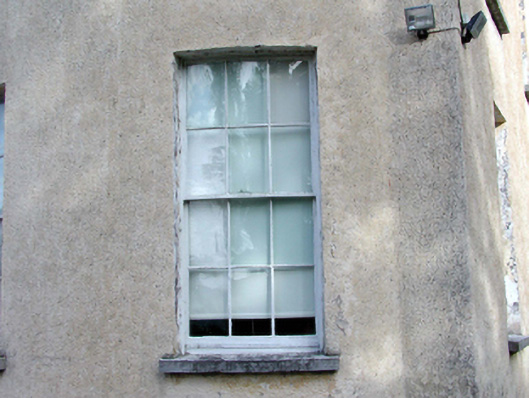
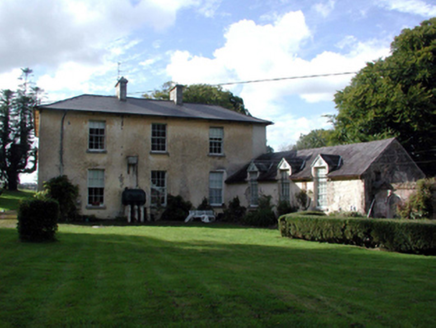
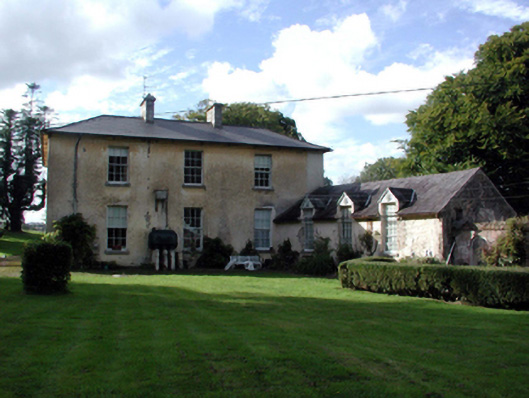
Detached three- or five-bay (three-bay deep) two-storey country house, built 1811, on a U-shaped plan with single- or two-bay two-storey advanced end bays; three-bay two-storey rear (east) elevation. For sale, 1851. Vacated, 1854. Sold, 1856. Occupied, 1901. Sold, 1910. Occupied, 1911. Sold, 1922. Hipped slate roof on a quadrangular plan with clay ridge tiles, paired limestone ashlar central chimney stacks having stepped capping, and replacement uPVC rainwater goods on slightly overhanging rendered slate flagged eaves retaining cast-iron downpipes. Roughcast walls. Segmental-headed central door opening in tripartite arrangement with two cut-granite steps, cut-granite doorcase with panelled pilasters on plinths supporting panelled archivolt centred on panelled keystone framing timber panelled double doors having margined sidelights below fanlight. Square-headed window openings with drag edged dragged cut-limestone sills, and concealed dressings framing six-over-six timber sash windows. Square-headed window openings to rear (east) elevation with drag edged dragged cut-limestone sills, and concealed dressings framing six-over-six timber sash windows. Set in landscaped grounds.
Appraisal
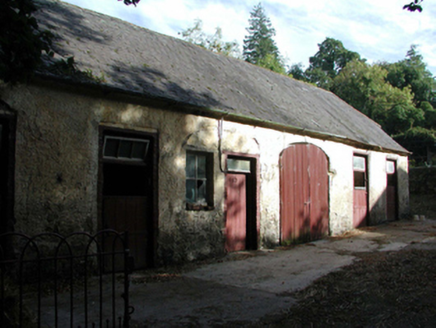
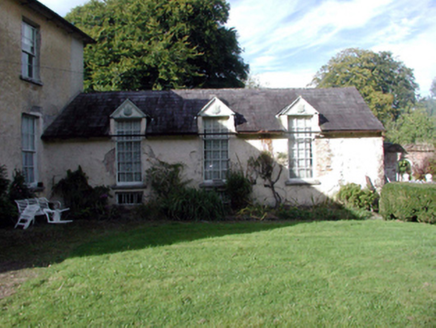
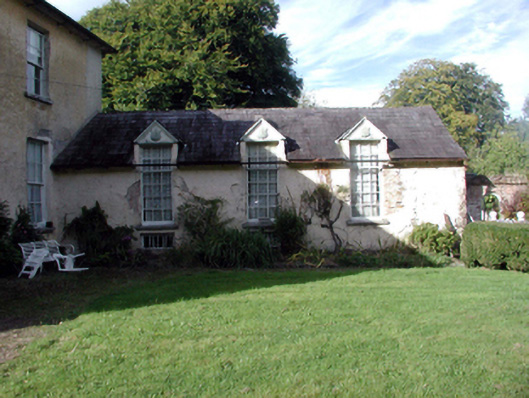
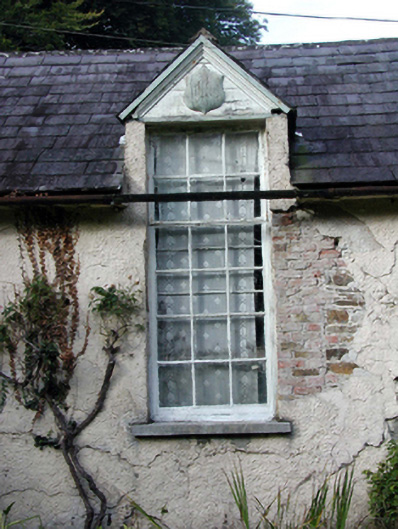
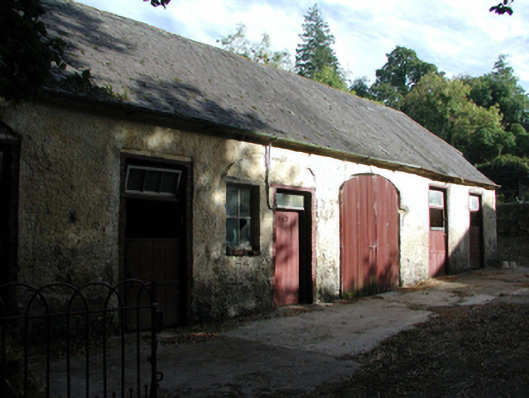
A country house erected by Richard Power Ronayne (----) representing an important component of the early nineteenth-century domestic built heritage of County Waterford with the architectural value of the composition, one recalling the contemporary Ballynaparka House near Aglish (see 22902924), confirmed by such attributes as the deliberate alignment maximising on scenic vistas overlooking wooded grounds and the winding River Blackwater; the compact plan form centred on a Classically-detailed doorcase not only demonstrating good quality workmanship in a silver-grey granite, but also showing a simple radial fanlight; and the slight diminishing in scale of the openings on each floor producing a feint graduated visual impression with the principal "apartments" defined by curvilinear bows. Having been well maintained, the form and massing survive intact together with substantial quantities of the original fabric, both to the exterior and to the interior where contemporary joinery; chimneypieces; and plasterwork refinements, all highlight the artistic potential of the composition. Furthermore, an adjacent coach house-cum-stable outbuilding (----); and distant gate lodges (see 22903708; 229037--), all continue to contribute positively to the group and setting values of an estate having historic connections with Samuel Allen (----) who obtained the property (1856) through the Encumbered Estates' Court (National Gazetteer of Great Britain and Ireland 1868, ----); John Pedder Furlong (1846-1928) '[of] D'Loughtane Clashmore [and] Ballinaparka [sic] Cappoquin County Waterford' (Walford ----, 511); Roger McGrath (1852-1931) '[of] Ballyheeny and D'Loughtane House' (cf. 22826015); and Michael Norris (1898-1952) and Mary Ellen Norris (née McGrath) (1896-1987).