Survey Data
Reg No
22902905
Rating
Regional
Categories of Special Interest
Archaeological, Architectural, Historical, Social
Original Use
House
In Use As
House
Date
1820 - 1840
Coordinates
207681, 91510
Date Recorded
09/10/2003
Date Updated
--/--/--
Description
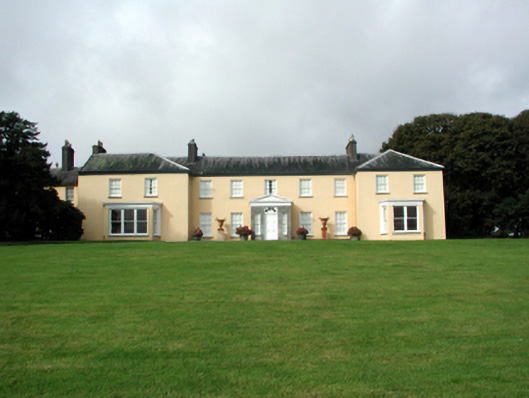
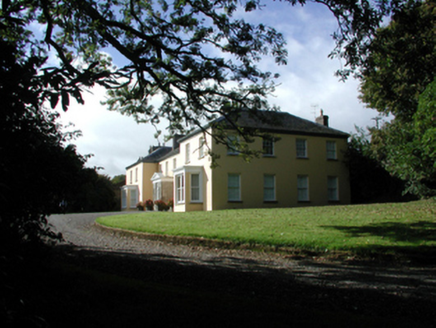
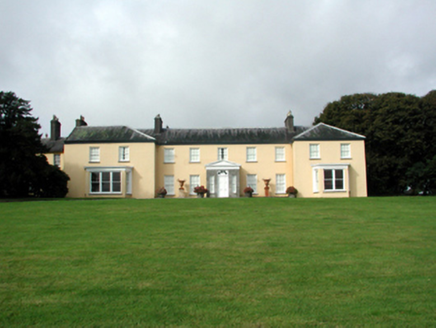
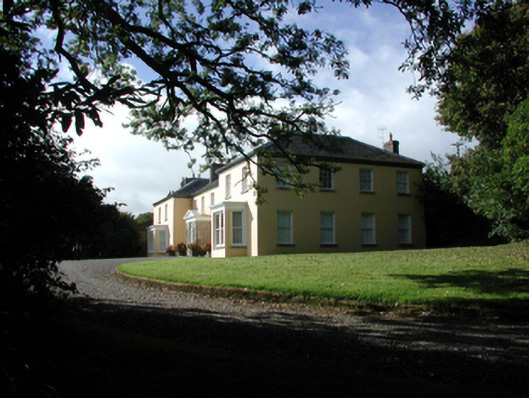
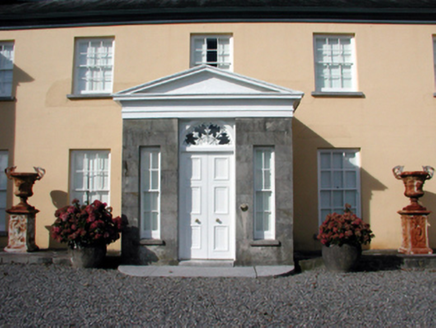
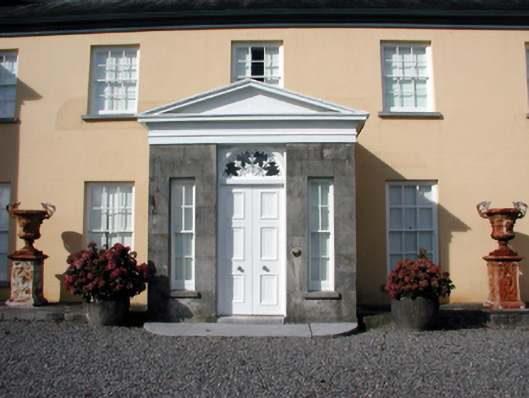
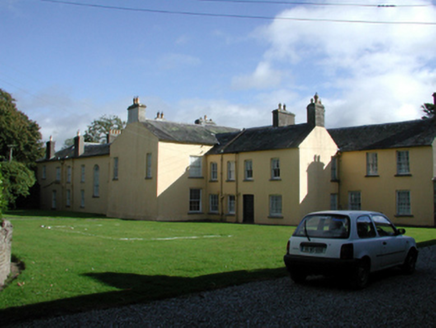
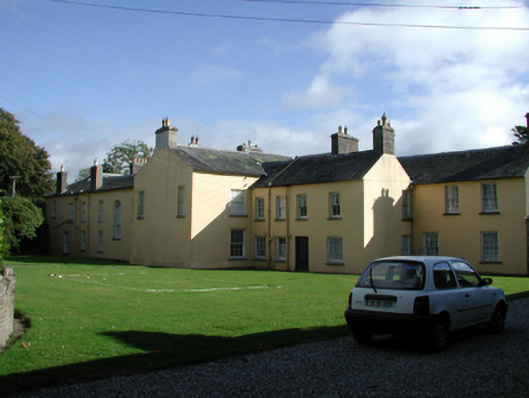
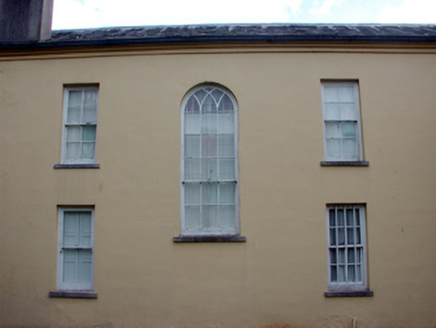
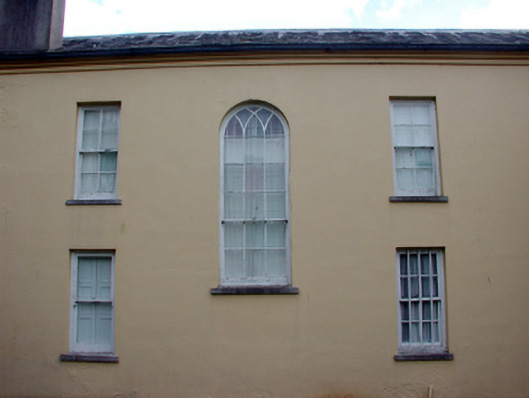
Detached nine-bay two-storey over basement house, c.1830, on an irregular plan retaining early aspect and incorporating fabric of earlier house, c.1680, comprising five-bay two-storey central block with single-bay single-storey pedimented projecting porch to centre ground floor, two-bay single-storey advanced flanking bays having four-bay two-storey side elevation to north-east, single-bay two-storey return to north-west, and six-bay two-storey lower flanking lateral wing to south-west having four-bay two-storey parallel range to north-west forming double pile section. Renovated, c.1930, with single-bay single-storey canted bay windows added to advanced flanking bays, and possibly with porch added. Pitched and hipped roofs (gabled to porch; double-pile (M-profile) to part of wing) with rolled lead ridge tiles, rendered chimney stacks, and cast-iron rainwater goods on moulded rendered eaves. Painted rendered, ruled and lined walls with moulded rendered cornices to canted bay windows. Limestone ashlar walls to porch with frieze and moulded rendered surround to pediment. Square-headed window openings (one round-headed window opening to rear (north-west) elevation; in bipartite and tripartite arrangement to canted bay windows) with cut-stone sills. 6/6 timber sash windows with 1/1 timber sash windows to canted bay windows. Square-headed door opening to porch in tripartite arrangement with timber panelled double doors, decorative cast-iron fanlight, and 4/4 timber sash windows to flanking lights. Cambered headed openings to parallel range to wing to south-west with cut-stone sills, 4/2 and 2/2 timber sash windows, and timber panelled door. Interior with timber panelled shutters to window openings. Set back from road in own grounds with gravel forecourt, and landscaped grounds to site.
Appraisal
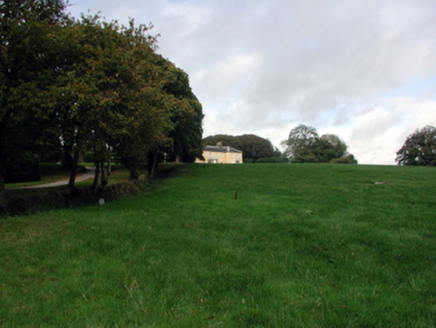
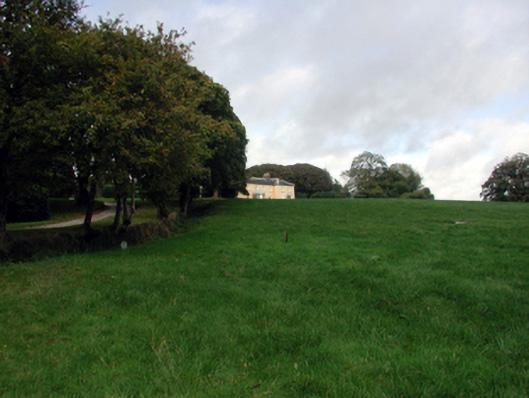
An impressive, substantial house that has been very well maintained to present an early aspect, both to the exterior and to the interior, and which remains an important element of the architectural heritage of County Waterford. The irregular form and massing of the house is evidence of the incorporation of an earlier structure on site, and confirms the archaeological importance of the composition. The house forms an elegant centrepiece of an extensive planned estate and, positioned on a slightly elevated site overlooking the River Bride, forms an attractive landmark in the landscape.