Survey Data
Reg No
22902807
Rating
Regional
Categories of Special Interest
Archaeological, Architectural, Historical, Social
Original Use
House
In Use As
House
Date
1780 - 1800
Coordinates
199233, 94498
Date Recorded
01/10/2003
Date Updated
--/--/--
Description
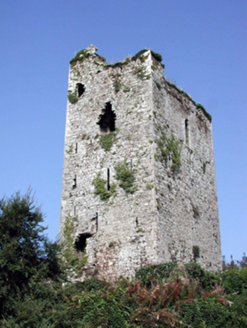
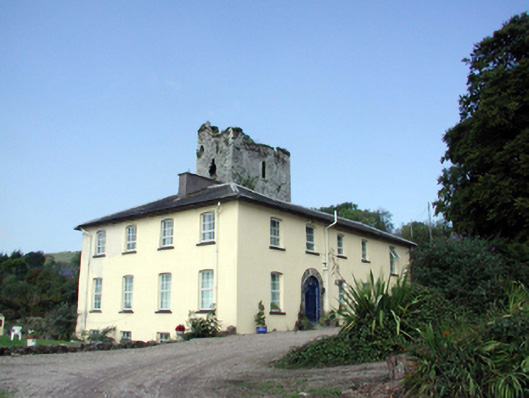
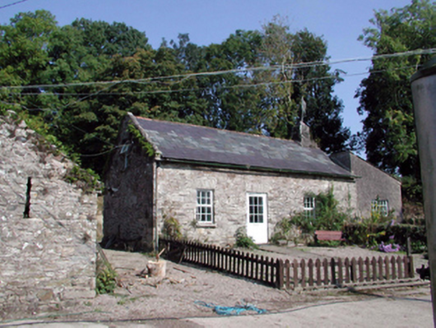
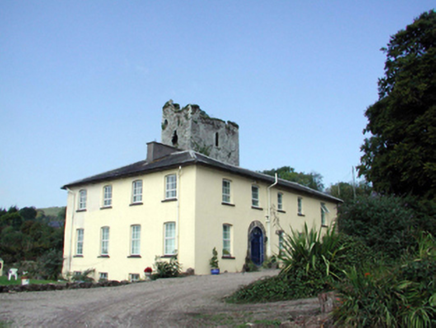
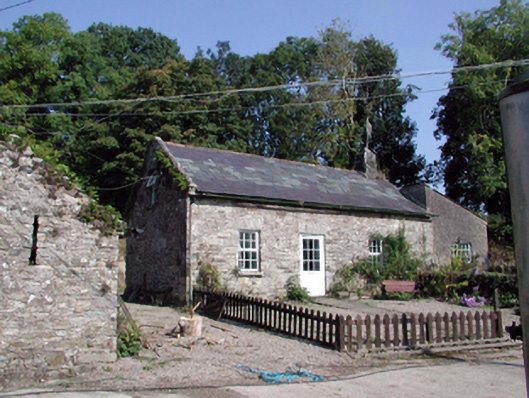
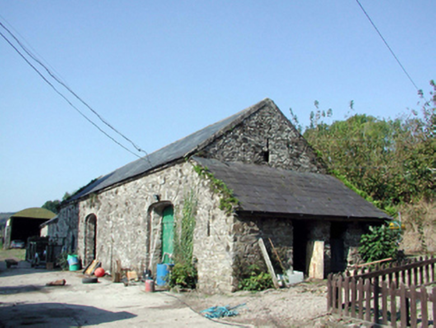
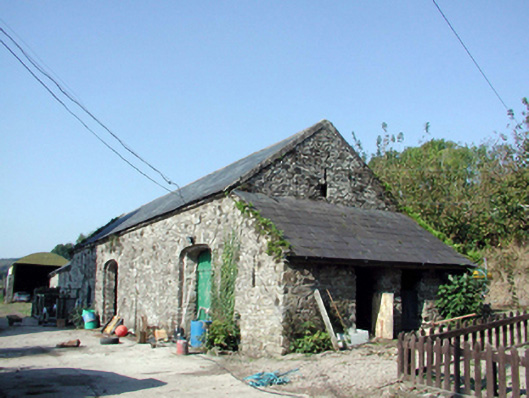
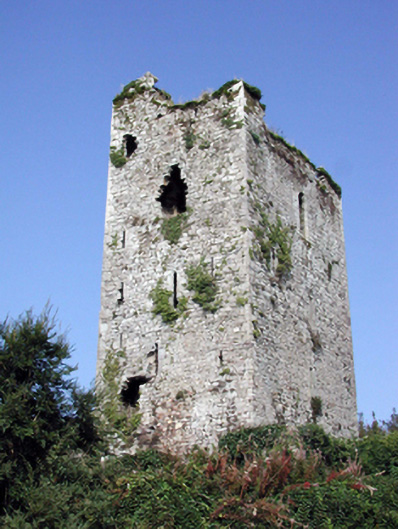
Detached five-bay two-storey over basement house, c.1790, on an L-shaped plan possibly incorporating fabric of earlier building, 1676 – 1677, with two-bay two-storey side elevations, and two-bay two-storey return to west. Renovated and refenestrated, c.1990. Hipped slate roof on an L-shaped plan with rolled lead ridge tiles, rendered chimney stacks, and replacement uPVC rainwater goods, c.1990, on rendered eaves having iron brackets retaining original cast-iron downpipes. Painted rendered walls over random rubble stone construction. Camber-headed window openings (square-headed window openings to basement) with stone sills, and replacement uPVC casement windows, c.1990. Round-headed door opening with doorcase removed, c.1990, timber panelled door, and spoked fanlight. Set back from road in own grounds with forecourt, and landscaped grounds to site. (ii) Detached three-bay single-storey rubble stone outbuilding with attic, c.1790, to north. Extended, c.1940, comprising single-bay single-storey lean-to end bay to right (east). Refenestrated, c.1990. Pitched slate roof (lean-to to end bay) with red clay ridge tiles, rendered chimney stack, rendered coping, and cast-iron rainwater goods. Random rubble stone walls with unpainted rendered walls to end bay. Square-headed window openings with stone sills, and rubble stone voussoirs to original block. Replacement uPVC casement windows, c.1990. Square-headed door opening with rubble stone voussoirs, and replacement glazed uPVC panelled door, c.1990. (iii) Detached two-bay single-storey rubble stone coach house, c.1790, to north-west with pair of elliptical-headed carriageways, two-bay single-storey lower end bay to left (west), and single-bay single-storey lean-to lower end bay to right (east). Pitched slate roofs (lean-to to end bay) with red clay ridge tiles, rendered coping, and no rainwater goods on squared rubble stone eaves. Random rubble stone walls. Square-headed slit-style window openings with no fittings. Pair of elliptical-headed carriageways with squared rubble stone voussoirs, and timber boarded double doors. Square-headed door openings to end bay to right (east) with timber boarded half-doors. (iv) Detached single-bay four-stage tower house, pre-1579, to west on a rectangular plan. Now in ruins. Roof now gone. Random rubble stone walls with base batter. Square-headed slit-style window openings with cut-stone surrounds having chamfered reveals, and no fittings. One pointed-arch slit-style window opening with cut-stone surround having chamfered reveals, and no fittings. Profile-headed window opening to top stage with cut-stone surround having chamfered reveals, and no fittings.
Appraisal
A well-proportioned, substantial house possibly incorporating the fabric of an earlier medieval store house on site. Extensively renovated in the late twentieth century, the house nevertheless retains most of its original form, although the inappropriate replacement fittings to the window openings have compromised the historic character of the composition. The house is of additional significance in the locality on account of its historic associations with the Tucker and Pyne families. The survival of a small range of attendant outbuildings enhances the group and setting qualities of the site. A tower house to the grounds is of considerable archaeological significance, and, positioned on an elevated site overlooking the River Bride, forms a picturesque landmark in the locality. The tower house is of particular importance for its historic associations with Sir Walter Raleigh (1552 - 1618).