Survey Data
Reg No
22901201
Rating
Regional
Categories of Special Interest
Archaeological, Architectural, Historical, Social
Original Use
House
In Use As
House
Date
1970 - 1980
Coordinates
205420, 105141
Date Recorded
09/10/2003
Date Updated
--/--/--
Description
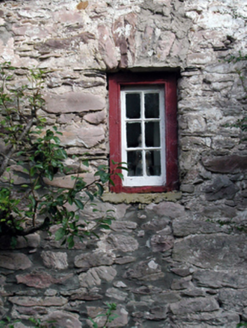
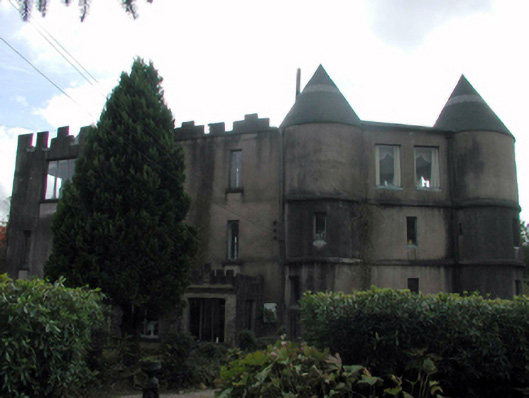
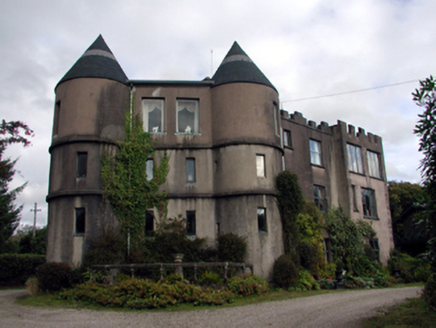
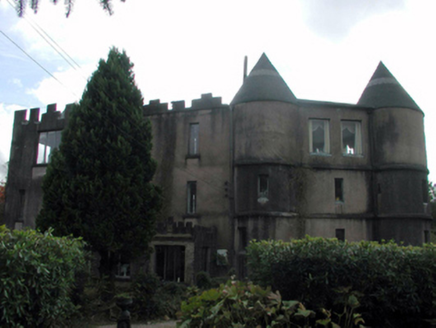
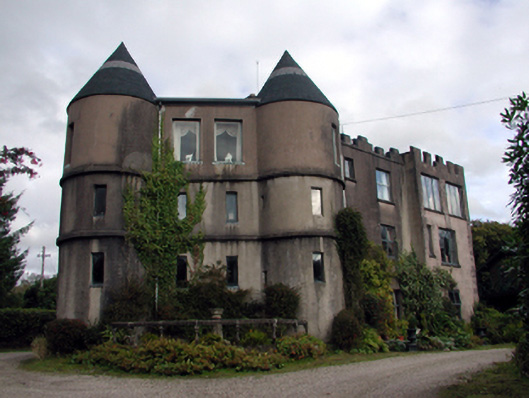
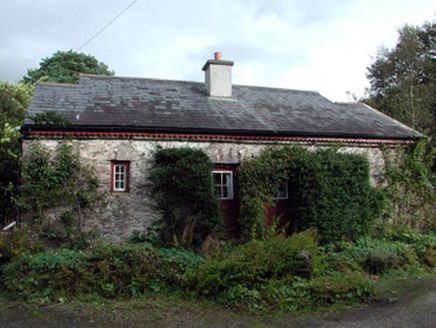
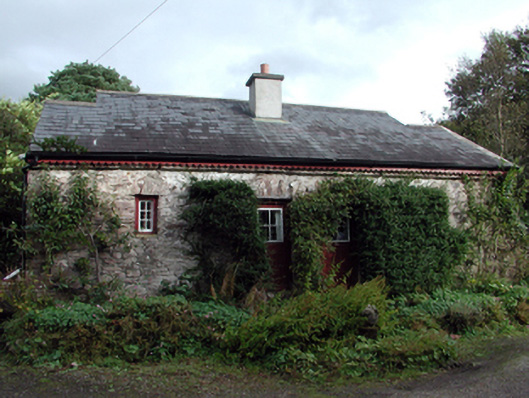
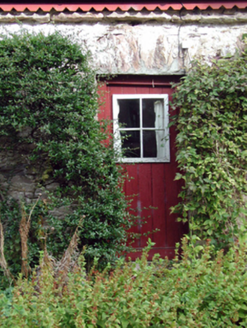
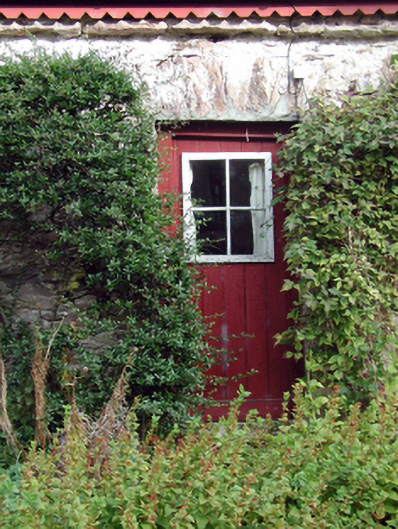
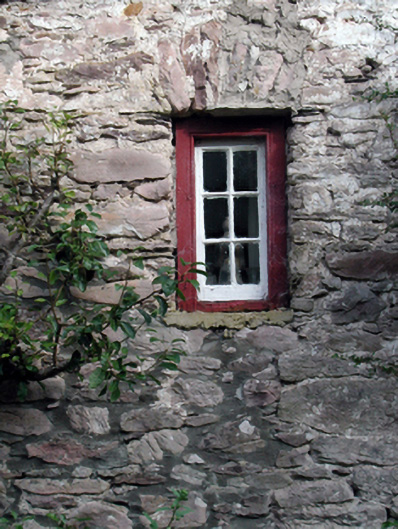
Detached eight-bay three-storey house with dormer attic, c.1975, on a cranked plan incorporating fabric of earlier hunting lodge, c.1625, comprising four-bay three-storey block (originally two-storey) with single-bay three-storey engaged corner towers on circular plans, three-bay three-storey wing to west having single-bay single-storey flat-roofed projecting porch to centre ground floor, and single-bay three-storey advanced end bay with dormer attic to left (west). Roofs not visible behind parapets with pitched artificial slate roof to end bay having clay ridge tiles, rendered chimney stacks, and cast-iron rainwater goods. Conical roofs to towers with artificial slate. Unpainted cement rendered walls retaining fragments of earlier lime render (including to porch) with rendered stringcourses to each floor to main block, lime rendered battlemented parapet to porch, and rendered battlemented parapet to wing and to end bay (on stringcourse to wing). Square-headed window openings with saw tooth-profiled zinc-lined sills, and timber casement windows. Square-headed door opening with glazed timber panelled door, and sidelights. Set back from road in own grounds with landscaped grounds to site. (ii) Detached four-bay single-storey rubble stone outbuilding, c.1825, to north on a symmetrical plan incorporating fabric of earlier building, c.1625, retaining early aspect. Pitched slate roof with clay ridge tiles, replacement cement rendered chimney stack, c.1975, and cast-iron rainwater goods on profiled timber board over squared rubble stone eaves. Random rubble stone walls with lime mortar. Square-headed window openings with no sills, rubble stone voussoirs, and timber casement windows. Square-headed door openings with glazed timber boarded doors.
Appraisal
Although extensively reconstructed in the late twentieth century leading to the loss of much of the evident historic fabric, this building remains unmistakably archaeological in character on account of the form and massing of the composition. Originally built as a hunting lodge for the Earl of Cork (n. d.), the house remains an important component of the architectural heritage of County Waterford. An outbuilding to the grounds retains most of its original form and historic fabric, and enhances the group value of the site.