
Survey Data
Reg No
22809154
Rating
Regional
Categories of Special Interest
Architectural, Artistic, Historical, Social
Original Use
Train shed
In Use As
Outbuilding
Date
1870 - 1875
Coordinates
204551, 97800
Date Recorded
25/06/2003
Date Updated
--/--/--
Description
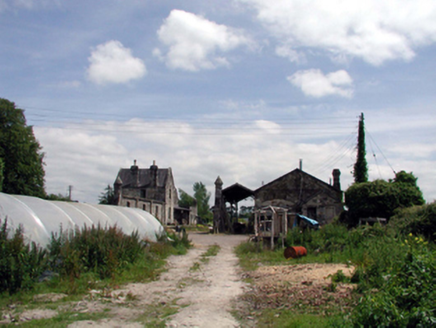
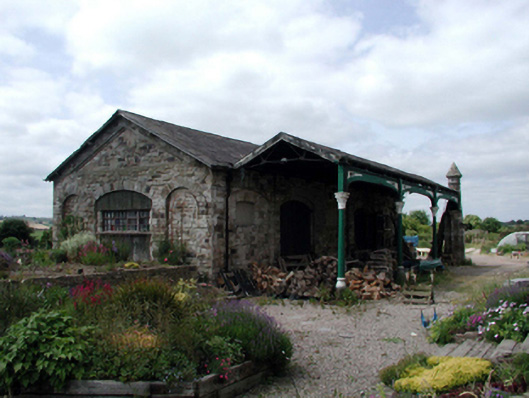
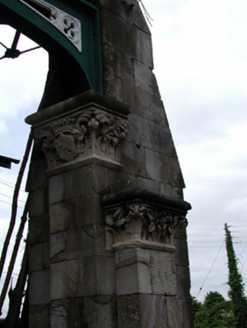
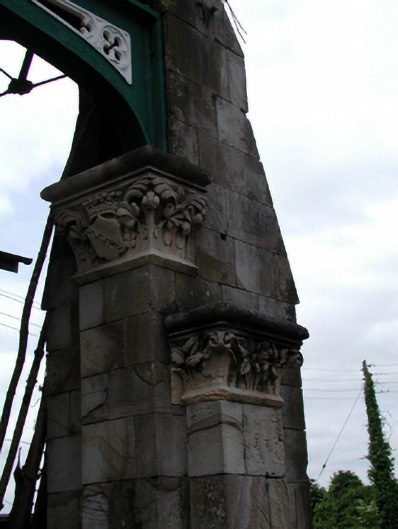
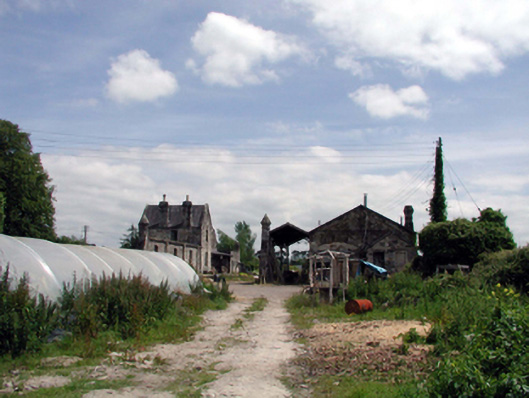
Detached five-bay single-storey railway goods shed, built 1872, with pair of shallow segmental-headed carriageways, three-bay single-storey canopy along front (north) elevation on cast-iron columns, and three-bay single-storey side elevations having shallow segmental-headed carriageways. Decommissioned, 1967. Renovated, c.1970, with some carriageways remodelled to accommodate use as outbuilding. Pitched slate roofs (including to canopy) with clay ridge tiles, and cast-iron rainwater goods on timber eaves. Irregular coursed squared Derbyshire grit stone walls with round-headed recessed panels to side elevations having squared Derbyshire grit stone voussoirs, and triangular recessed panels to gables. Shallow segmental-headed window openings in shallow segmental-headed recesses with no sills. Now blocked-up. Shallow segmental-headed carriageways with squared Derbyshire grit stone voussoirs, and timber boarded double doors with one having replacement timber casement window, c.1970, tongue-and-groove timber panelled apron, and overpanel. Elliptical-headed arcade to canopy on cast-iron Corinthian columns having moulded pedestals, and limestone ashlar pier to north-west having Corinthian pilasters with crown motif, buttress, and polygonal finial over having moulded capping. Set back from road in grounds shared with Lismore Railway Station with platform to east having random rubble stone retaining wall, and landscaped grounds to site of former railway line.
Appraisal
An attractive, finely-detailed building of considerable importance for its connection with the introduction of the railway network system to Lismore in the late nineteenth century. Sponsored by the Duke of Devonshire, and constructed in Derbyshire grit stone imported from Chatsworth, the railway station complex formed and integral component of the Waterford, Dungarvan, and Lismore Railway line. The construction of the building attests to high quality local stone masonry, while most of the original fabric remains intact, despite closure in the late twentieth century, and a subsequent change of use. The survival of the original canopy is of particular importance, and includes decorative detailing of artistic design distinction.