Survey Data
Reg No
22802001
Rating
Regional
Categories of Special Interest
Architectural
Original Use
House
Date
1850 - 1870
Coordinates
238459, 114138
Date Recorded
17/07/2003
Date Updated
--/--/--
Description
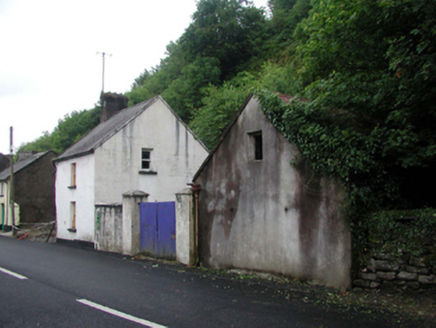
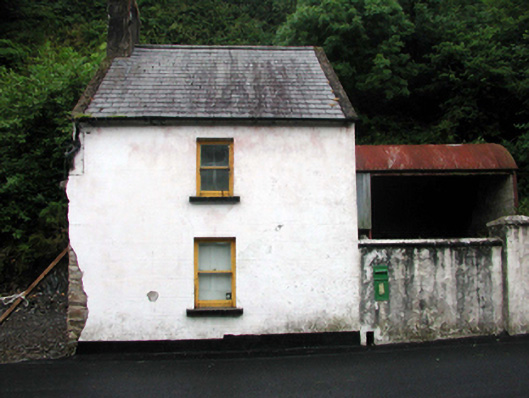
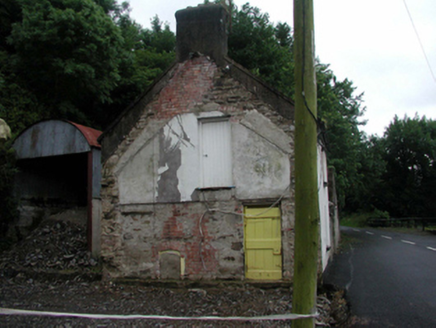
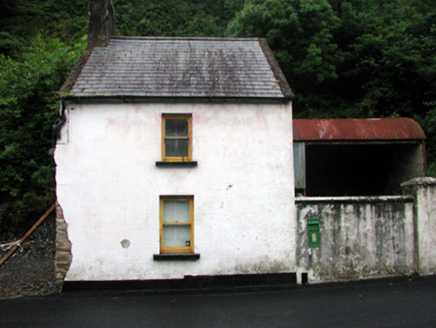
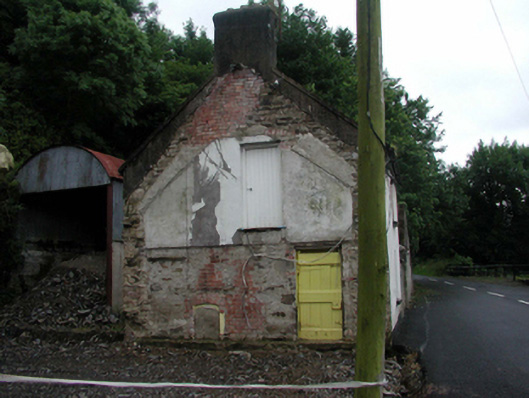
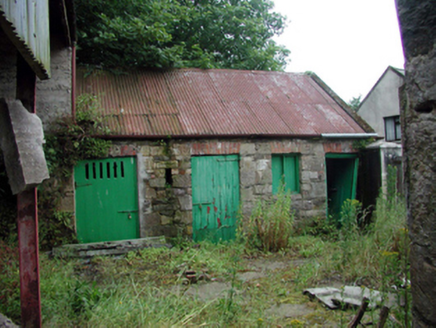
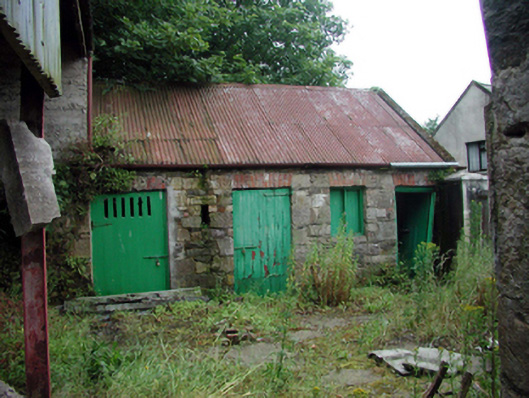
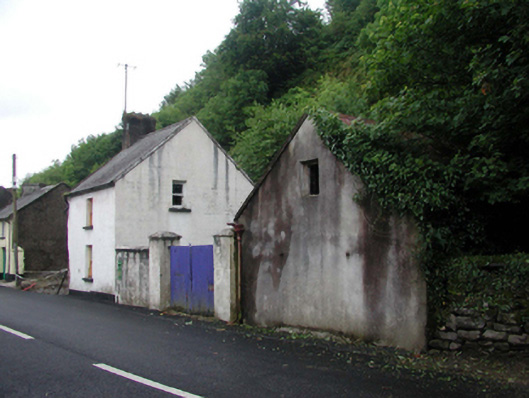
Detached single-bay two-storey house, c.1860, originally attached retaining original aspect. Now disused. Pitched slate roof with clay ridge tiles, rendered chimney stack, rendered coping, and cast-iron rainwater goods on rendered eaves. Painted rendered, ruled and lined walls. Exposed random rubble stone construction to side (north-east) and rear (south-east) elevations with red brick sections. Square-headed window openings with stone sills, and 1/1 timber sash windows. Square-headed door openings to side (north-east) elevation (originally internal doors) with timber boarded door to ground floor, and tongue-and-groove timber panelled door to first floor. Road fronted with enclosed grounds to site. (ii) Detached four-bay single-storey outbuilding with attic, c.1860, to south-west. Reroofed, c.1935. Now disused. Pitched roof with replacement corrugated-iron, c.1935, iron ridge tiles, rendered coping, and cast-iron rainwater goods. Exposed random squared rubble stone wall to front (north-east) elevation. Unpainted replacement rendered walls, c.1935, to remainder. Square-headed window opening with no sill, red brick ‘voussoirs’, and timber boarded fitting. Square-headed door openings with red brick ‘voussoirs’, and timber boarded doors. (iii) Gateway, c.1860, comprising pair of rendered piers with rendered capping, timber boarded double gates, and section of painted rendered, ruled and lined boundary wall to north-east.
Appraisal
This house, probably originally built as the post master’s house (as identified by archival Ordnance Survey maps and the presence of a wall-mounted cast-iron post box (22802018/WD-07-02-18)), is a small-scale composition of modest proportions that, despite the removal of the adjoining building and therefore much of the original context, retains its original form and character, together with important original features and fabric. The house is part of an attractive, self-contained group, including an attendant outbuilding of almost vernacular form and appearance. The buildings form an important component of the architectural heritage of Clonea, and contribute to the historic character of the village.