Survey Data
Reg No
22208316
Rating
Regional
Categories of Special Interest
Architectural, Artistic
Original Use
House
Date
1760 - 1900
Coordinates
224041, 123638
Date Recorded
06/07/2005
Date Updated
--/--/--
Description
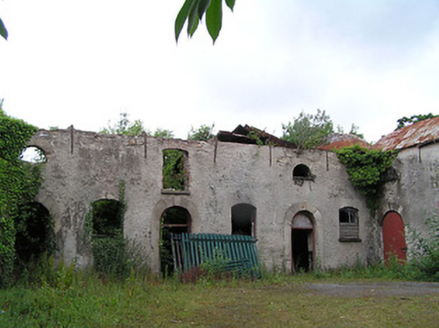
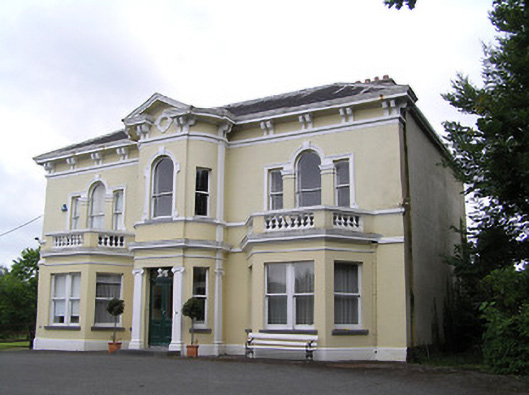
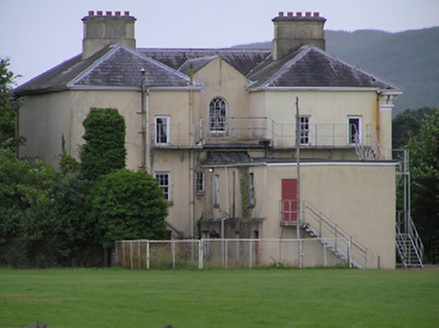
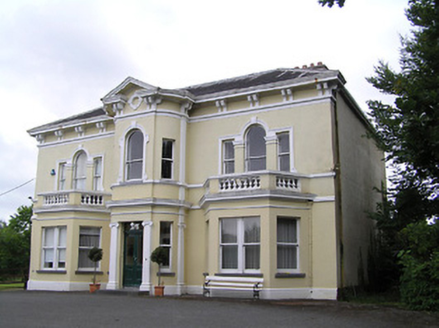
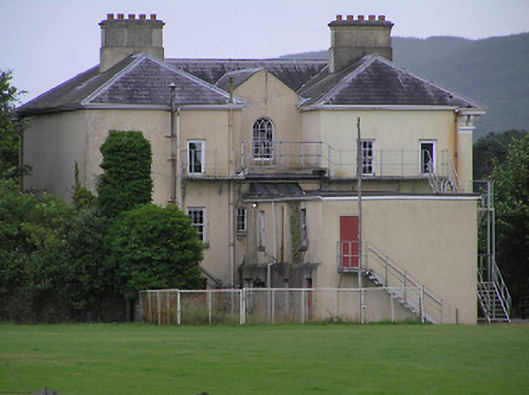
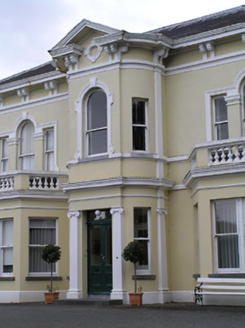
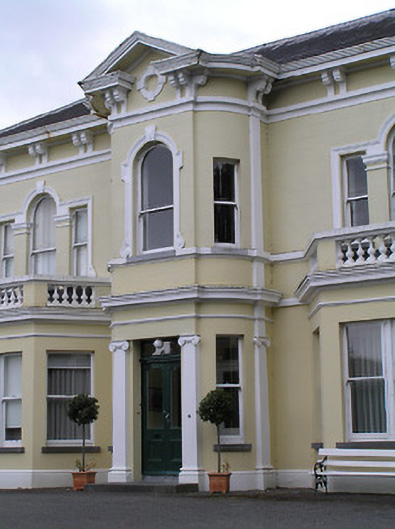
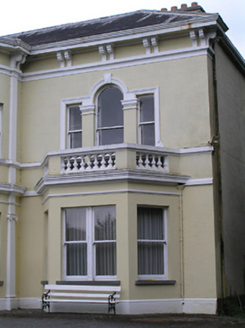
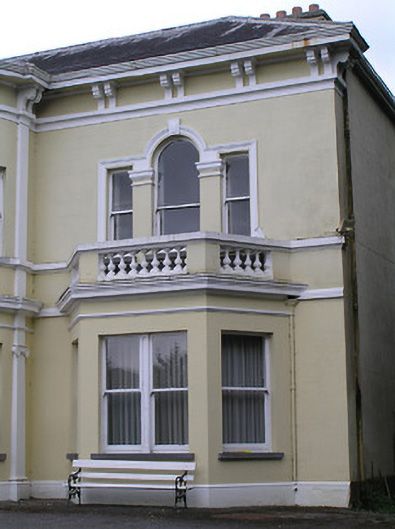
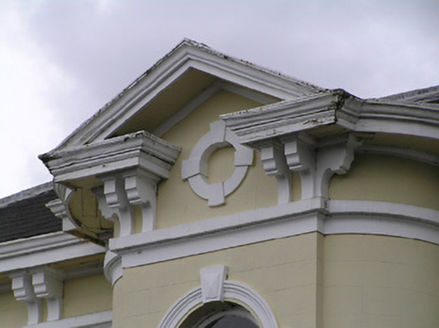
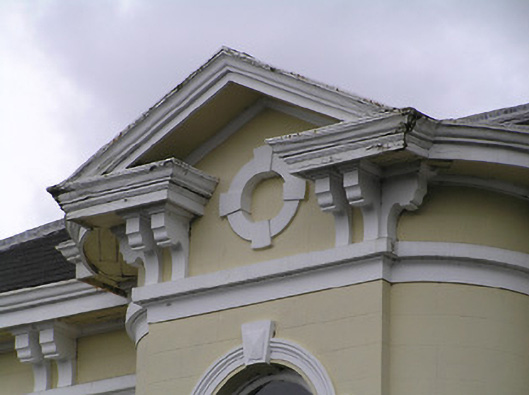
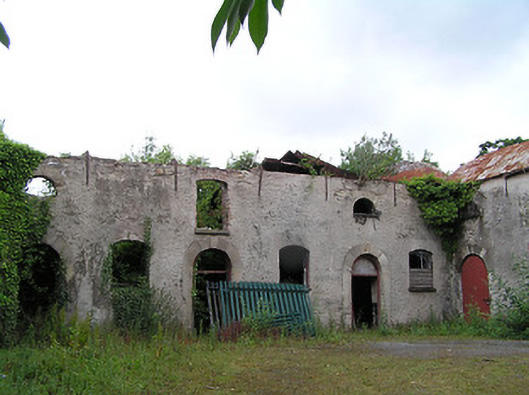
Detached U-plan three-bay two-storey over basement house, built c. 1770, subsequently remodelled c. 1880, having three-storey elevation to rear, projecting full-height bowed entrance bay with open-bed pediment, balustraded canted-bay windows to ground floor front, and recent flat-roofed two-storey extension and recent fire escape to rear. Entrance bay has full-height pilasters at junction with house proper, presenting to ground floor as Ionic pilasters with entasis. Hipped slate roofs, pitched to central recessed rear bay, with rendered chimneystacks. Decorative paired brackets to front and south elevations only, with moulded cornice above, continuing to form part of pediment to entrance bay, and moulded platband below. Painted lined-and-ruled rendered walls with render detailing to front and south elevations, comprising plinth with moulded coping, platband at cornice level of bay windows, moulded platband at first floor sill level, forming sills to windows of south elevation and continuing to form coping to balustrades of bay windows. Timber sliding sash one-over-one pane windows to front and south elevations, with rounded corners to glazing, and having moulded surrounds to south elevation and to first floor of front elevation, all with render keystones, ornately-detailed knees to front elevation and shoulders and knees to south elevation, and having cut limestone sills to all windows of front elevation. Venetian windows to first floor end bays of front elevation with render keystones and moulded imposts. South elevation has one tripartite window to first floor. Bay windows have double sash frames to front faces, with panel detail to mullions, moulded render string course above windows and having balustrades with slightly projecting moulded plinths. Rear elevation has six-over-six pane timber sliding sash windows, extension has some three-over-three pane timber sliding sash windows, and both have some uPVC replacement windows, all windows having cut limestone sills. Entrance bay has blind oculus to pediment with render surround, and round-headed window to first floor flanked by square-headed windows to curved sides, with sills set into sill course. Square-headed entrance doorway with glazed timber panelled vertically-divided door with overlight and flanked by render Ionic pilasters, matching those elsewhere to entrance bay, and similar windows to first floor. Square-headed door opening with render Ionic pilasters with half-glazed timber panelled vertically-divided door with overlight and limestone step. Doorways, one blind, to south elevation, with moulded render surrounds, one with keystone and glazed timber panelled double-leaf door with sidelights and overlight. Walled garden to north with rubble stone walls. Yard to north has ranges of two-storey outbuildings to west and north, having barrel-profile corrugated-iron roofs and rendered rubble stone walls. Seven-bay west range has round-headed doorways with render over cut sandstone voussoirs and remains of timber battened doors, segmental-headed windows with brick arches and remains of timber frames, and lunette over centre doorway with render over rubble sandstone voussoirs. North range has paired elliptical-headed carriage entrances to centre and round-headed doorways to ends, with cut sandstone voussoirs with raised keystones, and segmental-headed windows with brick voussoirs and timber sliding sash windows.
Appraisal
Although the fabric of this house dates from the late eighteenth century, its Italianate appearance is due to a Victorian remodelling. The decorative render treatment has been applied to the two main elevations of the building, the front and south elevation seen on approach, the platbands and elaborate bracketed cornice coming to an abrupt halt just around the corner of the rear elevation. The Venetian windows and Ionic pilasters are classically inspired, but this classicism is freely interpreted to create a new specifically nineteenth-century type of architecture. The projections on the front façade and the exploitation of the sculptural properties of render for exterior decoration are both typical of this period. The double-height porch incorporates bowed sash windows, a feat of carpentry and glazing, an indication of the skill of the craftsmen involved. The associated outbuildings are well designed and typical demesne buildings with sandstone voussoirs to the door openings.