Survey Data
Reg No
22205407
Rating
Regional
Categories of Special Interest
Architectural, Social
Original Use
Railway station
Date
1850 - 1870
Coordinates
219113, 146824
Date Recorded
21/06/2005
Date Updated
--/--/--
Description
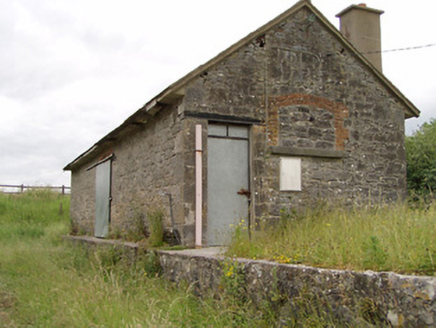
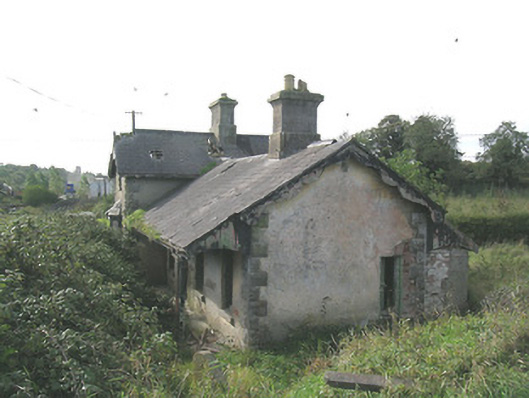
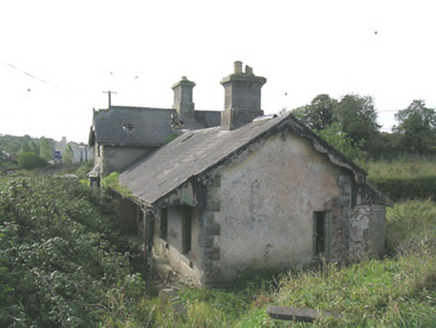
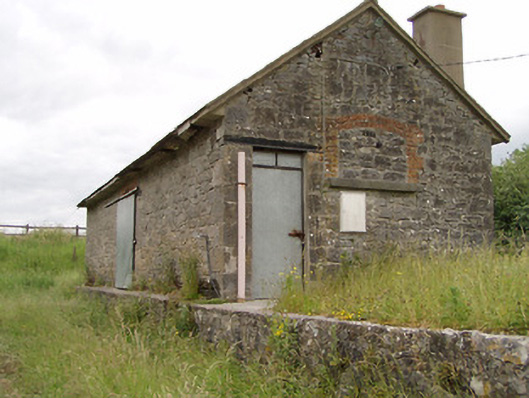
Detached L-plan former railway station and station master's house, built c. 1860, comprising gable-fronted single-bay two-storey block with canted-bay window at right angles to three-bay single-storey block to north. Now disused. Two-bay flat-roofed extension to rear. Pitched slate roofs with decorative timber bargeboards and dressed limestone chimneystacks, with wide overhanging eaves to front of lower part. Lined-and-ruled rendered walls having rock-faced limestone quoins. Square-headed openings, some retaining one-over-one pane timber sliding sash windows having limestone sills and some interior shutters. Canted bay window to gable front. Square-headed entrance to single-storey part. Platform to front of station house. Goods shed opposite station house having pitched slate roof with rendered chimneystack and coursed roughly dressed limestone walls with limestone quoins. Blocked segmental-headed former window opening to south elevation with brick voussoirs and limestone sill. Segmental-headed opening to west elevation having brick voussoirs and cast-iron sliding door and square-headed door opening to south elevation.
Appraisal
This former railway station, which was closed in 1967, forms an interesting group of railway structures with the former railway goods shed and remains of the platform to the south. The station is solidly constructed with many decorative features such as the timber bargeboards and the rusticated limestone quoins. The dressed limestone chimneystacks are particularly fine and serve as a reminder of the quality of craftsmanship and stonemasonry available right up to the end of the nineteenth century. The station retains the remains of its one-over-one timber sliding sash windows which are typical of buildings of the late nineteenth and early twentieth century. The manufacture of such windows became possible with advances in technology whereby large panes of glass became readily available and increasingly affordable. Although no longer in use, these buildings are reminders of the great railway era in Ireland.