Survey Data
Reg No
22110004
Rating
Regional
Categories of Special Interest
Architectural, Artistic, Social
Previous Name
Fethard Railway Station
Original Use
Railway station
In Use As
House
Date
1875 - 1880
Coordinates
220179, 135090
Date Recorded
07/06/2005
Date Updated
--/--/--
Description
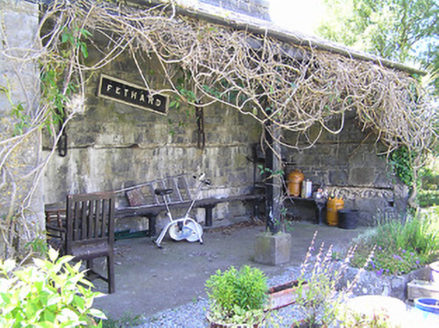
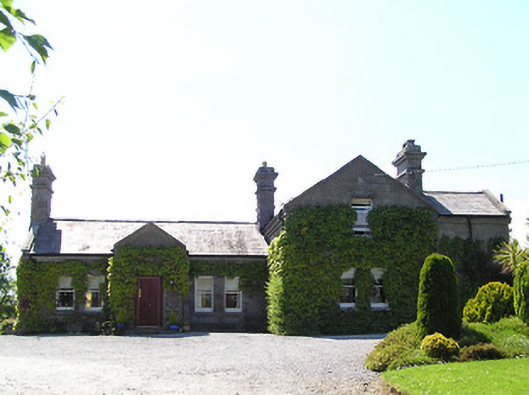
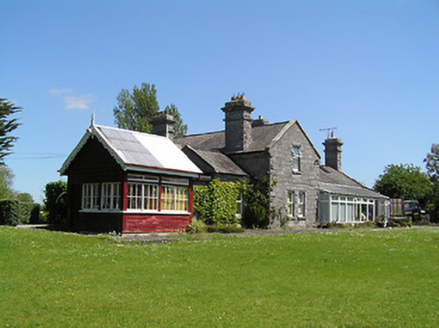
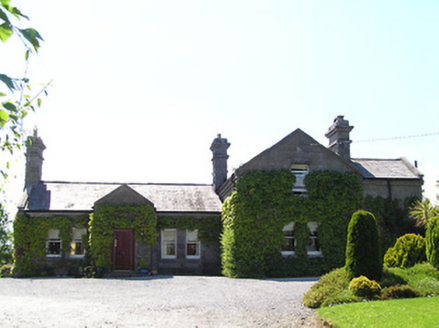
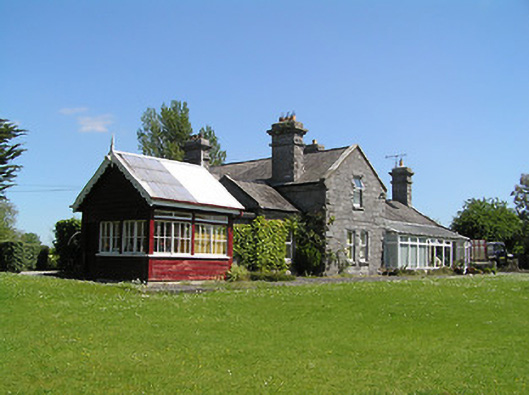
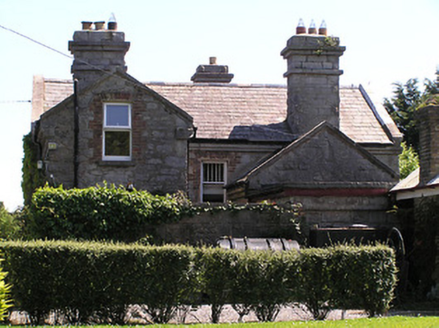
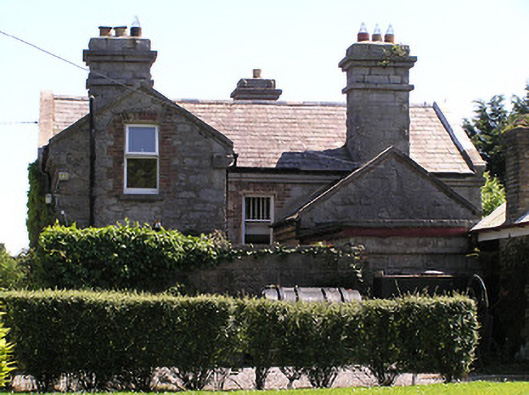
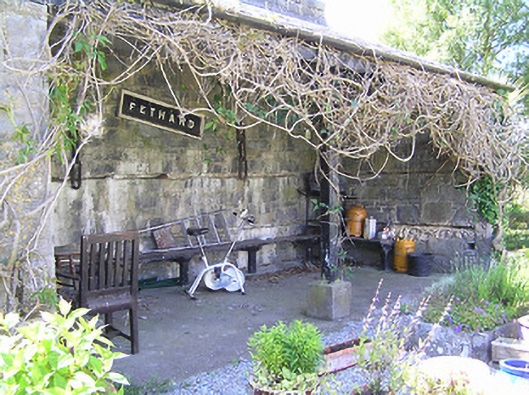
Detached irregular-plan railway station, built 1879, now in use as house, having three-bay single-storey north-south block to south, with projecting gable-fronted porch to front (east) elevation and recent conservatory extension to rear, and east-west two-storey block to north, with gabled ends projecting beyond south block, and with single-bay gable-ended blocks projecting from north elevation, single-storey to west and two-storey to east. Flat-roofed single-storey extension to gable of single-storey block. Walled yard to north side. Pitched slate roofs with recently inserted rooflights, cut limestone copings and eaves course and cut limestone chimneystacks with rusticated quoins and cast-iron rainwater goods. Snecked limestone walls with rusticated limestone quoins. Square-headed openings with one-over-one pane timber sliding sash windows with cut limestone sills, some replacement uPVC to north and west elevations, and replacement timber panelled door. Former waiting room to west of site has snecked rusticated limestone walls, lean-to slate roof with cast-iron rainwater goods, and retains render and timber benches to interior and wooden station name board. Former signal box has pitched corrugated-iron roof with carved pierced timber bargeboards, timber finials and brick chimneystack, timber battened cladding to walls and square-headed openings having timber fixed and horizontally sliding windows, four-pane to north and six-pane elsewhere, with timber sills, having paned overlights to west elevation, and timber battened door. Cut limestone piers to site entrance.
Appraisal
The high quality of design and construction associated with railway architecture in the nineteenth century is strongly in evidence in this former station. The distinctly separate massing of the different interior spaces leads to elevations which are all asymmetrical, a conceit typical of the picturesque movement. The snecked stone walls, thick battered chimneystacks and the proliferation of gables contribute to the apparently informal effects of this distinctive style. Happily still in use, it forms part of an interesting group with the nearby former waiting room, the former signal box, and the goods shed to the north.