Survey Data
Reg No
20906324
Rating
Regional
Categories of Special Interest
Architectural, Social, Technical
Original Use
Hospital/infirmary
In Use As
Hospital/infirmary
Date
1950 - 1955
Coordinates
172627, 77674
Date Recorded
31/07/2007
Date Updated
--/--/--
Description
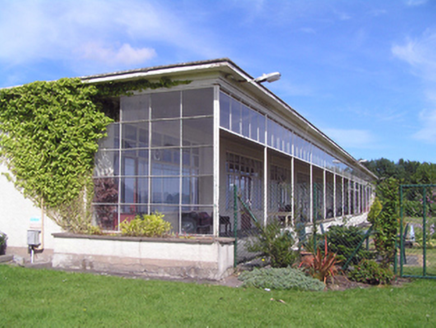
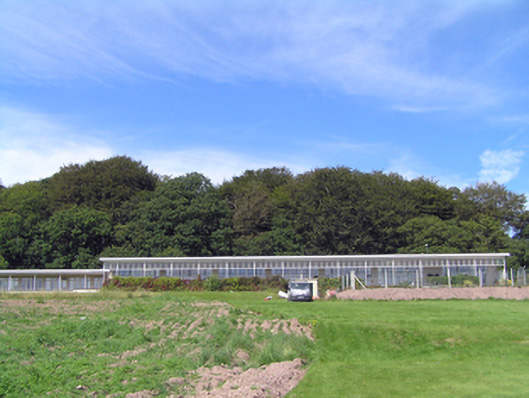
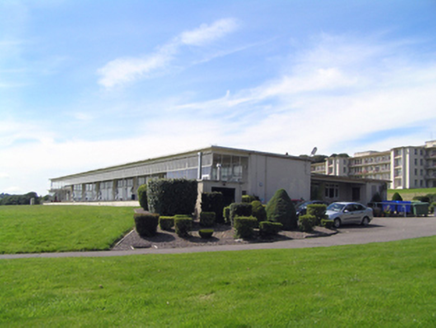
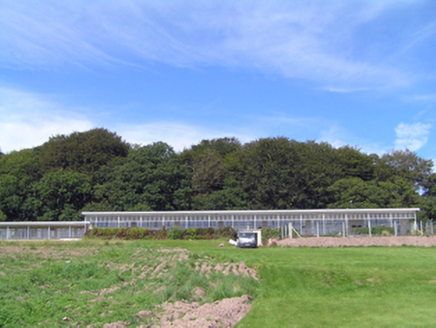
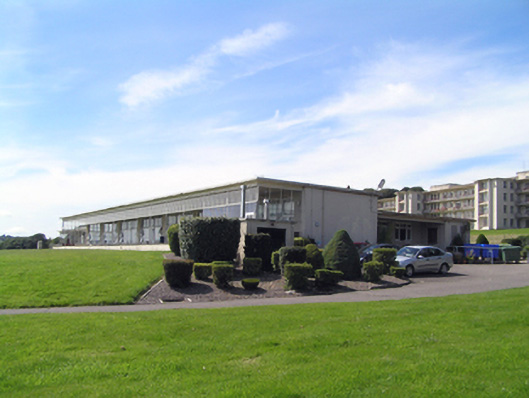
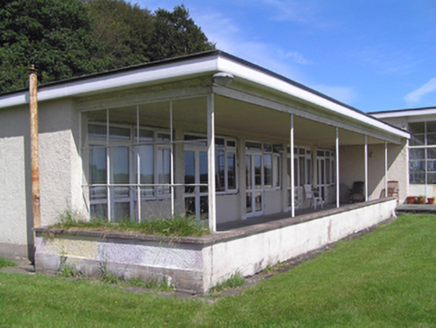
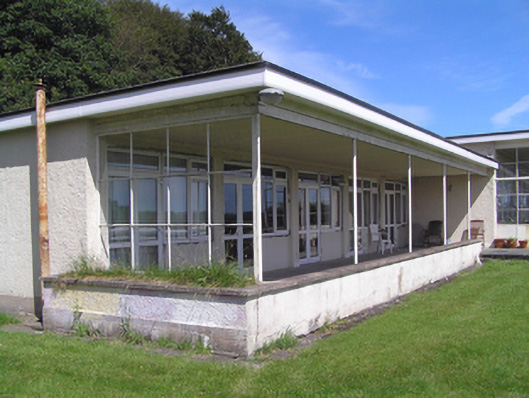
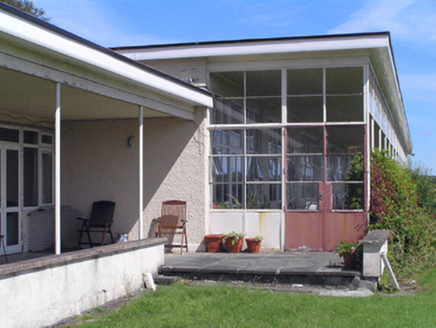
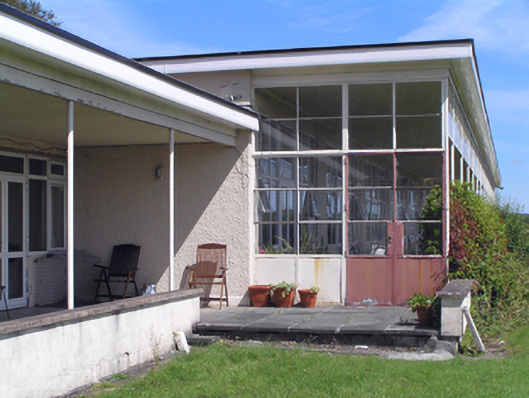
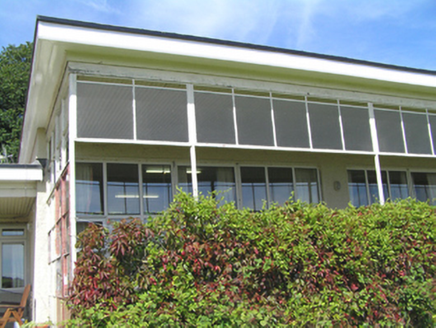
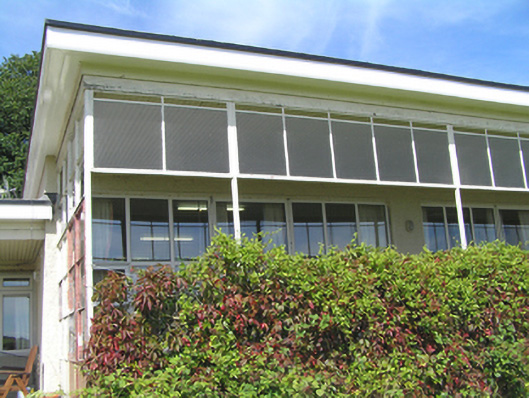
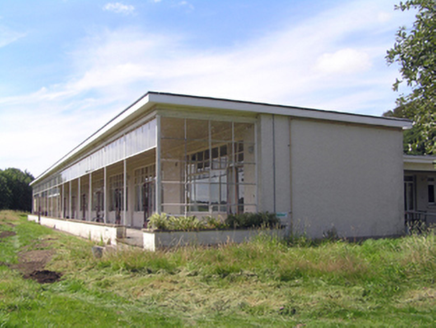
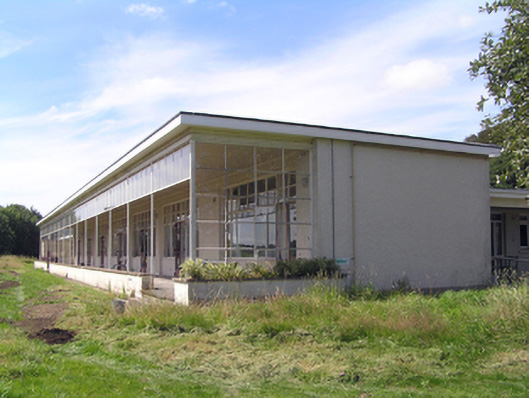
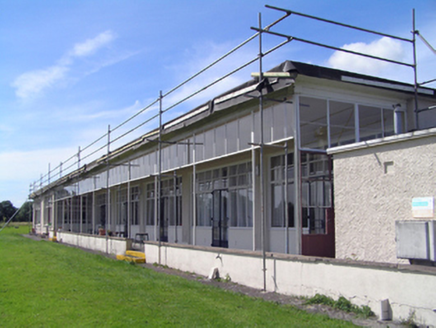
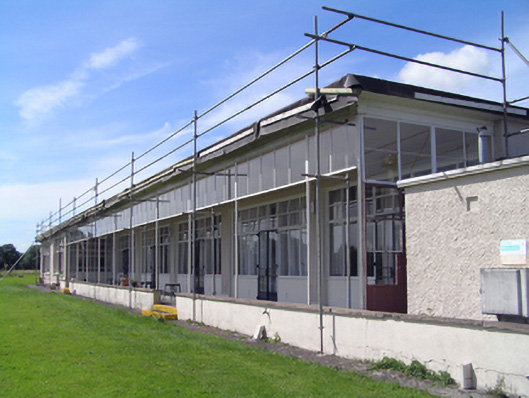
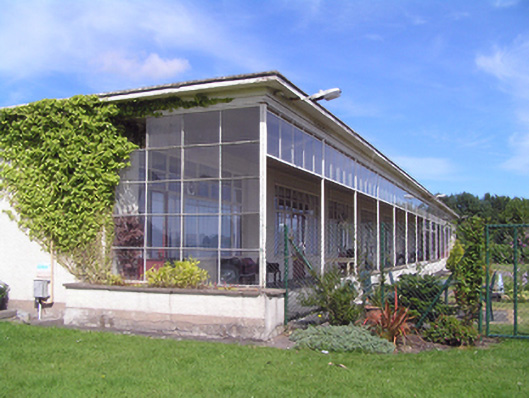
Group of five detached irregular-plan multiple-bay single-storey hospital wards, built 1954. Units 1, 2 and 3 south-facing, units 4 and 5 north-facing. Wards comprising rectangular-plan blocks with full-length verandahs to front elevations and full-length lower blocks to rear elevations, with recessed bays to east end (west end of units 4 and 5), and south-facing verandah to west end of lower block wrapping around west end (east end of units 4 and 5) of higher block. Flat roofs with oversailing timber eaves, rendered chimneystacks and cast-iron rainwater goods. Roughcast rendered walls. Rendered plinth walls with pilotis with vertically divided steel-framed overlights to south elevations of verandahs and steel-framed glazed end walls to verandahs, with half-glazed steel double doors to west ends (east end of units 4 and 5). Square-headed openings to front elevations with steel casement windows flanking half-glazed steel double doors, with swivelling overlights over whole. Replacement uPVC windows and doors to units 1 and 2. Square-headed windows to north elevations of taller blocks, and square-headed openings with concrete sills to rear elevations, some with steel casement and swivelling windows, some with replacement uPVC windows. Square-headed openings with replacement uPVC windows and doors to entrance elevations.
Appraisal
Part of large coherently planned group of hospital structures, built as Tuberculosis Sanatorium under Doctor Noel Browne as Minister for Health. Frankly modern in style, the flat roofs, strip windows, pilotis, large glazed areas and minimal adornment are typical of mid-twentieth-century institutional architecture and evidently informed by Le Corbusier's work. The large south-facing verandahs were an integral part of the treatment in sanatoria, and units 3, 4 and 5 retain their original steel windows and doors. Part of a remarkably complete and well preserved scheme, enhanced and contextualised by mature grounds.