Survey Data
Reg No
20906117
Rating
Regional
Categories of Special Interest
Architectural, Artistic, Social
Original Use
Church/chapel
In Use As
Church/chapel
Date
1840 - 1880
Coordinates
151626, 81687
Date Recorded
08/04/2009
Date Updated
--/--/--
Description
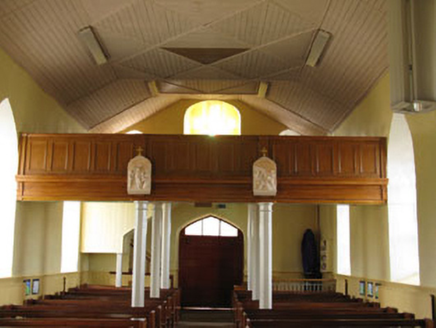
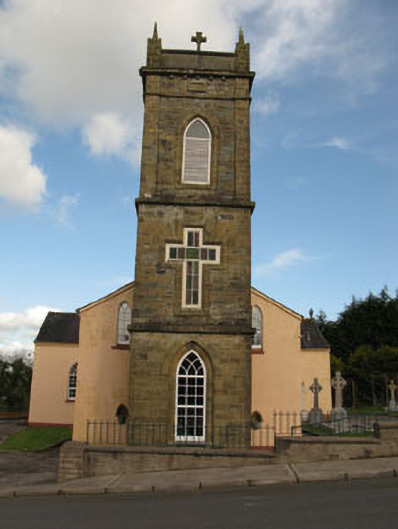
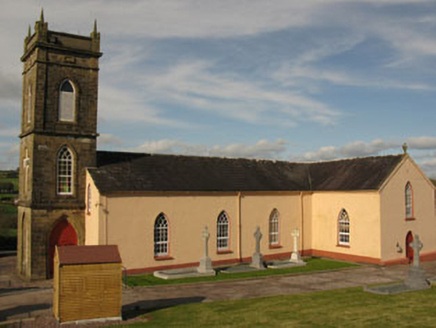
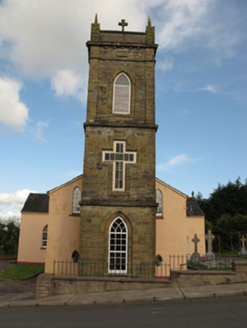
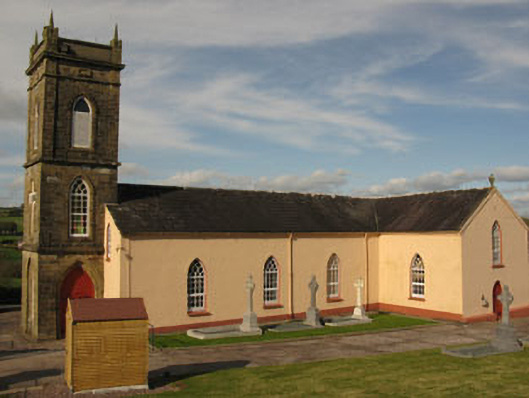
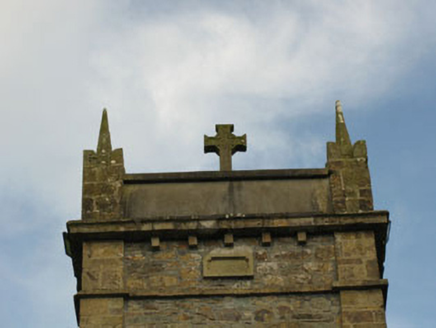
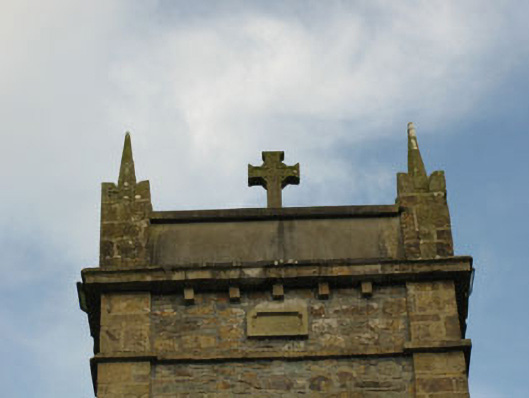
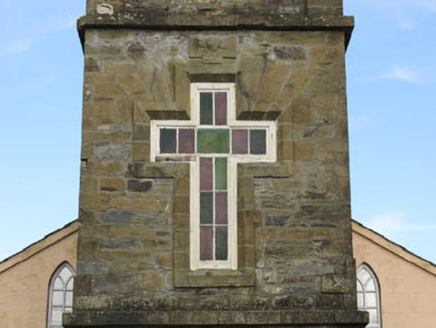
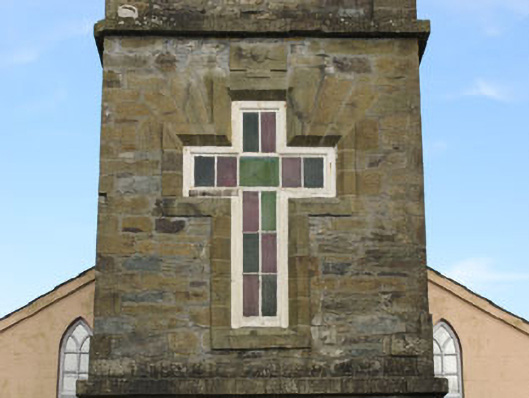
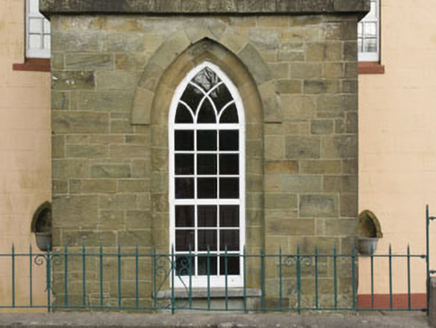
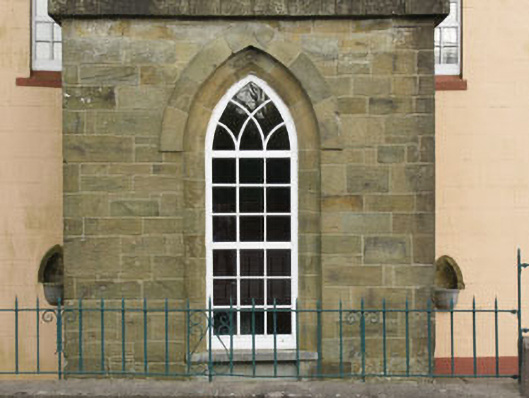
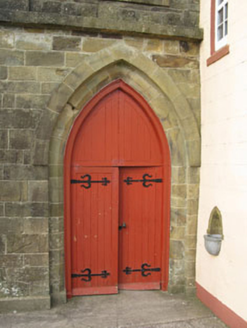
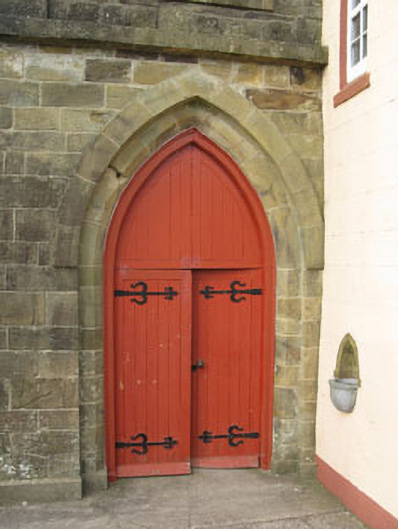
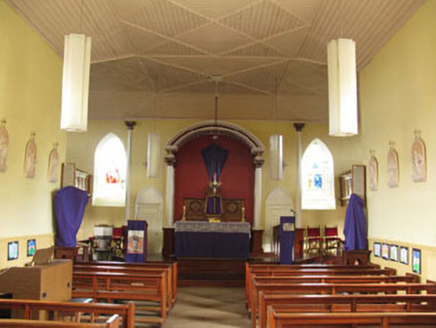
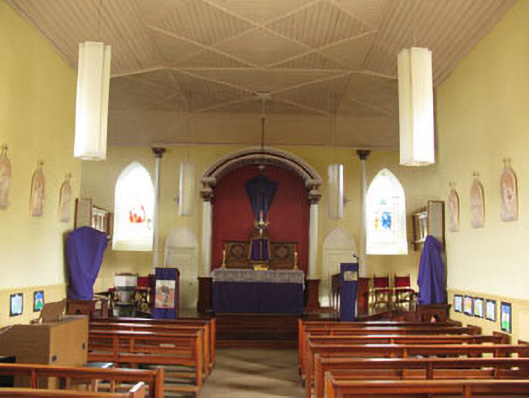
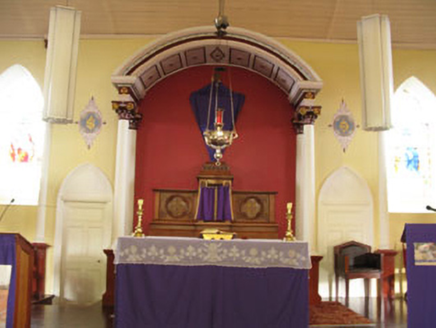
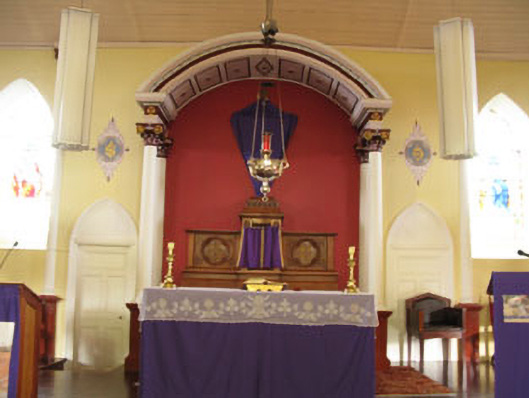
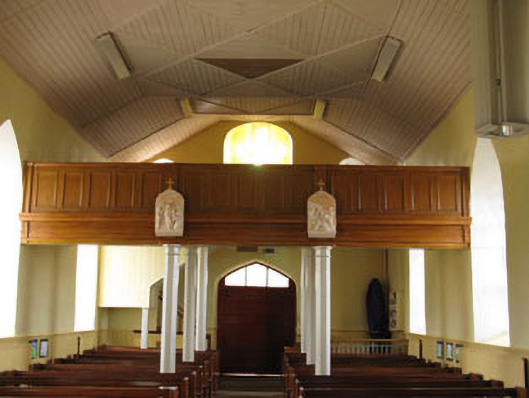
Freestanding cruciform-plan double-height Roman Catholic church, built c.1860, having three-stage entrance tower to front (west), three-bay nave, single-bay transepts to sides (north, south) and two-bay single-storey vestry to rear (east) with extensions to side (north) elevation. Pitched slate roofs with rendered eaves course, carved stone gable copings to transepts, cross finial to southern transept and cast-iron rainwater goods. Rendered parapet with carved stone corner spires to tower over tooled stone eaves course with corbels, cruciform finial to centre of tower. Dressed coursed sandstone walls to entrance tower having cut stone stringcourses to each stage, carved plaque to second stage over window opening. Lined-and-ruled rendered walls elsewhere with carved stone fonts to front elevation of nave. Pointed arch window openings with tooled chamfered stone sills and surrounds to tower with replacement uPVC windows and louvres to upper stage. Cruciform window opening with chamfered stone sill and surround to front (west) elevation of first-stage, having timber-framed stained glass window. Pointed arch window openings with rendered sills to nave and transepts having replacement uPVC windows. Round-headed window openings with rendered sills to rear (west) elevation of vestry having fixed timber framed windows with timber tracery. Pointed arch door openings to side (north, south) elevations of tower, within shallow recessed chamfered surrounds, having double-leaf timber battened doors surmounted by timber battened tympanum. Pointed arch door openings to transepts with timber battened doors. Carved timber reredos to interior, comprising Ionic columns surmounted by open bedded segmental pediment. Carved timber gallery on timber columns to rear (west). Timber battened roof. Rendered enclosing walls with square-profile gate piers having wrought-iron gates and railings. Set within its own grounds in the village of Fornaght.
Appraisal
This prominently sited church is of an unusual design for a rural Roman Catholic church with its crenellated entrance tower more commonly being associated with Church of Ireland churches. Its Gothic Revival form is characteristic of its age and is apparent in design elements including pointed arch window openings and tooled stone detailing. It is a notable feature in the landscape, and is a social focus for the surrounding area.