

Survey Data
Reg No
20901402
Rating
Regional
Categories of Special Interest
Architectural, Artistic, Social
Original Use
Church/chapel
In Use As
Church/chapel
Date
1835 - 1840
Coordinates
129484, 113105
Date Recorded
06/09/2006
Date Updated
--/--/--
Description
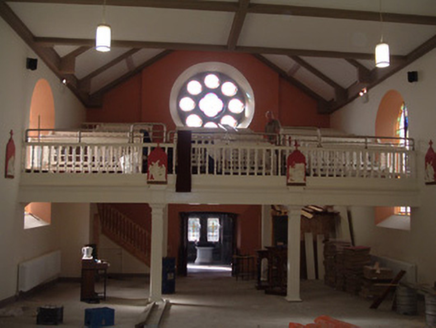
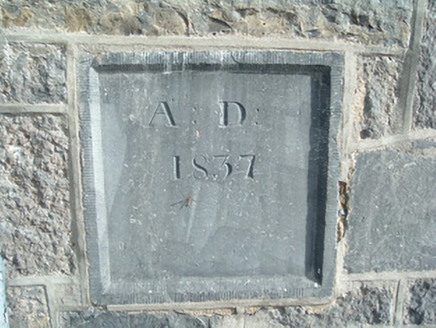
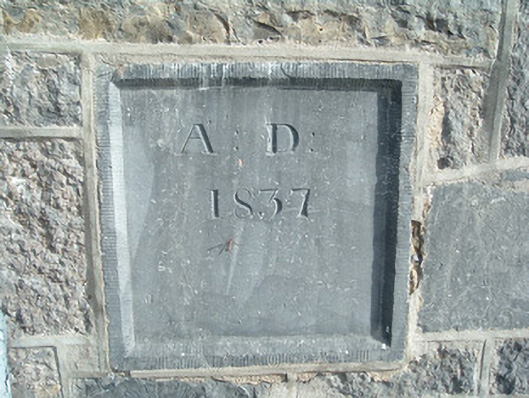
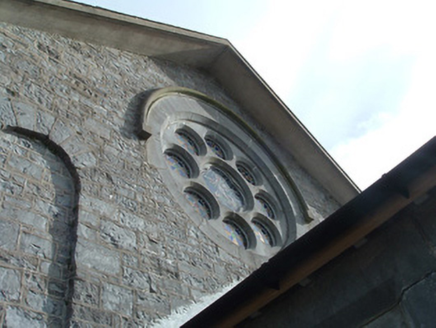
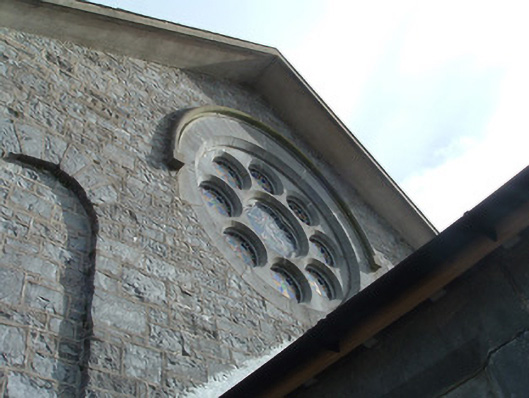
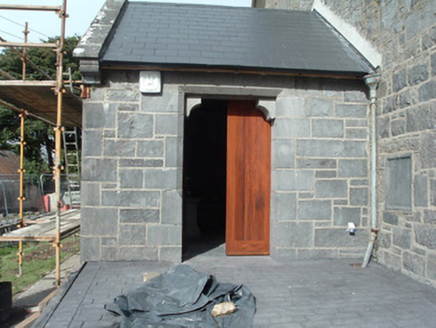
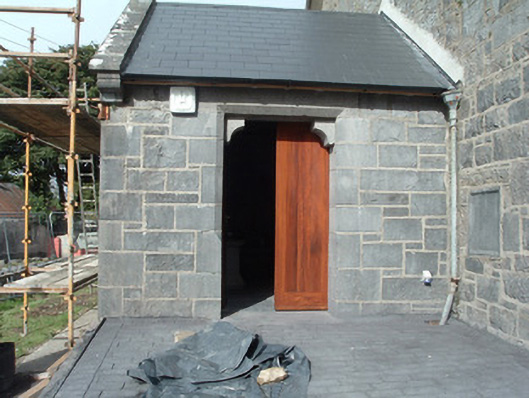
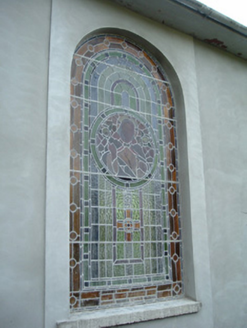
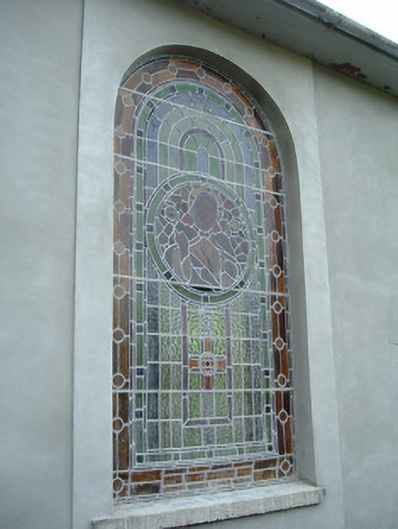
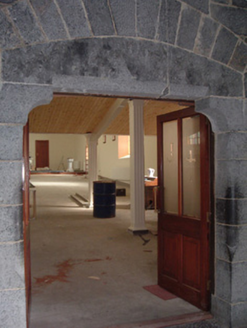
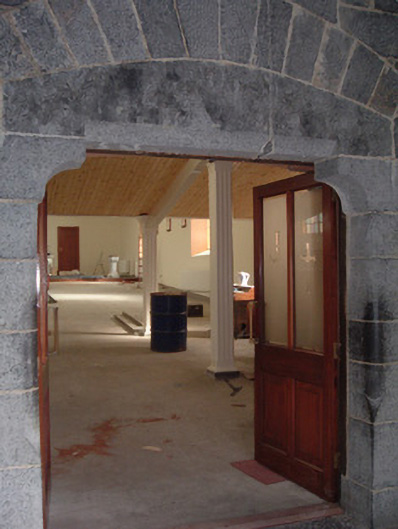
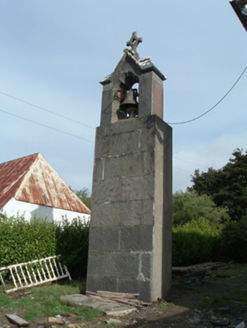
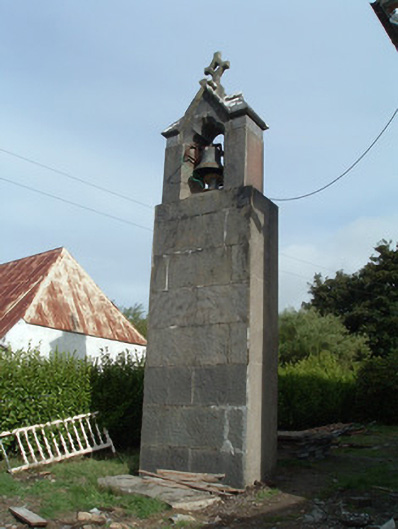
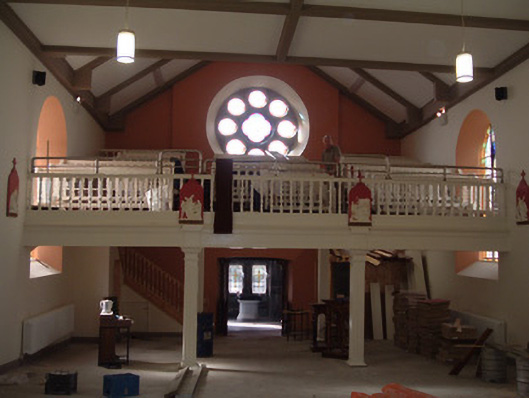
Freestanding gable-fronted Roman Catholic church, dated 1837, facing south, and having porch added 1898 to front and sacristy extension to rear. Pitched artificial slate roof having replacement rendered projecting eaves and cast-iron rainwater goods. Coursed lightly dressed limestone rubble walls to gable-front and snecked cut limestone to porch, with tooled limestone quoins. Limestone date plaque to gable-front. Replacement render to other walls. Rose window to upper part of gable-front, with limestone ashlar surround, limestone hood-moulding and circular stained-glass lights, flanked at lower level by round-headed blind openings. Round-headed windows to long walls having stained-glass windows. Oculus window to porch having stained glass, with double-light square-headed window below. Shouldered door opening to east side of porch, set into chamfered square-headed opening, with timber battened door. Blocked shouldered door opening to west side. Pitched slate roof extension to rear having square-headed openings with replacement windows and timber door. Shouldered door opening to interior with tooled cut limestone surround with chamfering and having limestone lintel and relieving arch above. Marble altar to interior. Painted timber railings to gallery, supported on painted square-plan fluted columns. Limestone ashlar bellstand having trefoil arch openwork bell opening with limestone cross finial, to south-east of building. Priests' graves to site having some ornate grave markers. Painted roughcast rendered boundary walls terminating in square-plan piers having wrought-iron gate.
Appraisal
A well-maintained church which is still in regular use and retains some of its original materials including tooled limestone quoins and window surrounds, stained-glass windows and cast-iron rainwater goods. The stones for this church are likely to have been quarried in the nearby Meelin Quarry, and the nearby limekiln was in all likelihood used to prepare lime for render. The building is a testament to the quality of local craftsmen and materials.