Survey Data
Reg No
15704534
Rating
Regional
Categories of Special Interest
Architectural, Technical
Original Use
Engine house
Date
1840 - 1850
Coordinates
285173, 112243
Date Recorded
06/09/2007
Date Updated
--/--/--
Description
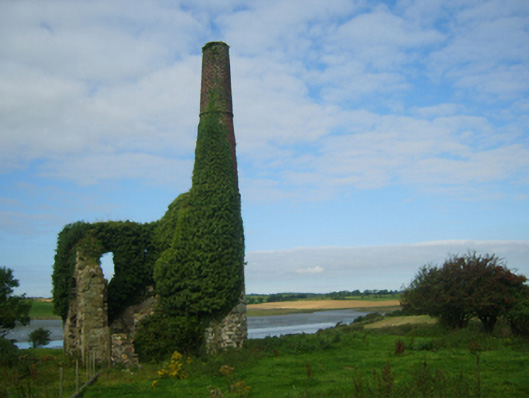
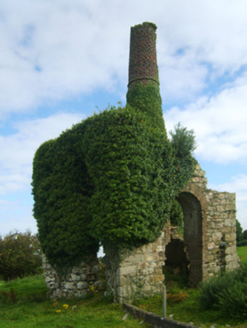
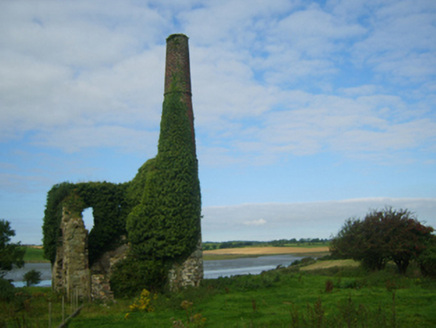
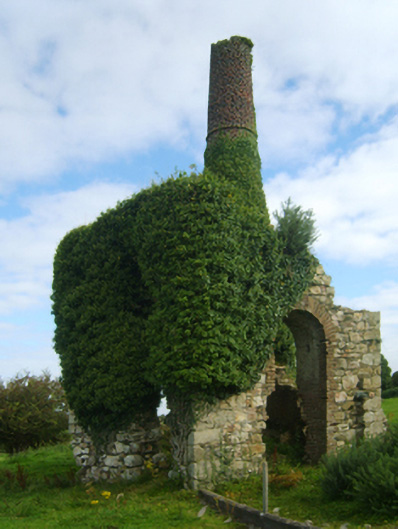
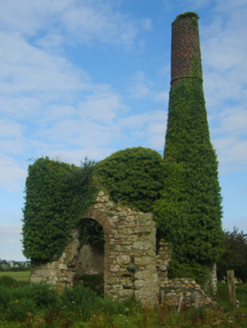
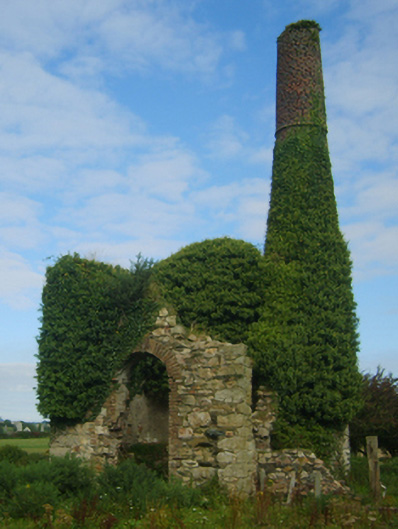
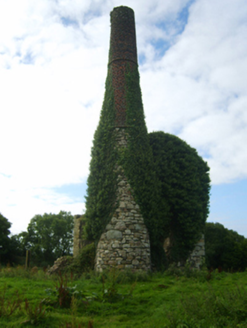
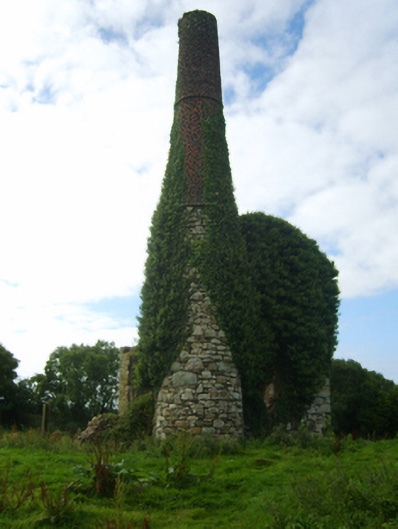
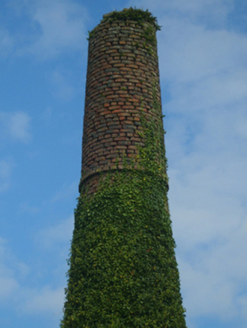
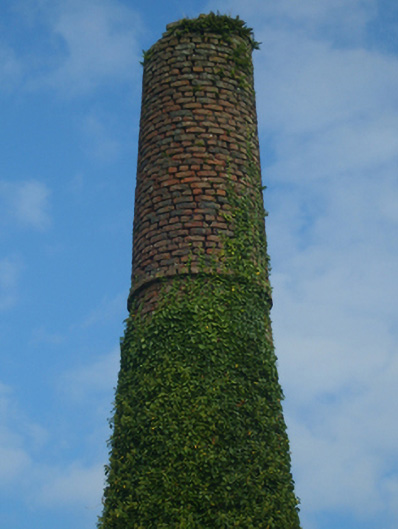
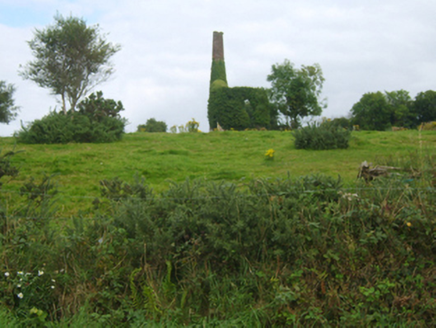
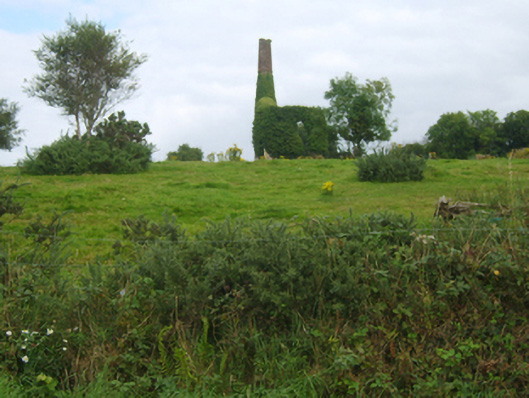
Silver mines complex, recommissioned 1845, including: Freestanding single-bay single-storey engine house on a square plan. Decommissioned 1851. Recommissioned, 1913. Disused, 1922. Now in ruins. Roof now missing. Part creeper- or ivy-covered coursed rubble stone walls with rough hewn rubble limestone flush quoins to corners; part creeper- or ivy-covered red brick English Garden Wall bond chimney stack (north-east) on a circular plan on coursed rubble stone base with remains of red brick header bond corbelled stepped capping. Round-headed opening (south) with red brick block-and-start surround. Interior in ruins. Set in unkempt grounds on a slightly elevated site.
Appraisal
The ivy-enveloped shell of a Cornish-type engine house representing an important component of the nineteenth-century industrial heritage of south County Wexford. NOTE: The site knew at least four documented periods of unprofitable industrial activity with the first attempt at extraction (1551-3) by a team of Dutch miners under the direction of Captain Joachim Gundelfinger [SMR WX045-055----]; the second attempt (1804-12) when 'an ancient working of a mine on the banks of the river Barrow near Barrastown [sic] was renewed by [George Ogle MP (1742-1814)] on whose property [the] workings appeared [but which] did not turn out to any profit' (Fraser 1807, 13); the third attempt (1845-50) by the Barrystown Mining Company (established 1845) of London; and the final attempt (1913) by Edward Armstrong "Pasha" Johnson (1846-1932) of Ballynapierce House (cf. 15702552).