Survey Data
Reg No
15702716
Rating
Regional
Categories of Special Interest
Architectural
Original Use
Farm house
Date
1842 - 1903
Coordinates
309298, 139374
Date Recorded
08/01/2008
Date Updated
--/--/--
Description
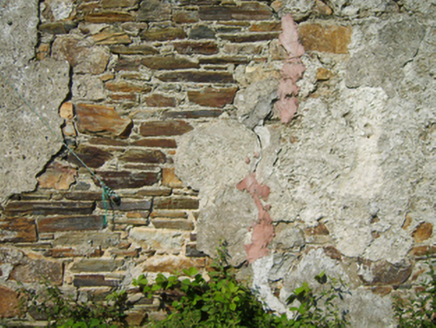
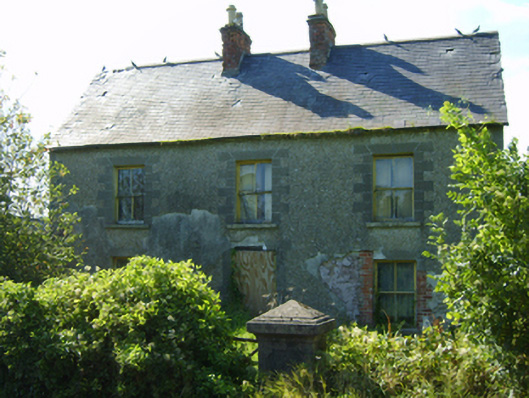
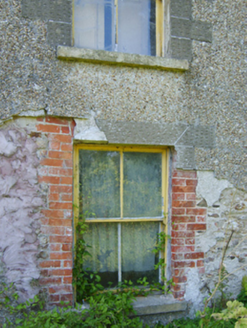
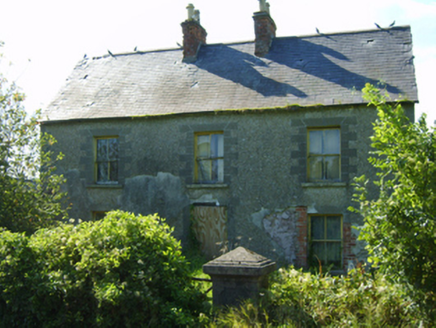
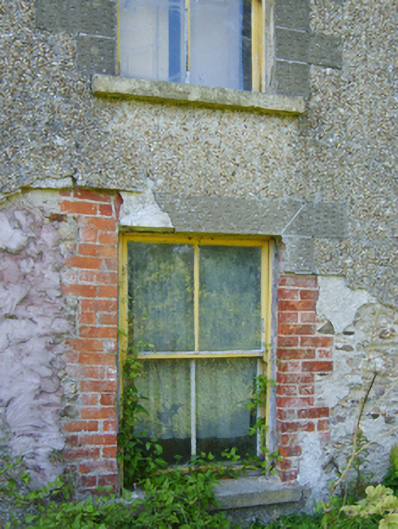
Detached three-bay two-storey farmhouse, extant 1903, on a rectangular plan. Now disused. Pitched slate roof on timber construction with clay ridge tiles centred on paired red brick Running bond chimney stacks having chamfered stringcourses below capping supporting yellow terracotta tapered pots, and remains of cast-iron rainwater goods on rendered red brick header bond eaves. Gritdashed roughcast walls on overgrown plinth with "sparrow pecked" rendered flush quoins to corners. Square-headed central door opening with overgrown threshold, and "sparrow pecked" rendered block-and-start surround with fittings now boarded up. Square-headed window openings with lichen-spotted cut-granite sills, and "sparrow pecked" rendered block-and-start surrounds framing two-over-two timber sash windows. Interior including (ground floor): central hall retaining timber surrounds to door openings framing timber panelled doors; and timber surrounds to door openings to remainder framing timber panelled doors with timber panelled shutters to window openings. Set back from line of road in overgrown grounds with roughcast-panelled rendered piers to perimeter having pyramidal capping supporting flat iron gate.
Appraisal
A farmhouse representing an integral component of the later nineteenth-century domestic built heritage of County Wexford with the architectural value of the composition, one refronting an earlier house marked on the first edition of the Ordnance Survey (surveyed 1840; published 1841), suggested by such attributes as the compact rectilinear plan form centred on a restrained doorcase; the uniform or near-uniform proportions of the openings on each floor with those openings showing mildly eccentric "sparrow pecked" dressings; and the high pitched roofline. A prolonged period of unoccupancy notwithstanding, the elementary form and massing survive intact together with substantial quantities of the original fabric, both to the exterior and to the interior, thus upholding much of the character or integrity of a farmhouse making a pleasing, if increasingly forlorn visual statement in a rural street scene.