Survey Data
Reg No
15702626
Rating
Regional
Categories of Special Interest
Architectural, Artistic, Historical, Social
Original Use
Farm house
In Use As
Farm house
Date
1816 - 1837
Coordinates
298288, 135359
Date Recorded
17/08/2007
Date Updated
--/--/--
Description
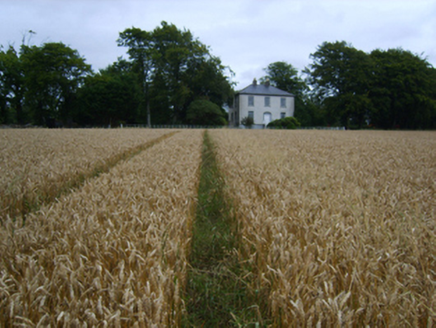
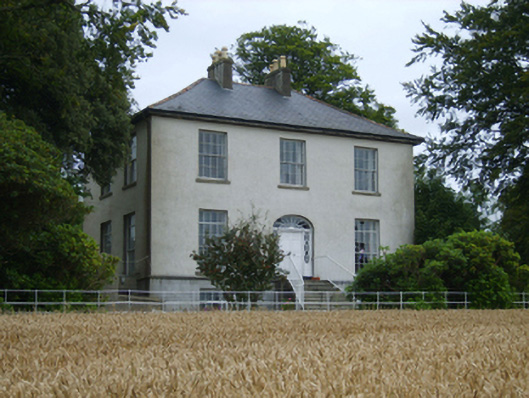
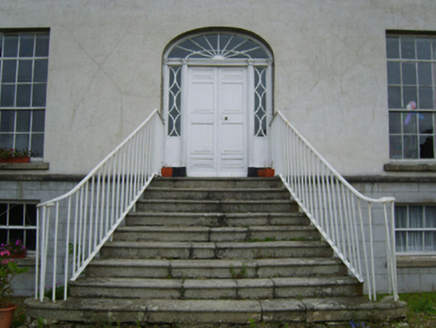
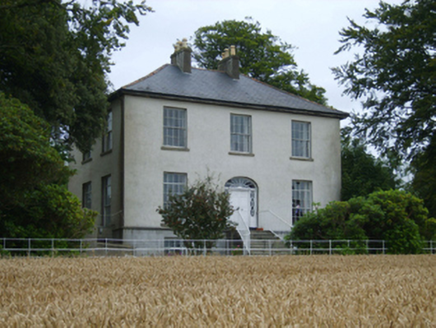
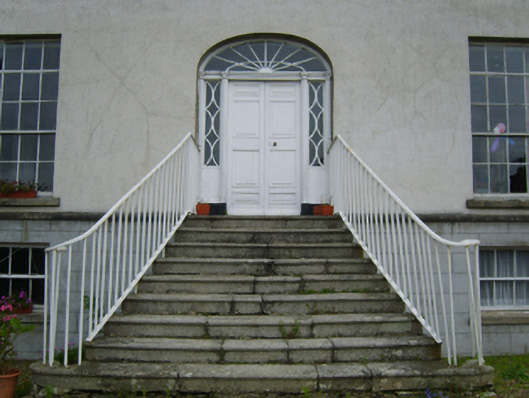
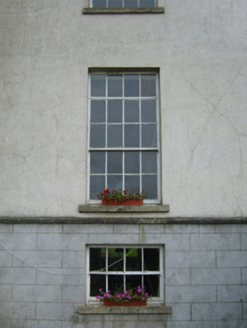
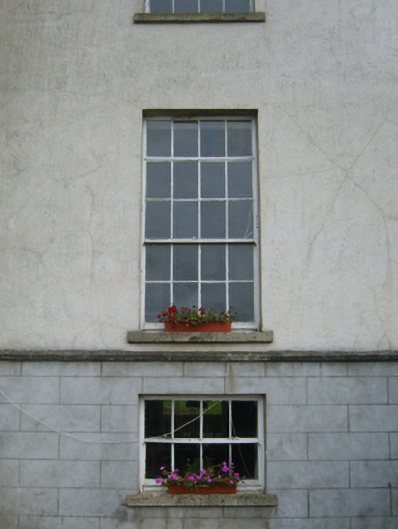
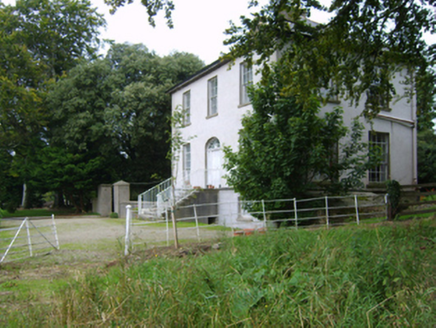
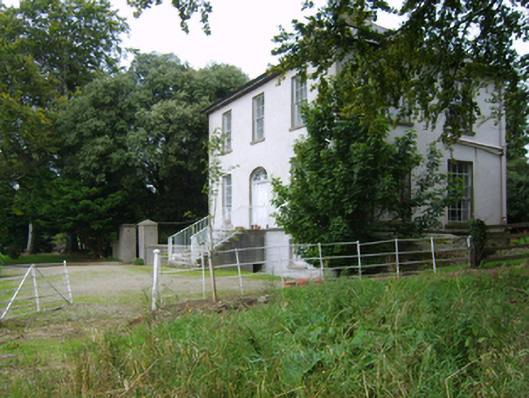
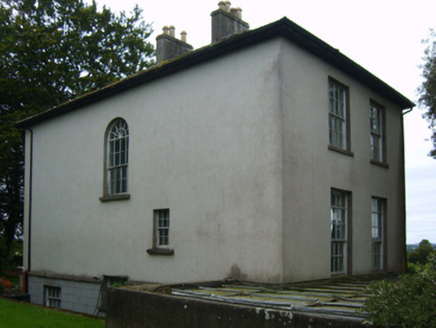
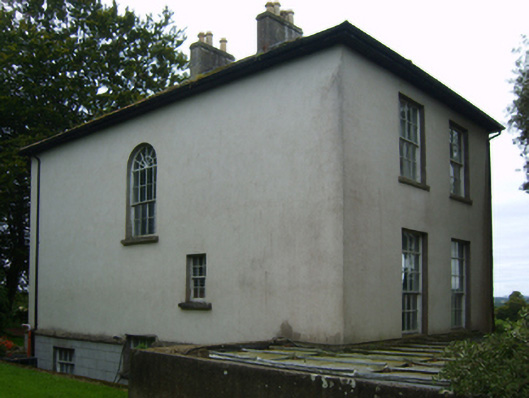
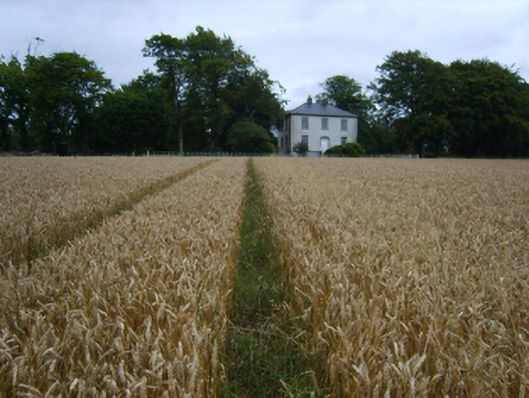
Detached three-bay two-storey over part raised basement farmhouse, extant 1837, on a rectangular plan with two-bay two-storey side elevations; three-bay full-height rear (east) elevation. Occupied, 1901; 1911. Renovated, ----. Hipped slate roof with terracotta ridge tiles, paired rendered central chimney stacks having stepped capping supporting yellow terracotta tapered pots, and replacement uPVC rainwater goods on slightly overhanging slate flagged eaves. Replacement cement rendered walls on cut-granite chamfered cushion course on cement rendered, ruled and lined base. Segmental-headed central door opening approached by flight of nine cut-granite steps between wrought iron railings, timber doorcase with reeded engaged colonettes supporting shallow cornice, and concealed dressings framing timber panelled double doors having sidelights below fanlight. Square-headed window openings (basement) with cut-granite sills, and concealed dressings framing four-over-four timber sash windows. Square-headed window openings (ground floor) with cut-granite sills, and concealed dressings framing eight-over-eight timber sash windows having overlights. Square-headed window openings (first floor) with cut-granite sills, and concealed dressings framing eight-over-eight timber sash windows. Round-headed central window opening to rear (east) elevation with cut-granite sill, and concealed dressings framing eight-over-eight timber sash window having fanlight. Interior including (ground floor): central hall retaining carved timber surrounds to door openings framing timber panelled doors, and plasterwork cornice to ceiling; and carved timber surrounds to door openings to remainder framing timber panelled doors with timber panelled shutters to window openings. Set in landscaped grounds on a slightly elevated site with wrought iron "estate railings" to forecourt.
Appraisal
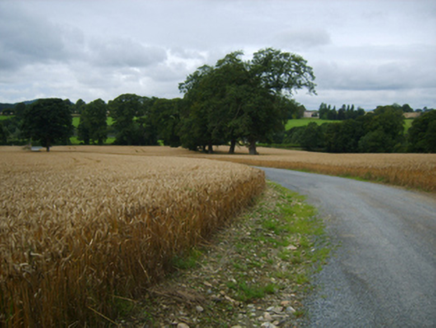
A farmhouse representing an important component of the early nineteenth-century domestic built heritage of County Wexford with the architectural value of the composition, one erected on a site 'lease[d] on the 27th of May 1816 by which John Staunton Rochfort demised certain lands in the county of Wexford to Michael Emerson…for three lives or thirty-one years' (Irish Equity Reports of Cases Argued and Determined in the High Court of Chancery VI 1844, 224), confirmed by such attributes as the deliberate alignment maximising on scenic vistas overlooking the River Slaney with its mountainous backdrop in the distance; the compact rectilinear plan form centred on a Classically-detailed doorcase not only demonstrating good quality workmanship, but also showing a simple radial fanlight; the definition of the principal floor as a slightly elevated "piano nobile"; and the diminishing in scale of the openings on each floor producing a graduated visual impression with the principal "apartments" or reception rooms further defined by so-called "Wexford Window" sash-and-overlight glazing patterns. Having been well maintained, the elementary form and massing survive intact together with substantial quantities of the original fabric, both to the exterior and to the interior where contemporary joinery; restrained chimneypieces; and plasterwork refinements, all highlight the artistic potential of a farmhouse having historic connections with John Jervis Emerson (Lewis 1837 I, 595); Captain John Thomas Beatty (1821-77) of Wood View, Foulkesmill (Lacy 1863, 475); a succession of tenants of Sir John Talbot Power (1845-1901) of neighbouring Edermine House (NA 1901); and Patrick Doyle (----), 'Farmer' (NA 1911).