Survey Data
Reg No
15702536
Rating
Regional
Categories of Special Interest
Architectural, Artistic, Historical, Social
Original Use
Farm house
In Use As
Farm house
Date
1700 - 1798
Coordinates
288865, 135013
Date Recorded
21/08/2007
Date Updated
--/--/--
Description
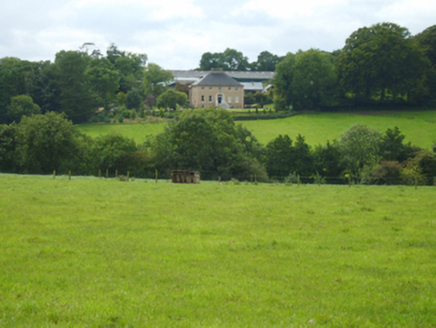
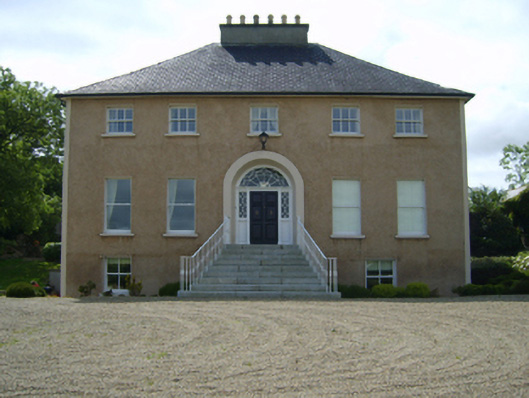
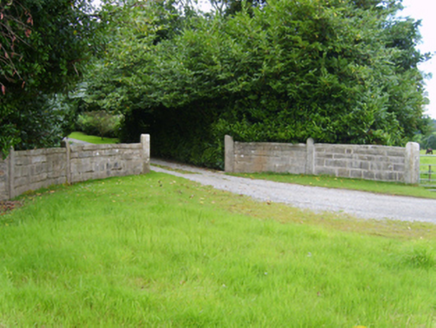
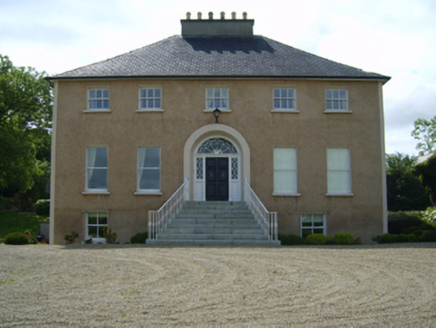
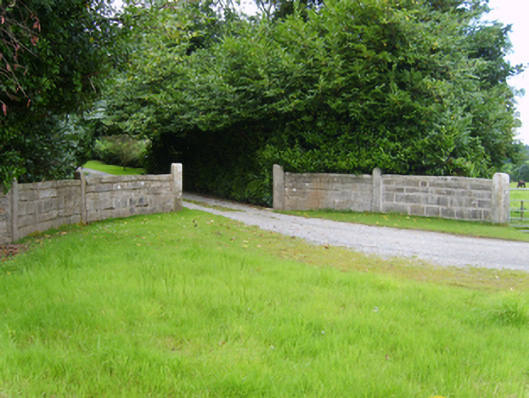
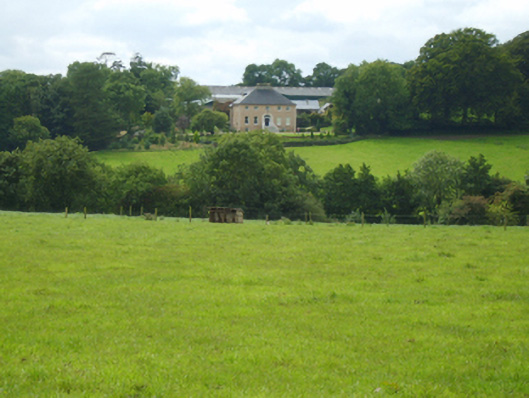
Detached three- or five-bay two-storey over part raised basement farmhouse, extant 1798, on a T-shaped plan with two-bay full-height side elevations; single-bay (single-bay deep) two-storey central return (south). Leased, 1806. Sold, 1876. Occupied, 1911. Sold, 1933. Resold, 1997. "Restored", 1998. Replacement hipped artificial slate roof on a T-shaped plan centred on hipped artificial slate roof (south) with ridge tiles, rendered chimney stack on axis with ridge having cut-granite capping supporting yellow terracotta pots, and uPVC rainwater goods on timber eaves boards on box eaves. Replacement pigmented roughcast walls with rendered "bas-relief" strips to corners. Segmental-headed central door opening approached by flight of nine cut-granite steps between cast-iron railings, timber doorcase with panelled pilasters on padstones supporting cornice, and rendered "bas-relief" surround framing timber panelled double doors having sidelights on panelled risers below fanlight. Square-headed window openings with cut-granite sills, and concealed dressings framing replacement two-over-two (basement), one-over-one (ground floor) or three-over-three (first floor) timber sash windows. Interior including (ground floor): central hall retaining carved timber surrounds to door openings framing timber panelled doors; and carved timber surrounds to door openings to remainder framing timber panelled doors with timber panelled shutters to window openings. Set in landscaped grounds on an elevated site with cut-granite monolithic piers to perimeter supporting looped wrought iron double gates.
Appraisal
A farmhouse representing an important component of the domestic built heritage of County Wexford with the architectural value of the composition confirmed by such attributes as the deliberate alignment maximising on panoramic vistas overlooking rolling grounds and the Boro River; the compact plan form centred on a Classically-detailed doorcase not only demonstrating good quality workmanship, but also showing a pretty fanlight; the definition of the principal floor as a slightly elevated "piano nobile"; the diminishing in scale of the openings on each floor producing a graduated visual impression; and the high pitched roofline. Having been sympathetically "restored" following a period of neglect in the later twentieth century, the elementary form and massing survive intact together with substantial quantities of the original or replicated fabric, both to the exterior and to the interior, thus upholding the character or integrity of the composition. Furthermore, adjacent outbuildings (extant 1840); and a walled garden (extant 1840), all continue to contribute positively to the group and setting values of a self-contained ensemble having historic connections with the Fitzhenry family including Colonel Jeremiah Fitzhenry (1742-1815), a rebel leader during the 1798 Insurrection and later an officer in Napoleon's army (Lewis 1837 I, 322); a succession of tenants including Reverend James Bentley Gordon (1750-1819), co-author of "History of the Rebellion in Ireland in the year 1798" (1803) and planter of the adjacent Ballymackesy Wood; and the Casson family including Mark J. Casson (1857/8-1933), 'Farmer' (NA 1911).