Survey Data
Reg No
15702525
Rating
Regional
Categories of Special Interest
Architectural, Artistic, Historical, Scientific, Social
Original Use
Farm house
Date
1785 - 1795
Coordinates
287318, 135288
Date Recorded
21/08/2007
Date Updated
--/--/--
Description
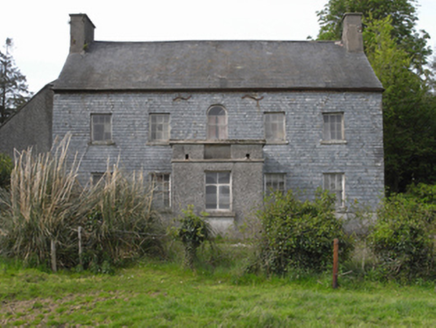
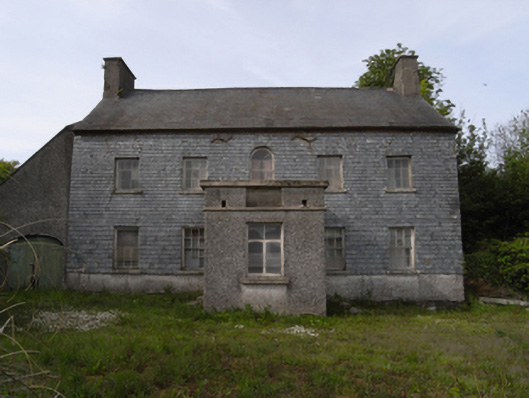
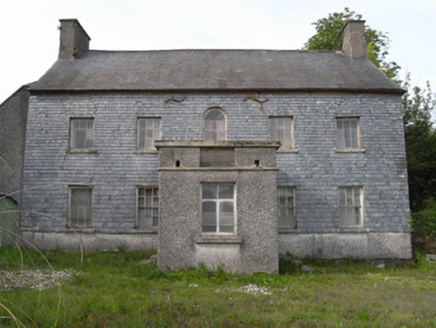
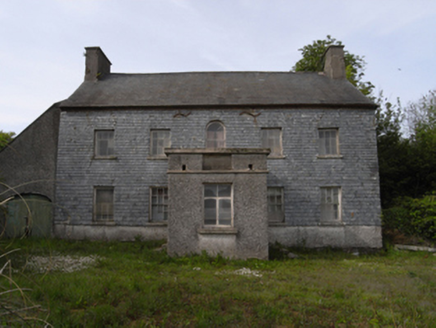
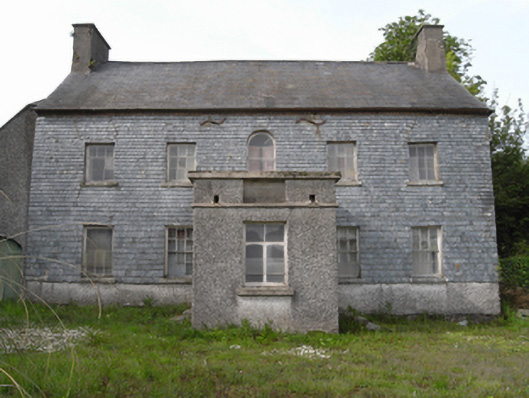
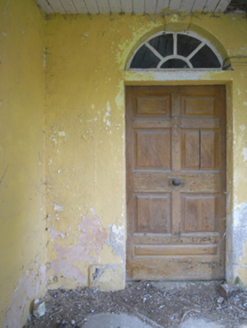
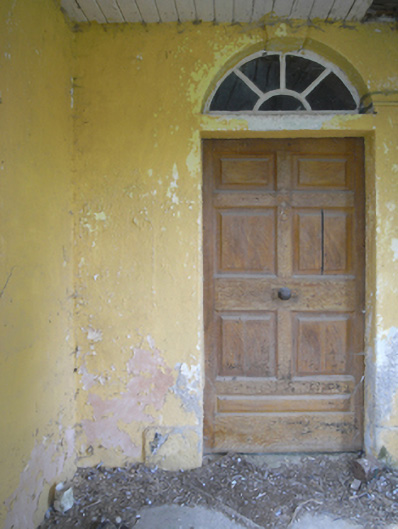
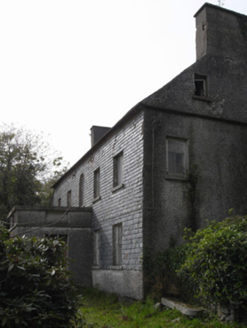
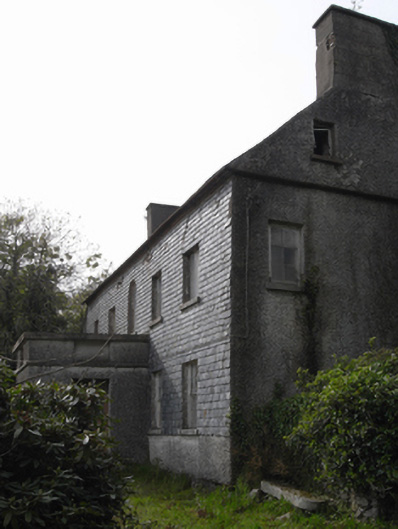
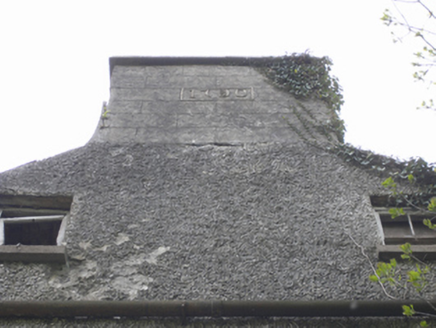
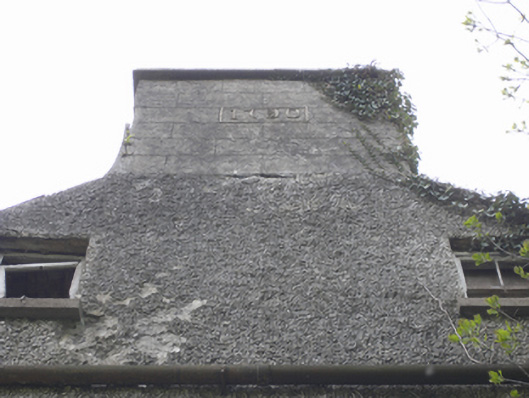
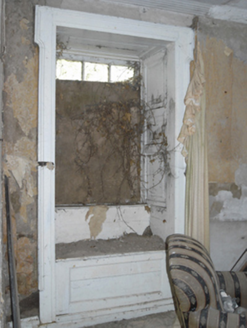
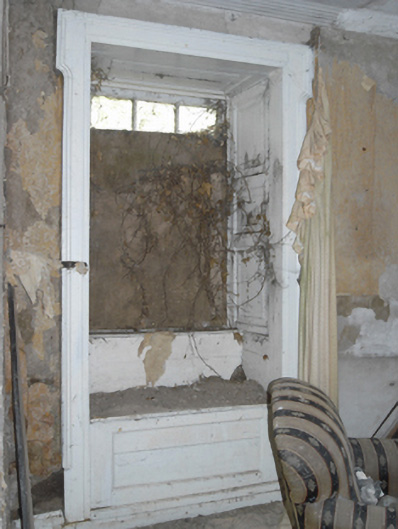
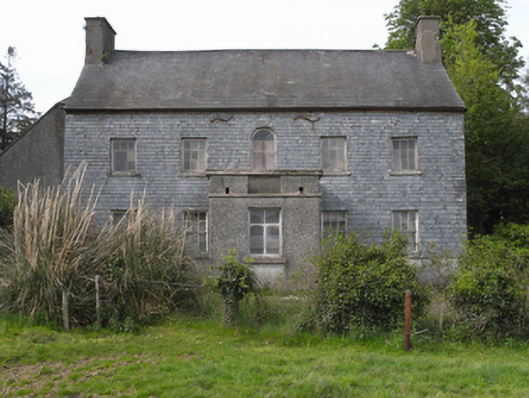
Detached three-bay two-storey farmhouse with dormer attic, dated 1790, on a cruciform plan centred on single-bay single-storey flat-roofed projecting porch to ground floor; single-bay (two-bay deep) two-storey lower central return (north). Occupied, 1901; 1911. Now disused. Pitched slate roof on a T-shaped plan centred on pitched corrugated-iron roof (north), clay ridge tiles, date stone-embossed ("1790") rendered, ruled and lined red brick Running bond chimney stacks having lichen-covered cut-granite shallow capping, concrete or rendered coping to gable (north) with rendered, ruled and lined red brick Running bond chimney stack to apex having cut-granite shallow capping, and cast-iron rainwater goods on red brick header bond stepped eaves retaining cast-iron downpipes. Slate hung wall to front (south) elevation on roughcast base with flat iron serpentine tie bars; roughcast surface finish (remainder). Segmental-headed central door opening into farmhouse with concealed dressings centred on cut-granite keystone framing timber panelled door having fanlight. Square-headed window openings centred on round-headed window opening (first floor) with cut-granite sills, and concealed dressings framing six-over-six (ground floor) or three-over-six (first floor) timber sash windows without horns centred on three-over-six timber sash window having fanlight. Paired square-headed window openings (gables) with cut-granite sills, and concealed dressings framing two-over-two timber sash windows having part exposed sash boxes. Interior including (ground floor): central hall retaining carved timber surrounds to door openings framing timber panelled doors, staircase on a dog leg plan with timber balusters supporting timber banister terminating in turned timber newels, and carved timber surrounds to door openings to landing framing timber panelled doors; dining room (south-west) retaining carved timber surround to door opening framing timber panelled door with timber panelled shutters to window openings, chimneypiece now missing, and plaster ceiling on timber batons; drawing room (south-east) retaining carved timber lugged surround to door opening framing timber panelled door with carved timber lugged surrounds to window openings framing timber panelled shutters on panelled risers, chimneypiece now missing with hearth centred on fluted keystone, and run moulded plasterwork cornice to ceiling; and carved timber surrounds to door openings to remainder framing timber panelled doors with carved timber surrounds to window openings framing timber panelled shutters. Set in unkempt grounds with benchmark-inscribed cut-granite monolithic piers to perimeter supporting flat iron double gates.
Appraisal
A farmhouse representing an important component of the late eighteenth-century domestic built heritage of Cloghbaun with the architectural value of the composition, one erected by Walter Greene (----) on a site leased (1788) from Robert Shapland Carew (1752-1829) of Castleboro House (Longfield 1946, 3), confirmed by such attributes as the compact plan form centred on a restrained doorcase showing a simple radial fanlight, albeit one largely concealed behind a later porch; the diminishing in scale of the openings on each floor producing a graduated visual impression; and the high pitched roof. A prolonged period of unoccupancy notwithstanding, the elementary form and massing survive intact together with substantial quantities of the original fabric, both to the exterior and to the interior including not only crown or cylinder glazing panels in hornless sash frames, but also a slate hung surface finish widely regarded as an increasingly endangered hallmark of the architectural heritage of County Wexford: meanwhile, contemporary joinery; restrained chimneypieces; and sleek plasterwork refinements, all highlight the modest artistic potential of the composition. Furthermore, adjacent outbuildings (extant 1840) continue to contribute positively to the group and setting values of a self-contained ensemble having historic connections with the Greene family including Samuel Greene (d. 1887), 'Gentleman Farmer late of Collagh [sic] County Wexford' (Calendars of Wills and Administrations 1888, 277); and the Nolan family including Michael Nolan (----), 'Farmer' (NA 1901); and Luke Nolan (----), 'Farmer' (NA 1911).