Survey Data
Reg No
15702301
Rating
Regional
Categories of Special Interest
Architectural, Artistic, Historical, Social
Original Use
Farm house
In Use As
Farm house
Date
1875 - 1880
Coordinates
274113, 134233
Date Recorded
22/08/2007
Date Updated
--/--/--
Description
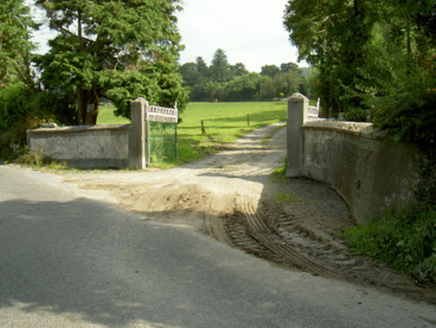
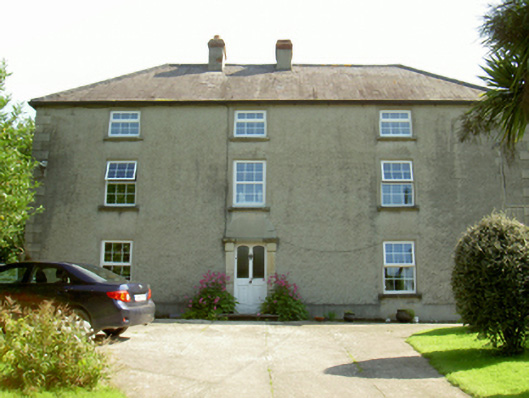
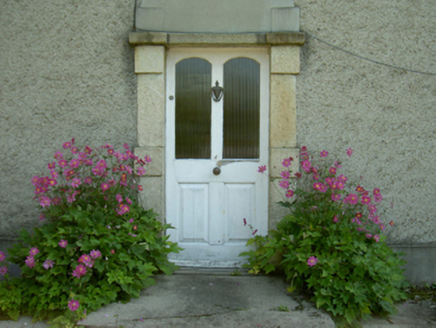
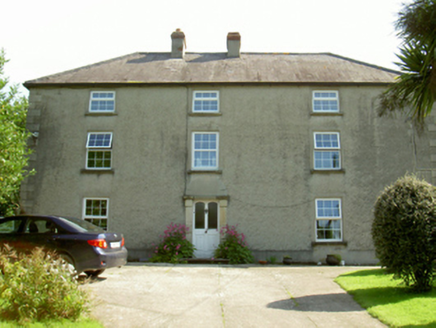
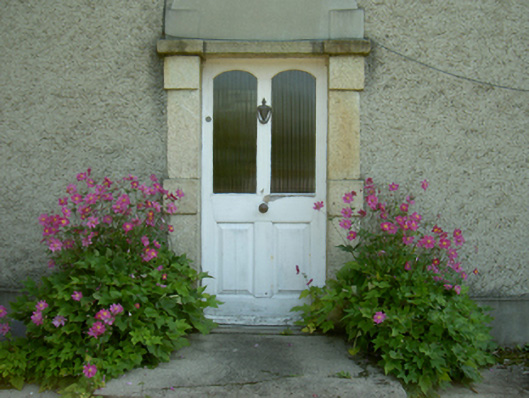
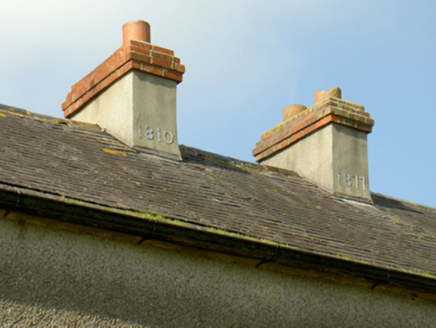
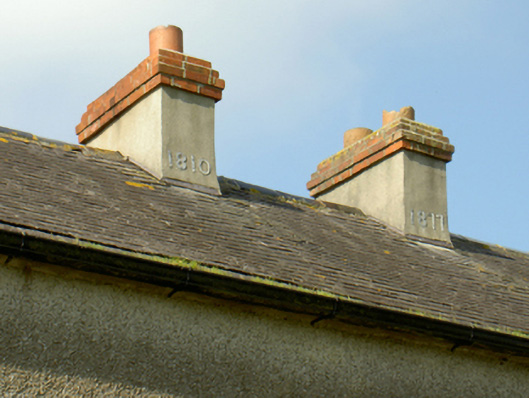
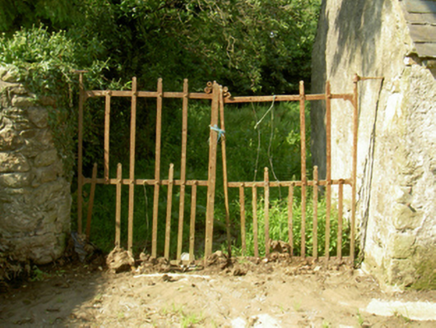
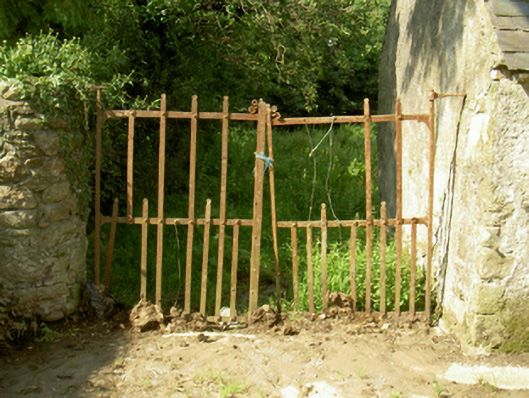
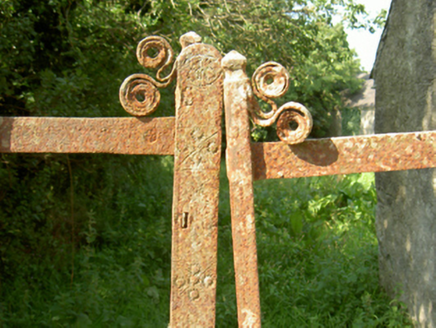
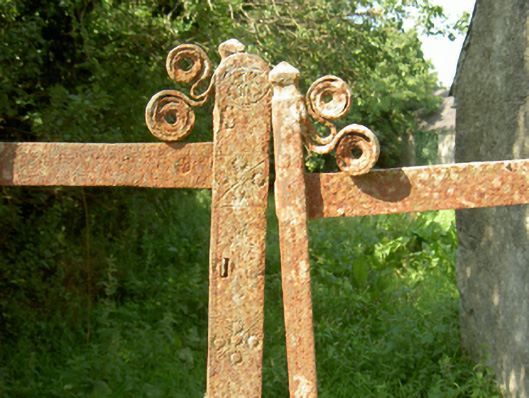
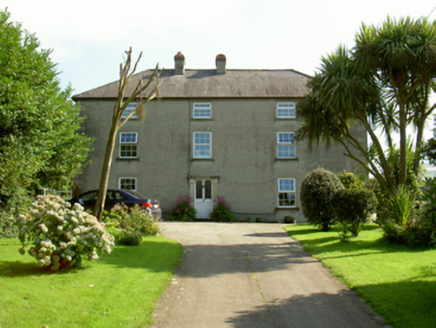
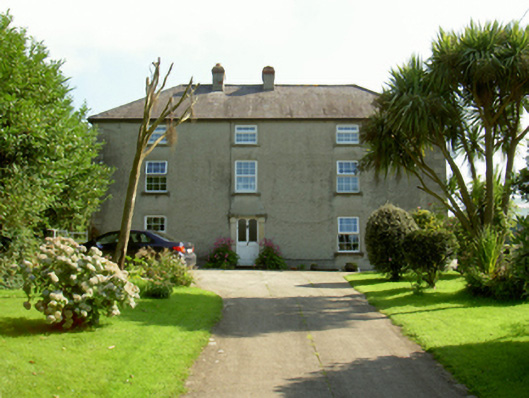
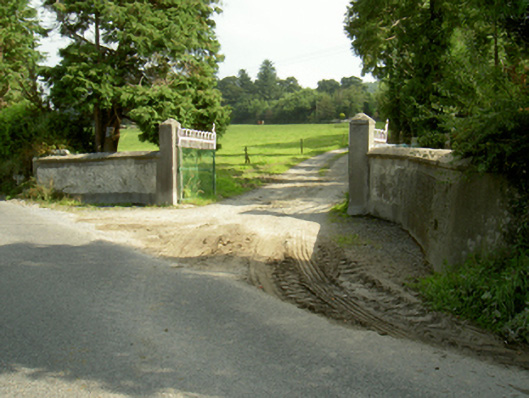
Detached three-bay two-storey farmhouse with half-dormer attic, rebuilt 1877, on a rectangular plan with single-bay (north) or two-bay (south) full-height side elevations. Occupied, 1911. Refenestrated, ----. Hipped slate roof with clay ridge tiles, date stone-detailed paired rendered red brick Running bond central chimney stacks ("1810"; "1877") having corbelled stepped capping supporting terracotta pots, and replacement uPVC rainwater goods on rendered slate flagged eaves. Roughcast battered walls on rendered plinth with rusticated rendered quoins to corners. Square-headed central door opening originally round-headed with concrete step threshold, and cut-granite block-and-start surround framing glazed timber panelled door. Square-headed window openings with cut-granite sills, and rendered "bas-relief" surrounds framing replacement uPVC casement windows replacing six-over-six or three-over-three (half-dormer attic) timber sash windows. Set in landscaped grounds with rendered piers to perimeter having pyramidal capping supporting looped flat iron double gates.
Appraisal
A farmhouse representing an integral component of the domestic built heritage of County Wexford with the architectural value of the composition, one succeeding an earlier house (1810) displaying an alternative footprint on the first edition of the Ordnance Survey (surveyed 1840; published 1841), suggested by such attributes as the deliberate alignment maximising on scenic vistas overlooking rolling grounds with the meandering River Barrow in the near distance; the compact rectilinear plan form centred on a simplified Gibbsian doorcase demonstrating good quality workmanship in a honey-coloured granite; and the somewhat disproportionate bias of solid to void in the massing compounded by the diminishing in scale of the openings on each floor producing a graduated visual impression. Having been well maintained, the elementary form and massing survive intact together with substantial quantities of the original fabric, both to the exterior and to the interior: the introduction of replacement fittings to most of the openings, however, has not had a beneficial impact on the character or integrity of the composition. Furthermore, adjacent outbuildings (extant 1840) continue to contribute positively to the group and setting values of a self-contained ensemble having long-standing connections with the Kavanagh family (NA 1901; NA 1911).