Survey Data
Reg No
15702138
Rating
Regional
Categories of Special Interest
Architectural, Artistic, Historical, Social
Original Use
Farm house
In Use As
Farm house
Date
1700 - 1705
Coordinates
312444, 141774
Date Recorded
14/08/2007
Date Updated
--/--/--
Description
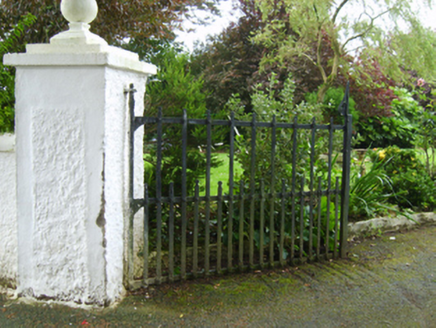
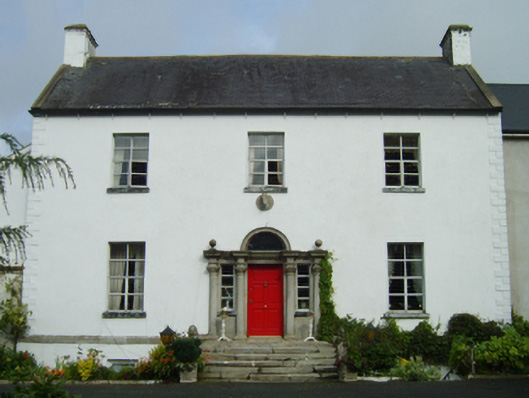
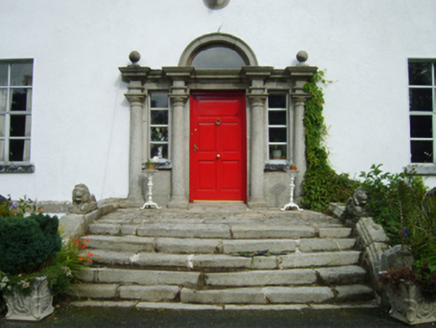
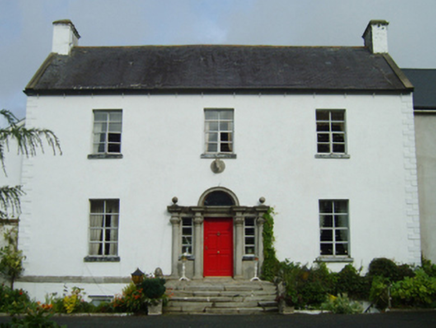
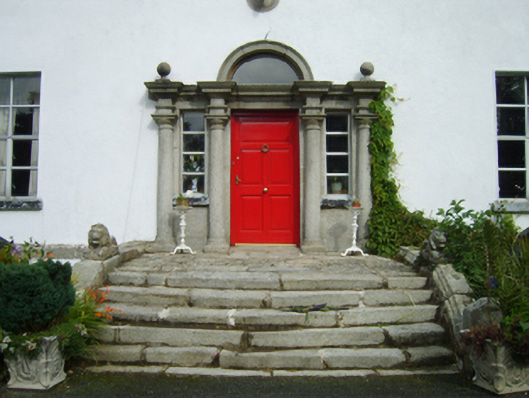
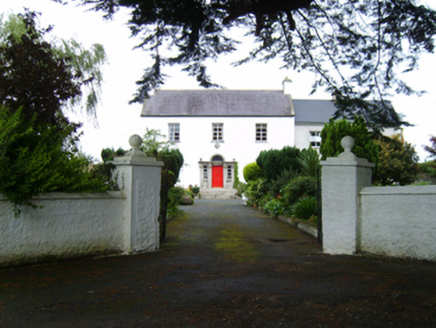
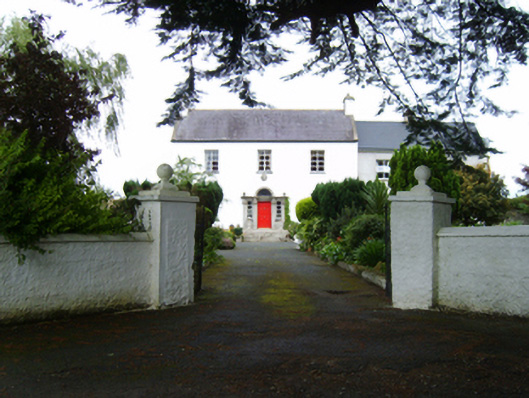
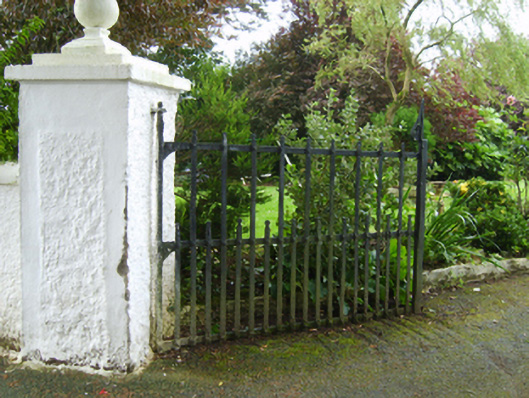
Detached three-bay two-storey part double-pile over part raised basement farmhouse, built 1702; extant 1777, on an L-shaped plan originally three-bay two-storey double-pile. Burnt, 1798. Vacant, 1837. Truncated, pre-1903, producing present composition. Occupied, 1911. Sold, 1939. Renovated, ----. Pitched part double-pile (M-profile) slate roof with clay ridge tiles, concrete or rendered coping to gables with rendered red brick Running bond chimney stacks to apexes having stringcourses below capping supporting terracotta pots, rooflights to rear (west) pitch, and replacement uPVC rainwater goods on rendered slate flagged eaves retaining cast-iron octagonal or ogee hoppers and downpipes. Rendered walls on cut-granite chamfered cushion course on rendered base with rusticated rendered quoins to ends; part creeper- or ivy-covered roughcast surface finish to rear (west) elevation. "Venetian Door" approached by flight of six cut-granite steps, cut-granite doorcase with engaged columns on padstones supporting ball finial-topped "Cyma Recta" or "Cyma Reversa" cornice on blind frieze on broken entablature, and concealed dressings framing replacement timber panelled door having overlight with fixed-pane sidelights. Square-headed window openings with cut-granite sills, and concealed red brick block-and-start surrounds framing replacement aluminium casement windows. Set in landscaped grounds with roughcast diagonal piers to perimeter having ball finial-topped stepped capping supporting flat iron double gates.
Appraisal
A farmhouse representing an integral component of the domestic built heritage of County Wexford with the architectural value of the composition, one annotated as "Ballynahone [of] Reverend Mr. Tottenham" by Taylor and Skinner (1778 pl. 144), confirmed by such attributes as the deliberate alignment maximising on scenic vistas overlooking rolling grounds; the compact plan form centred on an elegant doorcase demonstrating good quality workmanship in a silver-grey granite; and the diminishing in scale of the openings on each floor producing a graduated visual impression. Having been reasonably well maintained, the elementary form and massing survive intact together with quantities of the original fabric, both to the exterior and to the interior: the introduction of replacement fittings to most of the openings, however, has not had a beneficial impact on the character or integrity of a farmhouse having historic connections with Edward Howlin D'Arcy (d. 1798), a casualty of the 1798 Insurrection; and the Malone family including George Malone Senior (d. 1882), 'Farmer late of Ballinhoun [sic] Oulart County Wexford' (Calendars of Wills and Administrations 1888, 423); and George Malone Junior (----), 'Farmer' (NA 1911).