Survey Data
Reg No
15702107
Rating
Regional
Categories of Special Interest
Architectural, Artistic, Historical, Social
Original Use
Rectory/glebe/vicarage/curate's house
In Use As
House
Date
1800 - 1805
Coordinates
307315, 143285
Date Recorded
14/08/2007
Date Updated
--/--/--
Description
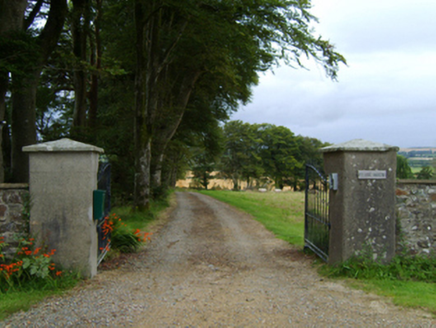
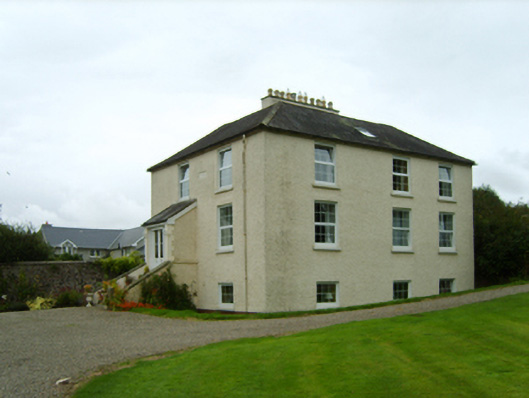
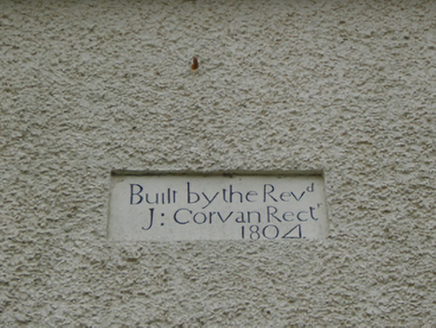
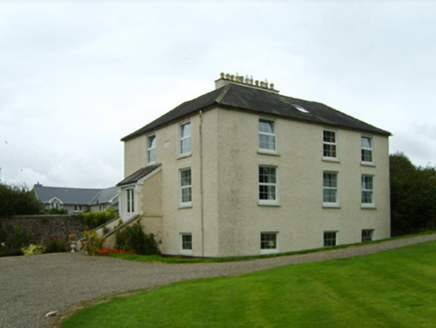
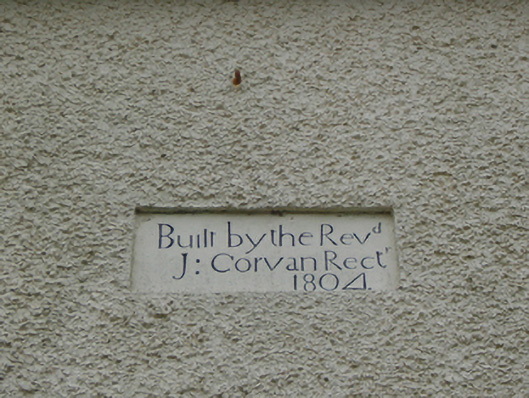
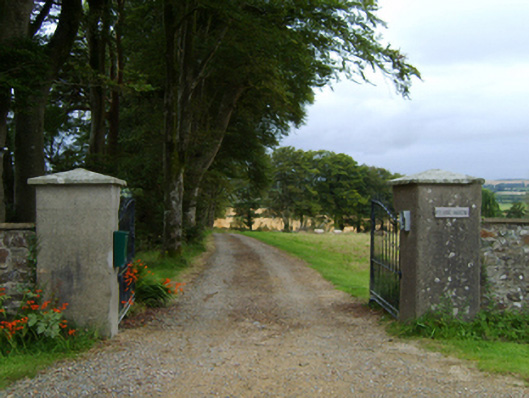
Detached two-bay two-storey over part raised basement Board of First Fruits Church of Ireland church, dated 1804, on a rectangular plan with three-bay full-height side elevations; two-bay full-height rear (east) elevation. In private residential use, 1901. Sold, 1933. Resold, 1982. Refenestrated, ----. Hipped slate roof on a quadrangular plan with lichen-covered clay ridge tiles, rendered central chimney stack having shallow capping supporting terracotta or yellow terracotta tapered pots, rooflights, and cast-iron rainwater goods on slate or stone flagged eaves retaining cast-iron downpipes. Roughcast walls centred on cut-limestone date stone ("1804"). Square-headed window openings with cut-granite sills, and concealed dressings framing replacement uPVC casement windows replacing three-over-three (basement) or six-over-six timber sash windows. Set in landscaped grounds with rendered, ruled and lined piers to perimeter having cut-granite shallow pyramidal capping supporting wrought iron double gates.
Appraisal
A glebe house erected with financial support (1815) from the Board of First Fruits (fl. 1711-1833) representing an integral component of the early nineteenth-century built heritage of County Wexford with the architectural value of the composition, one evoking favourable comparisons with the contemporary Bantry Glebe House (1806), County Cork; and the later Castletownarra Glebe House (1820), County Tipperary, suggested by such attributes as the deliberate alignment maximising on panoramic vistas overlooking rolling grounds; the compact rectilinear plan form; the definition of the principal floor as a slightly elevated "piano nobile"; and the very slight diminishing in scale of the openings on each floor producing a feint graduated visual impression. Having been well maintained, the elementary form and massing survive intact together with quantities of the original fabric, both to the exterior and to the interior: the introduction of replacement fittings to the openings, however, has not had a beneficial impact on the character or integrity of the composition. Furthermore, adjacent outbuildings (extant 1840); and a substantial walled garden (extant 1903), all continue to contribute positively to the group and setting values of a self-contained ensemble having historic connections with the Kilcormick parish Church of Ireland clergy including Reverend Perceval Banks Weldon Junior (d. 1873), 'Clerk late of Kilcormack [sic] Rectory County Wexford' (Calendars of Wills and Administrations 1873, 662); and Reverend Edward Feinaigle Lawler (d. 1896), 'Clerk late of Kilcormack [sic] Glebe County Wexford' (Calendars of Wills and Administrations 1896, 232); and ensuing members of the Lawler family including Joseph Edward Lawler (d. 1903) and Lucy Catherine Lawler (d. 1910), 'late of Bochurst [sic] Kilcormack [sic] Ferns County Wexford' (Calendars of Wills and Administrations 1910, 339).