

Survey Data
Reg No
15702005
Rating
Regional
Categories of Special Interest
Architectural, Artistic, Historical, Social
Original Use
Farm house
In Use As
Farm house
Date
1700 - 1777
Coordinates
299234, 143443
Date Recorded
13/08/2007
Date Updated
--/--/--
Description
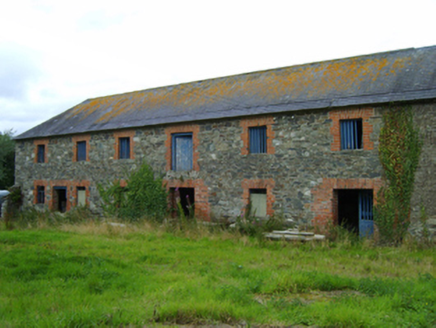
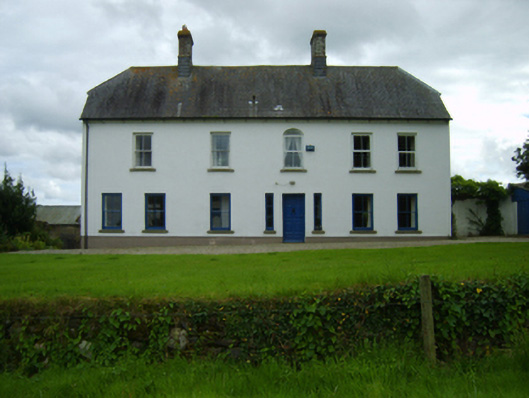
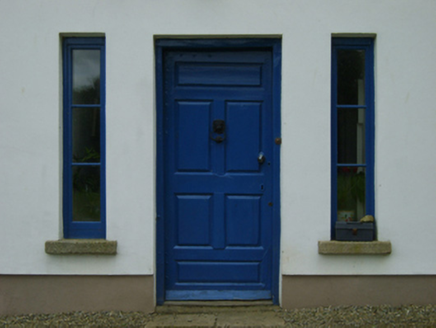
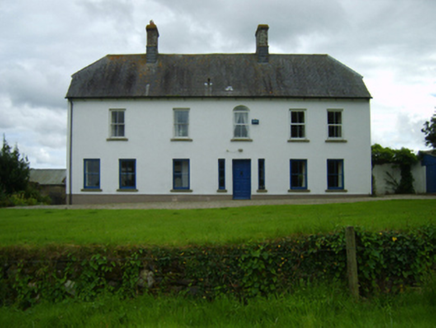
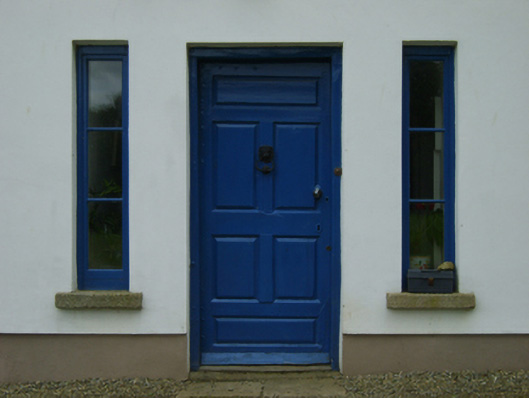
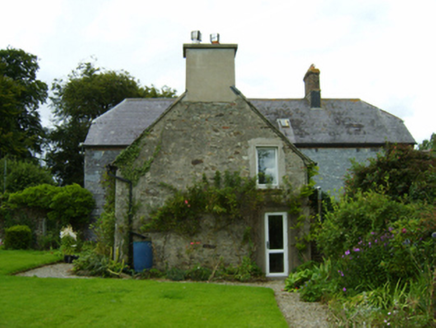
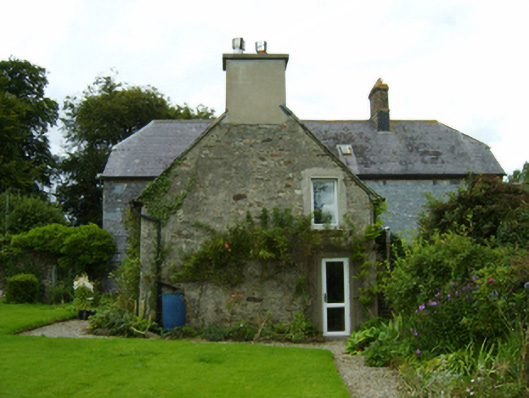
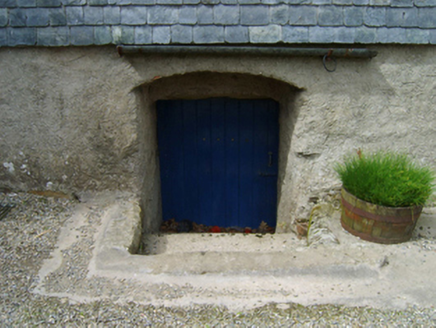
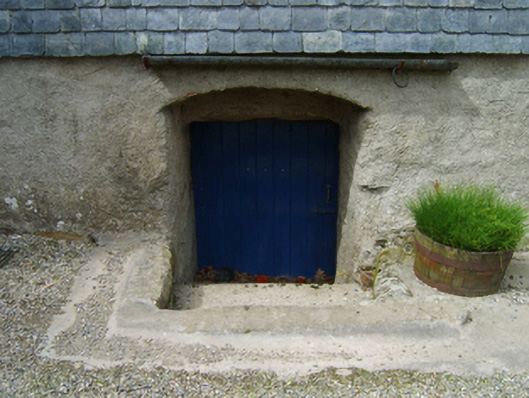
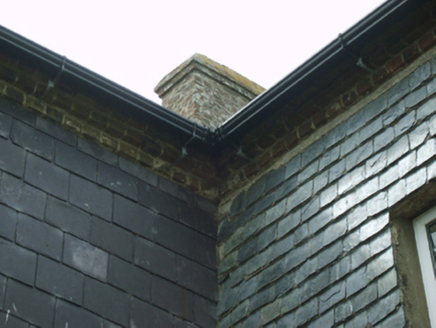
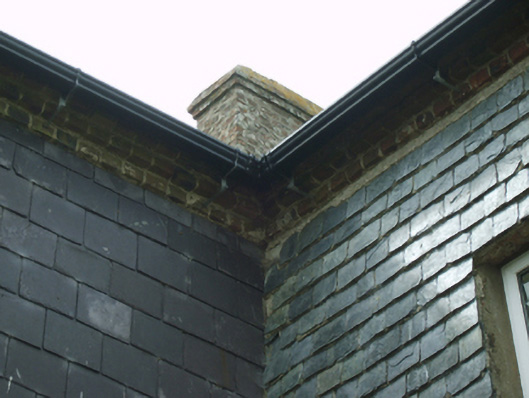
Detached five-bay two-storey over basement farmhouse with dormer attic, extant 1777, originally three-bay two-storey on a T-shaped plan with single-bay (single-bay deep) full-height central return (south). Occupied, 1901. Sold, 1902. Occupied, 1911. Sold, 1948. Renovated, ----. Hipped gabled slate roof on a T-shaped plan centred on pitched slate roof (south) with clay ridge tiles, red brick Running bond chimney stacks on cut-granite chamfered cushion courses on slate hung bases having corbelled stepped capping supporting terracotta pots, rooflight to rear (south) pitch, and replacement uPVC rainwater goods on rendered red brick header bond stepped eaves. Replacement cement rendered battered walls bellcast over rendered plinth; slate hung surface finish (south). Square-headed door opening with threshold, and concealed dressings framing nailed timber panelled door. Square-headed flanking window openings with cut-granite sills, and concealed dressings framing timber casement windows. Segmental-headed window opening (first floor) with cut-gramnite sill, and concealed dressings framing replacement uPVC casement window having overlight. Square-headed window openings with cut-granite sills, and concealed dressings framing two-over-two timber sash windows having part exposed sash boxes. Set in landscaped grounds including "haha" with creeper- or ivy-covered wall having overgrown coping.
Appraisal
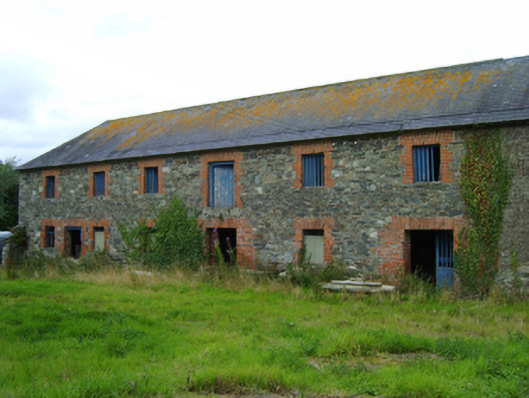
A farmhouse representing an important component of the eighteenth-century domestic built heritage of County Wexford with the architectural value of the composition, one annotated as "Ballynahallen [of] Newton Esquire" by Taylor and Skinner (1778 pl. 154), confirmed by such attributes as the compact plan form centred on a restrained doorcase; the uniform or near-uniform proportions of the openings on each floor; and the high pitched roofline: meanwhile, aspects of the composiotion clearly illustrate the continued linear development of the farmhouse in the nineteenth century. Having been well maintained, the elementary form and massing survive intact together with substantial quantities of the original fabric, both to the exterior and to the interior, including the remains of a slate hung surface finish widely regarded as an increasingly endangered hallmark of the architectural heritage of County Wexford. Furthermore, an adjacent stable outbuilding (1918) continues to contribute positively to the group and setting values of a self-contained ensemble having historic connections with the Brett family including Captain James Brett (c.1751-1835) and Barbara Brett (née De Rinzy) (c.1780-1850).