Survey Data
Reg No
15701905
Rating
Regional
Categories of Special Interest
Architectural, Artistic, Historical, Social
Original Use
Farm house
In Use As
Farm house
Date
1900 - 1905
Coordinates
286630, 141489
Date Recorded
03/10/2007
Date Updated
--/--/--
Description
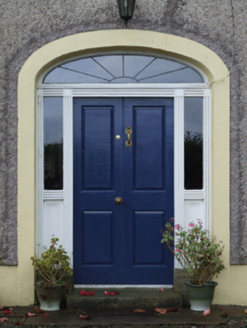
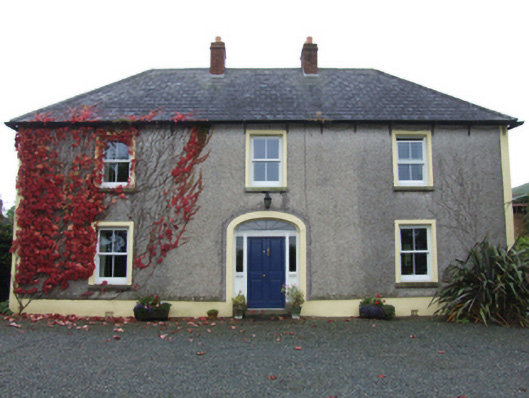
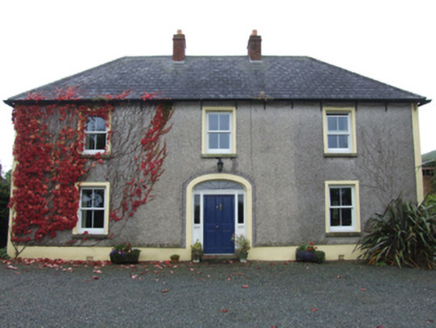
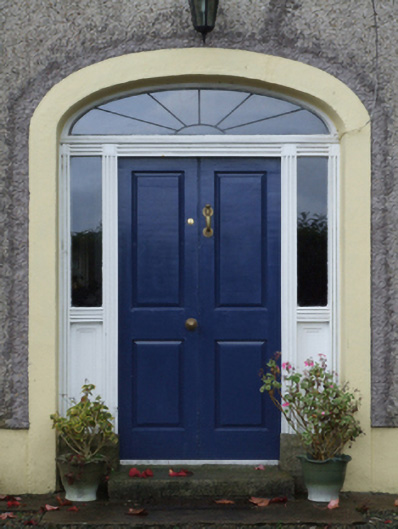
Detached three-bay two-storey farmhouse, built 1901, on a T-shaped plan with single-bay (two-bay deep) two-storey lower central return (south). Occupied, 1911. Renovated, ----. Replacement hipped artificial slate roof on a T-shaped plan centred on pitched artificial slate roof (south) with ridge tiles, paired red brick Running bond central chimney stacks having stringcourses below capping supporting terracotta pots, rooflights (south), and uPVC rainwater goods on roughcast slate flagged eaves. Part creeper- or ivy-covered roughcast walls bellcast over rendered plinth with rendered "bas-relief" strips to corners. Segmental-headed central door opening with cut-granite step threshold, timber doorcase with fluted pilasters supporting shallow cornice on fluted frieze, and rendered "bas-relief" surround framing timber panelled double doors having sidelights on panelled risers below overlight. Square-headed window openings with cut-granite sills, and rendered "bas-relief" surrounds framing replacement two-over-two sash windows. Interior including (ground floor): central hall retaining carved timber surrounds to door openings framing timber panelled doors; and carved timber surrounds to door openings to remainder framing timber panelled doors with timber panelled shutters to window openings. Set back from line of road in landscaped grounds.
Appraisal
A farmhouse erected by James Kenny (----) representing an integral component of the domestic built heritage of the environs of Killann with the architectural value of the composition suggested by such attributes as the compact plan form centred on a restrained doorcase demonstrating good quality workmanship; and the slight diminishing in scale of the openings on each floor producing a feint graduated visual impression. Having been well maintained, the elementary form and massing survive intact together with quantities of the original or replicated fabric, both to the exterior and to the interior, thus upholding much of the character or integrity of the composition. Furthermore, adjacent outbuildings continue to contribute positively to the group and setting values of a self-contained ensemble making a pleasing visual statement in a rural street scene.