Survey Data
Reg No
15701725
Rating
Regional
Categories of Special Interest
Architectural, Historical, Scientific, Social
Original Use
RIC barracks
In Use As
House
Date
1842 - 1901
Coordinates
319765, 146675
Date Recorded
17/08/2007
Date Updated
--/--/--
Description
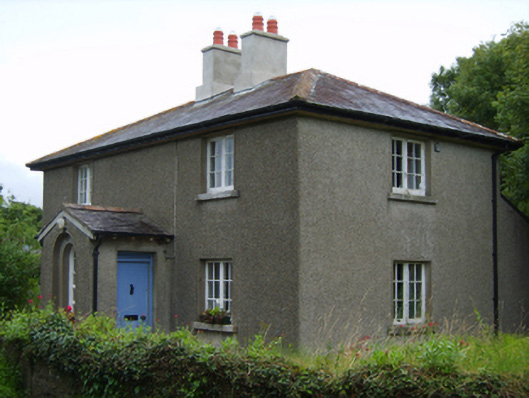
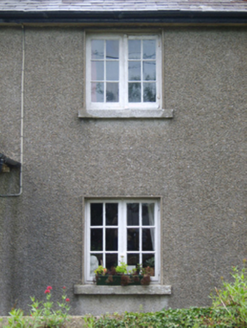
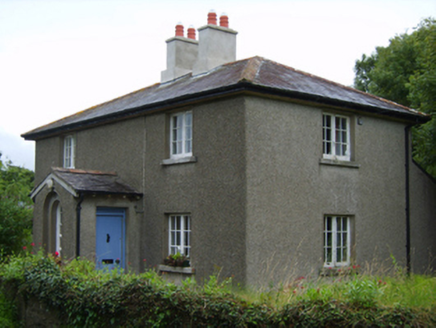
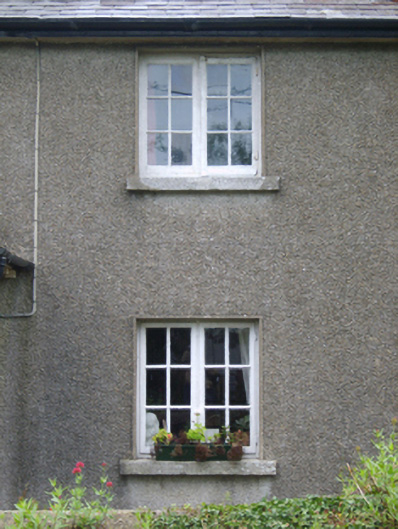
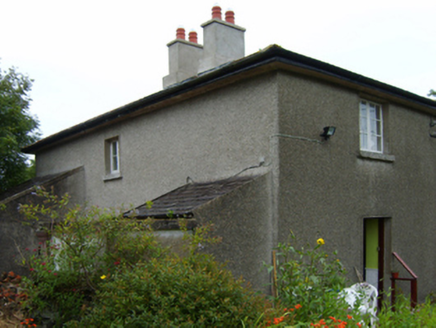
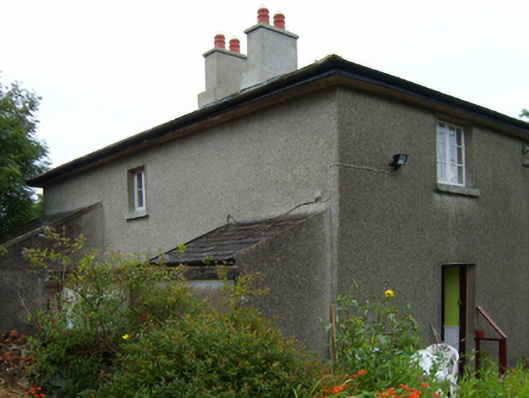
Detached three-bay two-storey constabulary barrack, occupied 1901, on a T-shaped plan centred on single-bay single-storey gabled projecting porch to ground floor; single-bay two-storey side elevations. Occupied, 1911. Attacked, 1920. Vacant, 1921. Hipped slate roof; pitched (gabled) slate roof (porch), lichen-spotted terracotta ridge tiles centred on paired cement rendered chimney stacks on cement rendered bases having concrete capping supporting ribbed terracotta tapered pots, and cast-iron rainwater goods on timber eaves boards on box eaves retaining cast-iron downpipes. Roughcast walls on rendered chamfered plinth. Round-headed central window opening in round-headed recess (porch) with benchmark-inscribed cut-granite sill, and concealed dressings framing fixed-pane timber fitting. Square-headed window openings including square-headed central window opening to rear (west) elevation with cut-granite sills, and concealed dressings framing timber casement windows having square glazing bars. Interior including (ground floor): central hall retaining carved timber surrounds to door openings framing timber boarded doors; room (south) retaining carved timber surrounds to door openings framing timber boarded doors with carved timber surround to window opening framing timber shutters; room (north) retaining carved timber surround to door opening framing timber boarded door with carved timber surrounds to window openings framing timber shutters, and Classical-style chimneypiece; and (first floor): carved timber surrounds to door openings framing timber boarded doors with carved timber surrounds to window openings framing timber boarded splayed reveals. Set back from line of road on a corner site with rendered red brick Running bond piers to perimeter having cut-granite gabled capping supporting wrought iron gate.
Appraisal
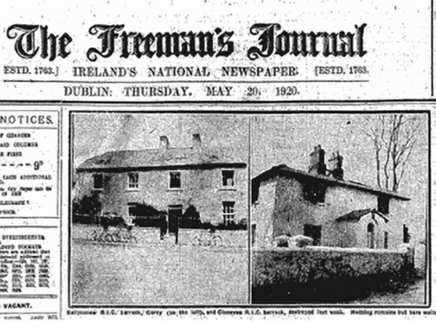
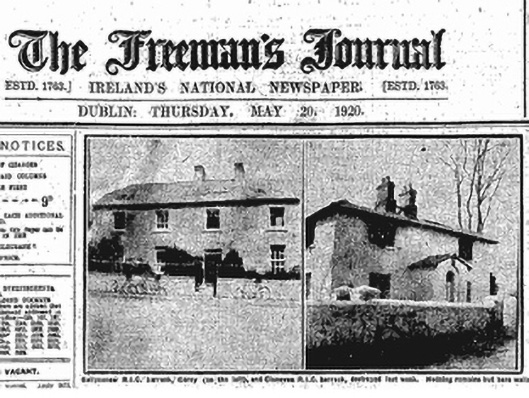
A constabulary barrack representing an integral component of the later nineteenth-century built heritage of County Wexford with the architectural value of the composition suggested by such attributes as the compact rectilinear plan form centred on an expressed porch; and the very slight diminishing in scale of the openings on each floor producing a feint graduated visual impression: meanwhile, aspects of the composition illustrate the partial reconstruction of the constabulary barrack following an attack (1920) during "The Troubles" (1919-23; The Freeman's Journal 20th May 1920, 1). Having been well maintained, the elementary form and massing survive intact together with substantial quantities of the original fabric, both to the exterior and to the interior, thus upholding the character or integrity of a constabulary barrack making a pleasing visual statement in a sylvan setting: meanwhile, a benchmark remains of additional interest for the connections with cartography and the preparation of maps by the Ordnance Survey (established 1824). NOTE: Occupied (1901) by Thomas Conlon (----), 'Sergeant [in] Royal Irish Constabulary' (NA 1901); and (1911) by A. Lineen (----), 'Sergeant [in] Royal Irish Constabulary' (NA 1911).