Survey Data
Reg No
15701710
Rating
Regional
Categories of Special Interest
Architectural, Artistic, Historical, Social
Original Use
Farm house
In Use As
Farm house
Date
1700 - 1839
Coordinates
318007, 147078
Date Recorded
15/08/2007
Date Updated
--/--/--
Description
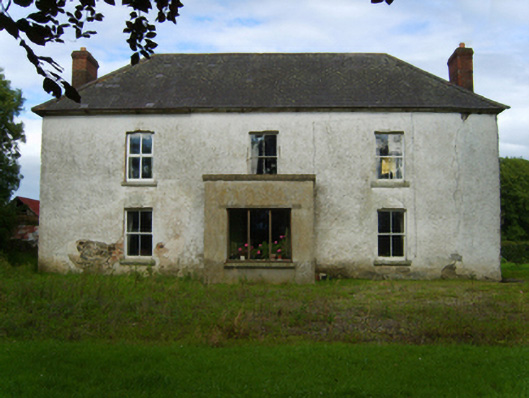
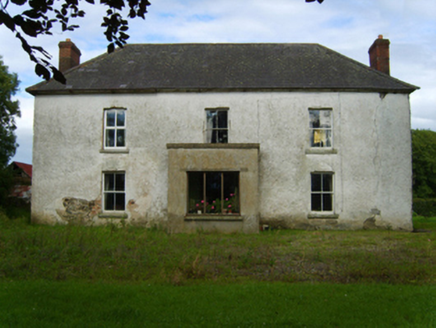
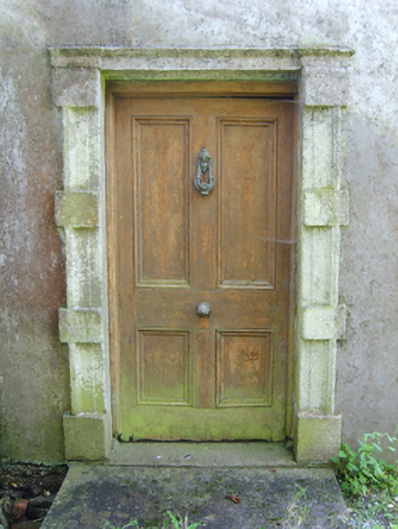
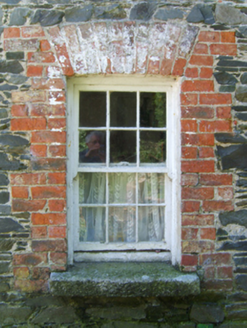
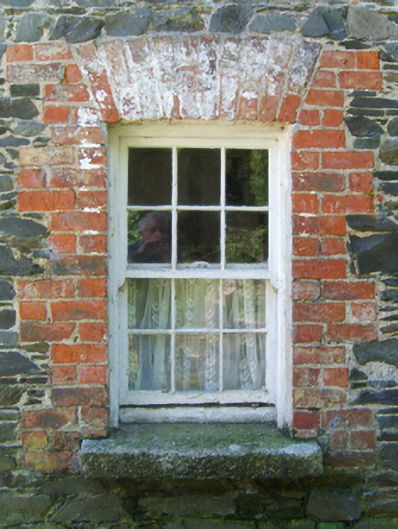
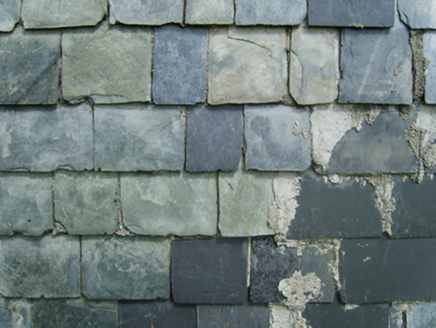
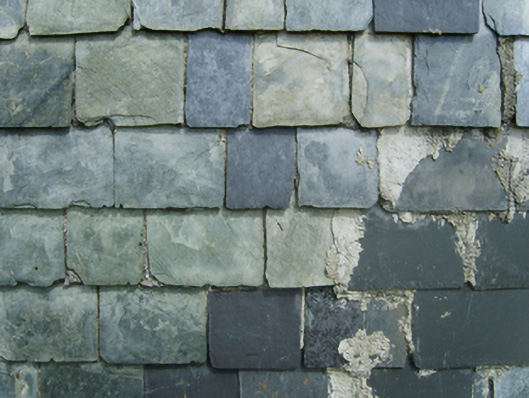
Detached three-bay two-storey farmhouse, extant 1839, on a cruciform plan centred on single-bay single-storey flat-roofed projecting porch to ground floor; single-bay (two-bay deep) or single-bay (single-bay deep) two-storey lower returns centred on single-bay (two-bay deep) full-height return (east). Occupied, 1901. Sold, 1903. Occupied, 1911. Hipped slate roof on an E-shaped plan with pitched slate roofs centred on pitched slate roof (east), clay or terracotta ridge tiles, red brick Running bond chimney stacks having corbelled stepped capping supporting terracotta pots, and remains of cast-iron rainwater goods on slate flagged eaves retaining cast-iron octagonal or ogee hoppers and downpipes. Fine roughcast coursed rubble limestone walls with concealed red brick flush quoins to corners; slate hung surface finish to side (south) elevation. Central door opening into farmhouse. Square-headed window openings to front (west) elevation with cut-granite sills, and concealed dressings framing two-over-two timber sash windows. Square-headed window openings (remainder) with cut-granite sills, and red brick block-and-start surrounds framing six-over-six timber sash windows having part exposed sash boxes. Set in unkempt landscaped grounds.
Appraisal
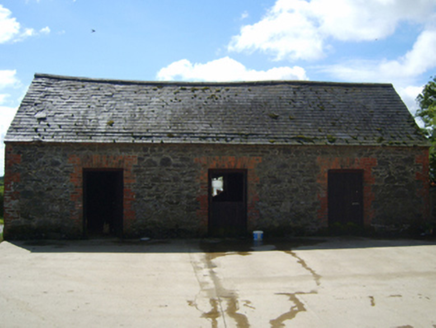
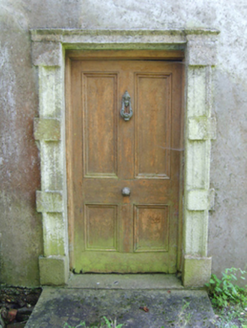
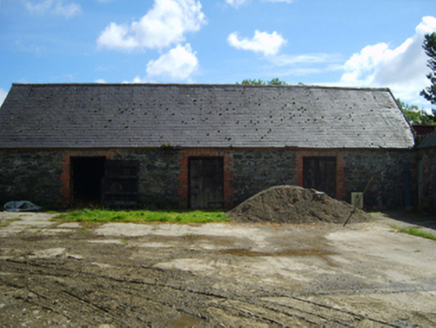
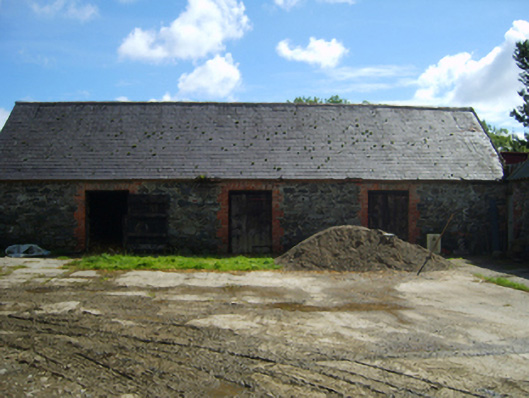
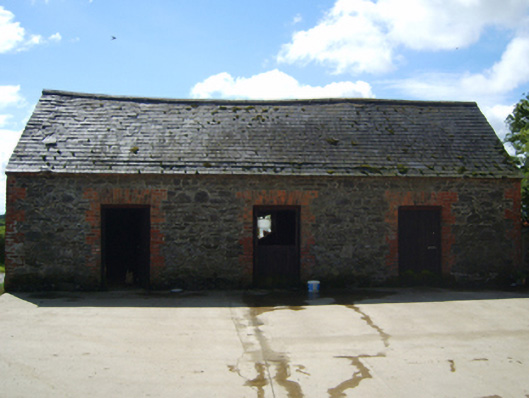
A farmhouse representing an integral component of the domestic built heritage of County Wexford with the architectural value of the composition, one rooted firmly in the contemporary Georgian fashion, confirmed by such attributes as the compact plan form centred on a restrained doorcase, albeit one largely concealed behind a later porch; and the somewhat disproportionate bias of solid to void in the massing compounded by the uniform or near-uniform proportions of the centralised openings on each floor: meanwhile, aspects of the composition clearly illustrate the continued development or "improvement" of the farmhouse in the later nineteenth century. Having been reasonably well maintained, the elementary form and massing survive intact together with substantial quantities of the original fabric, both to the exterior and to the interior, including a partial slate hung surface finish widely regarded as an increasingly endangered hallmark of the architectural heritage of County Wexford: meanwhile, contemporary joinery; restrained chimneypieces; and sleek plasterwork refinements, all highlight the modest artistic potential of the composition. Furthermore, adjacent outbuildings (extant 1940) continue to contribute positively to the group and setting values of a self-contained ensemble having historic connections with the Kearns family including Thomas Kearns (----), 'Farmer' (NA 1901); and the Foxton family including William Foxton (----), 'Farmer' (NA 1911).