

Survey Data
Reg No
15701708
Rating
Regional
Categories of Special Interest
Architectural, Artistic, Historical, Social
Previous Name
Parknashoge House
Original Use
Farmyard complex
In Use As
Farmyard complex
Date
1855 - 1860
Coordinates
317476, 148676
Date Recorded
15/08/2007
Date Updated
--/--/--
Description
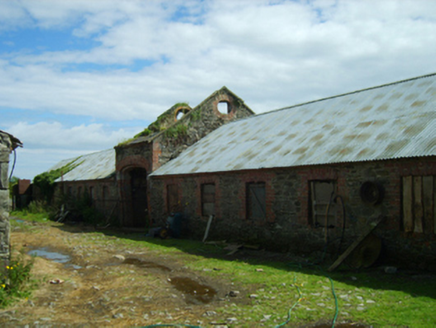
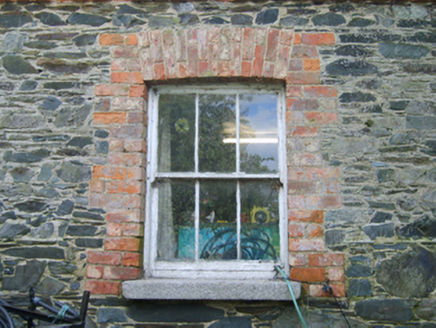
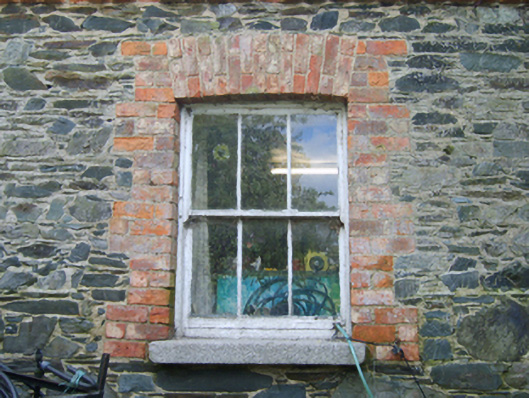
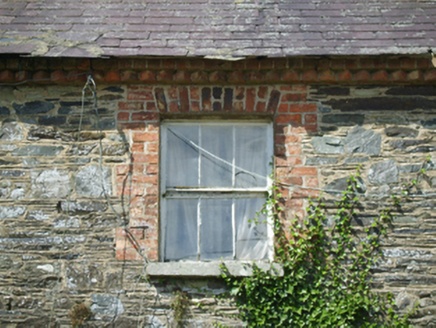
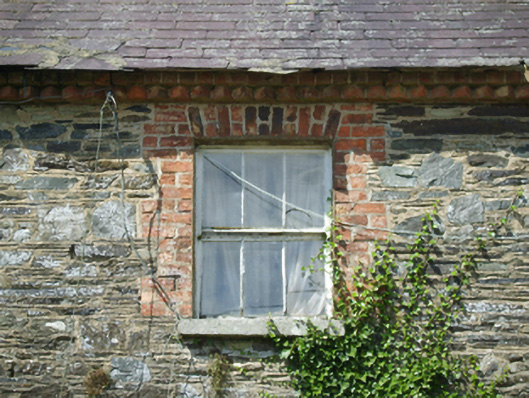
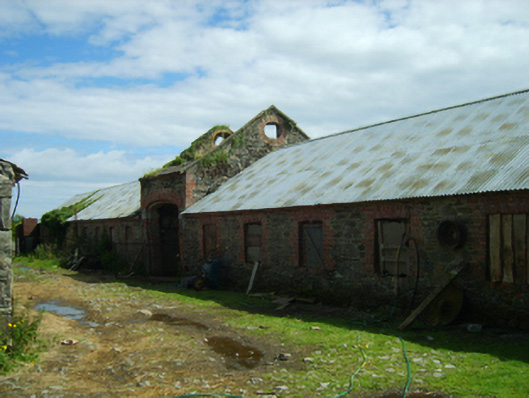
Farmyard complex, built 1858, including (north): Detached three-bay two-storey steward's house on a T-shaped plan with single-bay (three-bay deep) two-storey projecting end bay. Sold, 1880. Occupied, 1901; 1911. Pitched slate roof on a T-shaped plan with clay ridge tiles, red brick Running bond chimney stacks having corbelled stepped capping, timber bargeboards to gables on timber purlins, and remains of cast-iron rainwater goods on chevron- or saw tooth-detailed red brick cornice retaining cast-iron octagonal or ogee hoppers and downpipes. Part creeper- or ivy-covered coursed rubble stone walls with cut- or hammered granite flush quoins to corners. Central door opening into house. Square-headed window openings with cut-granite sills, and red brick block-and-start surrounds framing one-over-one (ground floor) or three-over-three (first floor) timber sash windows; (west): Detached nine-bay single-storey outbuilding on a rectangular plan. Pitched slate roof with clay ridge tiles centred on red brick Running bond chimney stack having corbelled stepped capping, and no rainwater goods surviving on chevron- or saw tooth-detailed red brick cornice. Part creeper- or ivy-covered coursed rubble stone walls with lichen-spotted flush quoins to corners. Series of nine square-headed door openings with red brick block-and-start surrounds framing timber boarded half-doors; (east): Detached nine-bay single-storey outbuilding with half-attic on a rectangular plan. Pitched slate roof on collared timber construction with clay ridge tiles, and no rainwater goods surviving on chevron- or saw tooth-detailed red brick cornice. Part creeper- or ivy-covered coursed rubble stone walls with lichen-spotted flush quoins to corners centred on cast-iron "Pattress" tie plates. Square-headed central door opening with red brick block-and-start surround. Square-headed window openings with cut-granite sills, and red brick block-and-start surrounds framing concrete block infill (ground floor) or timber boarded fittings (half-attic). Pair of elliptical-headed carriageways with red brick block-and-start surrounds having stepped reveals; (far south): Detached twenty-one-bay single-storey outbuilding on a symmetrical plan with single-bay single-storey higher central bay. Reroofed, ----. Replacement pitched corrugated-iron roofs centred on remains of pitched slate roof, pressed iron ridges, and no rainwater goods surviving on chevron- or saw tooth-detailed red brick cornices. Part creeper- or ivy-covered coursed rubble stone walls with red brick flush quoins to corners. Elliptical-headed central carriageway with red brick block-and-start surround having stepped reveals. Square-headed window openings with red brick header bond sills, and red brick block-and-start surrounds with fittings now boarded-up. Set in own grounds.
Appraisal
A farmyard complex erected for Arthur William Grattan Guinness JP (1827-69) to designs by Deane, Son and Woodward (formed 1851) of Upper Merrion Street, Dublin (O'Dwyer 1997, 451-3), representing an important component of the mid nineteenth-century built heritage of County Wexford with the architectural value of the steward's house suggested by such attributes as the compact plan form centred on a restrained doorcase; the construction in a deep blue "slatey" fieldstone with red brick dressings producing a pleasing palette; the diminishing in scale of the openings on each floor producing a graduated visual impression with the principal "apartment" or reception room defined by a polygonal bay window; and the high pitched roof shorn of its one eye-catching timber work (Craig and Garner 1975, 66). Having been reasonably well maintained, the form and massing survive intact together with substantial quantities of the original fabric, both to the exterior and to the interior, thus upholding the character or integrity of the composition. Furthermore, adjacent outbuildings continue to contribute positively to the group and setting values of a self-contained ensemble still awaiting the unrealised country house described as 'a mansion of a peculiarly rich and unique character...situated on the extremity of a lawn of ample dimensions embellished with young and vigorous plantations' (Lacy 1863, 497-8). NOTE: Occupied (1901) by John Dowling Senior (----), 'Farmer' (NA 1901); and (1911) by John Dowling Junior (----), 'Farmer' (NA 1911).