Survey Data
Reg No
15701617
Rating
Regional
Categories of Special Interest
Architectural, Artistic, Historical, Social
Original Use
Farm house
In Use As
Farm house
Date
1800 - 1839
Coordinates
311183, 151163
Date Recorded
16/08/2007
Date Updated
--/--/--
Description
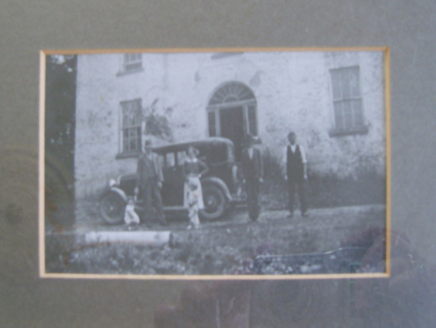
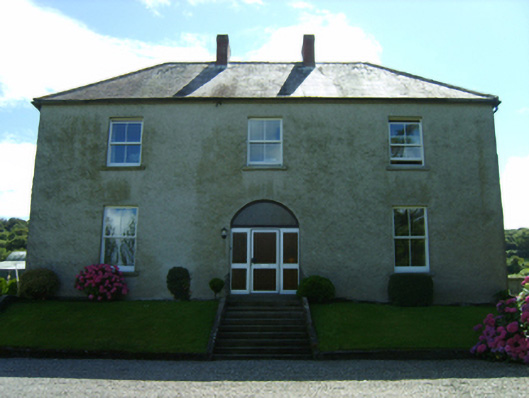
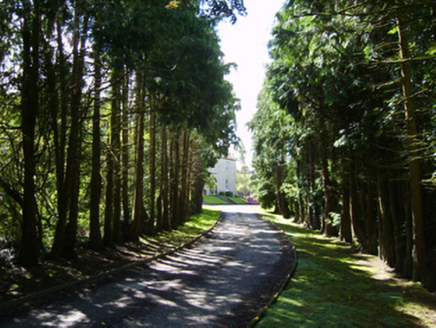
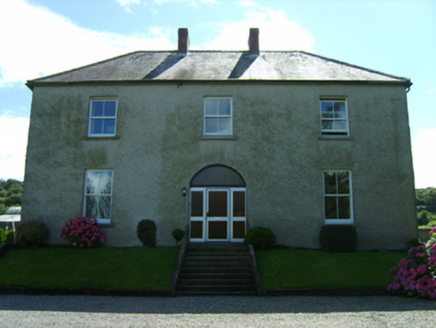
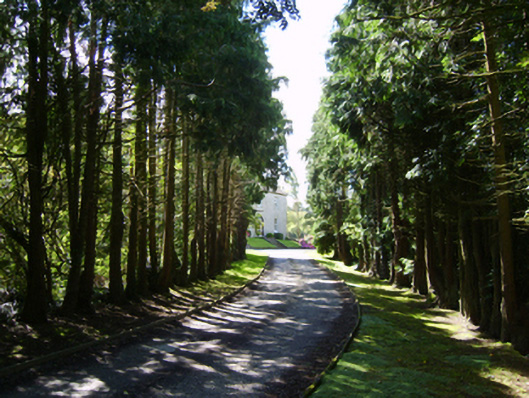
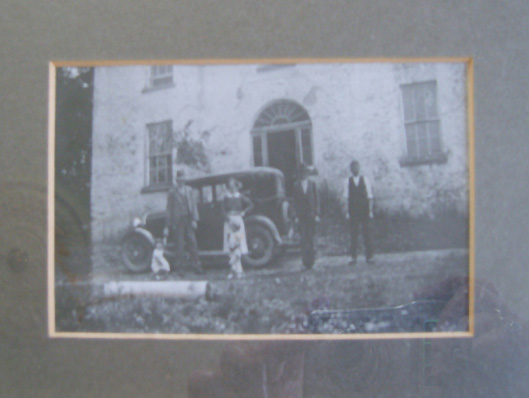
Detached three-bay two-storey over basement farmhouse, extant 1839, on a rectangular plan; three-bay two-storey rear (south) elevation. Occupied, 1901; 1911. Sold, 1935. Reroofed, 1947. Refenestrated, 2007. Hipped slate roof with clay ridge tiles, paired red brick Running bond central chimney stacks having corbelled stepped capping, and cast-iron rainwater goods on rendered eaves retaining cast-iron hoppers and downpipes. Fine roughcast battered walls. Segmental-headed central door opening approached by flight of nine cut-granite steps with concealed dressings framing replacement glazed aluminium door having sidelights below overlight. Square-headed window openings including square-headed window openings to rear (south) elevation centred on segmental-headed window opening (first floor) with cut-granite sills, and concealed dressings framing replacement two-over-two sash windows without horns with replacement two-over-two sash windows without horns to rear (south) elevation centred on fixed-pane timber fitting having fanlight. Interior including (ground floor): central hall retaining carved timber surrounds to door openings framing timber panelled doors; and carved timber surrounds to door openings to remainder framing timber panelled doors with timber panelled shutters to window openings. Set in landscaped grounds.
Appraisal
A farmhouse representing an integral component of the domestic built heritage of County Wexford with the architectural value of the composition, one recalling the contemporary Urrinfort House (see 15701916), suggested by such attributes as the deliberate alignment maximising on scenic vistas overlooking rolling grounds with a mountainous backdrop in the distance; the compact rectilinear plan form centred on a restrained doorcase originally showing a pretty radial fanlight; and the somewhat disproportionate bias of solid to void in the massing compounded by the diminishing in scale of the openings on each floor producing a graduated visual impression. Having been well maintained, the elementary form and massing survive intact together with quantities of the original or replicated fabric, both to the exterior and to the interior, thus upholding much of the character or integrity of a farmhouse having historic connections with the Burkett family including Robert Burkett (d. 1913), 'Farmer late of Belcarrig [sic] County Wexford' (Calendars of Wills and Administrations 1913, 64).