Survey Data
Reg No
15701611
Rating
Regional
Categories of Special Interest
Architectural, Artistic, Historical, Social
Original Use
School
In Use As
House
Date
1835 - 1845
Coordinates
308135, 149832
Date Recorded
08/07/2007
Date Updated
--/--/--
Description
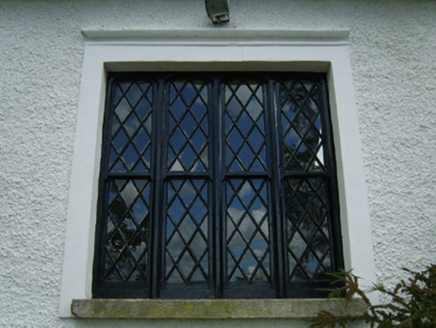
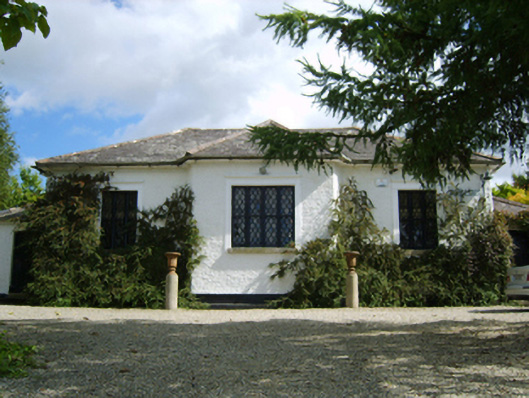
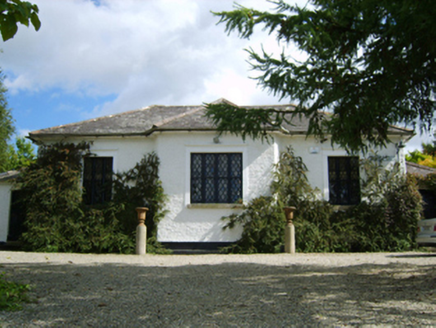
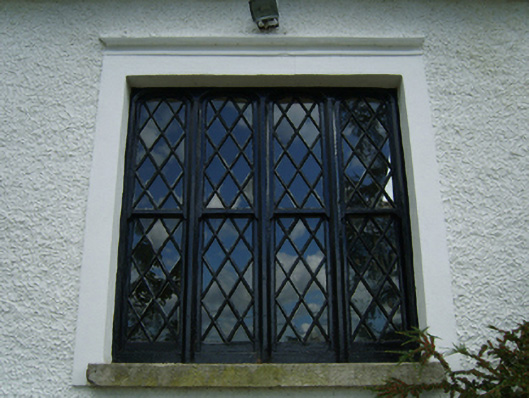
Detached three-bay single-storey parochial school, sanctioned 1840, on a cruciform plan centred on single-bay single-storey breakfront with single-bay single-storey recessed lower porches; single-bay (two-bay deep) full-height central return (east). Vacant, 1901. Disused, 1975. "Restored", 1999, to accommodate continued alternative use. Hipped slate roof on a cruciform plan centred on hipped slate roof (breakfront); hipped slate roofs (porches), lichen-spotted terracotta ridge tiles, paired rooflights to rear (east) pitch, and replacement rainwater goods on slightly overhanging slate flagged eaves. Roughcast walls bellcast over rendered plinth. Square-headed window openings in tripartite arrangement centred on square-headed window opening in quadripartite arrangement (breakfront) with cut-granite sills, chamfered timber mullions, and rendered "bas-relief" surrounds with ogee hood mouldings over framing one-over-one timber sash windows having cast-iron lattice glazing bars. Square-headed door openings with cut-granite step thresholds, and concealed dressings framing timber boarded or tongue-and-groove timber panelled double doors. Set back from line of road in relandscaped grounds.
Appraisal
A parochial school erected by Richard Donovan (1781-1849) of Ballymore House representing an integral component of the mid nineteenth-century built heritage of County Wexford with the architectural value of the composition, one partly endowed by the Erasmus Smith Trust (established 1657; Reports from Commissioners Ireland Endowed Schools 1858, 88), confirmed by such attributes as the cruciform plan form centred on a polygonal breakfront; and the definition of the segregated classrooms by elegant tripartite glazing patterns. Having been sympathetically "restored" following a prolonged period of unoccupancy in the later twentieth century, the elementary form and massing survive intact together with substantial quantities of the original fabric, both to the exterior and to the interior, thus upholding the character or integrity of a parochial school making a pleasing visual statement in a sylvan street scene.