

Survey Data
Reg No
15701218
Rating
Regional
Categories of Special Interest
Architectural, Artistic, Historical, Social
Original Use
Worker's house
In Use As
House
Date
1842 - 1852
Coordinates
319576, 157197
Date Recorded
17/10/2005
Date Updated
--/--/--
Description
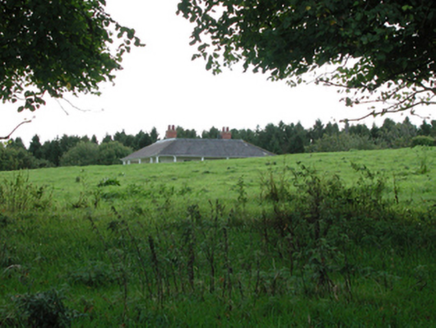
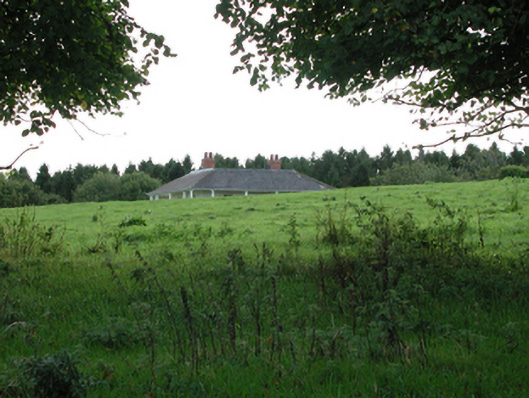
Detached three-bay (two-bay deep) two-storey head gardener's house, extant 1852, on a square plan with three-bay two-storey rear (north) elevation. Occupied, 1901; 1911. Sold, 1947. Renovated, ----, to accommodate continued private residential use. Flat topped hipped slate roof on a quadrangular plan with pressed or rolled lead ridges extending into clay ridge tiles, red brick Flemish bond chimney stacks having corbelled stepped capping supporting crested terracotta tapered pots, and cast-iron rainwater goods on overhanging eaves on pitch pine pillars. Red brick Flemish bond walls on cut-granite chamfered plinth. Square-headed central door opening approached by flight of ten cut-granite steps, doorcase with monolithic pilasters supporting "Cyma Recta"- or "Cyma Reversa"-detailed cornice framing timber panelled door having sidelights below overlight. Square-headed window openings centred on round-headed window opening (first floor) with cut-granite sills, and red brick voussoirs framing six-over-six (ground floor) or six-over-three (first floor) timber sash windows centred on three-over-three timber sash window having fanlight. Set in grounds originally shared with Courtown House.
Appraisal
A house forming part of a neat self-contained group alongside an adjoining walled garden (see 15701218) with the resulting ensemble not only surviving as an interesting relic of the Courtown House estate following the sale (1947) and subsequent demolition (1948-9) of the eponymous country house (see 15701216), but also illustrating the continued development or "improvement" of the estate in the nineteenth century with the architectural value of the composition confirmed by such attributes as the compact near-square plan form centred on a Classically-detailed doorcase; the diminishing in scale of the openings on each floor producing a graduated visual impression; and the oversailing roofline 'which projects considerably and is supported on all sides by nice columns' (Lacy 1863, 492-3). Having been well maintained, the elementary form and massing survive intact together with substantial quantities of the original fabric, both to the exterior and to the interior, thus upholding the character or integrity of a house having historic connections with a succession of head gardeners including James Turner (1869-1956), 'Gardener [and] Domestic Servant' (NA 1901; 1911; cf. 15700739).