

Survey Data
Reg No
15700925
Rating
Regional
Categories of Special Interest
Architectural, Artistic, Historical, Social
Original Use
Farm house
In Use As
Farm house
Date
1799 - 1839
Coordinates
295413, 153003
Date Recorded
28/08/2007
Date Updated
--/--/--
Description
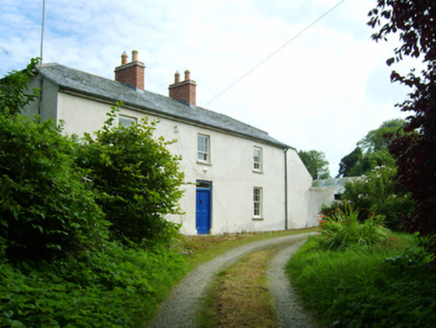
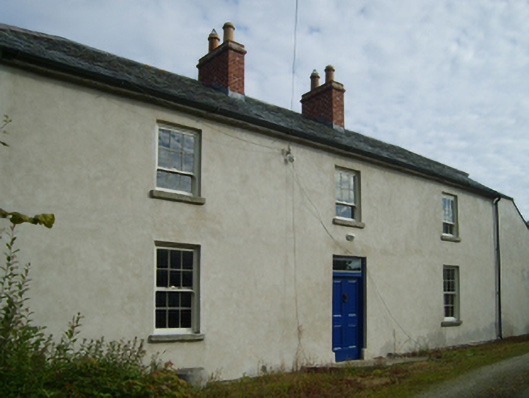
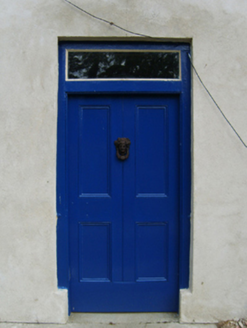
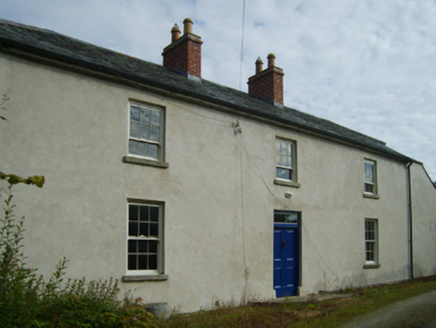
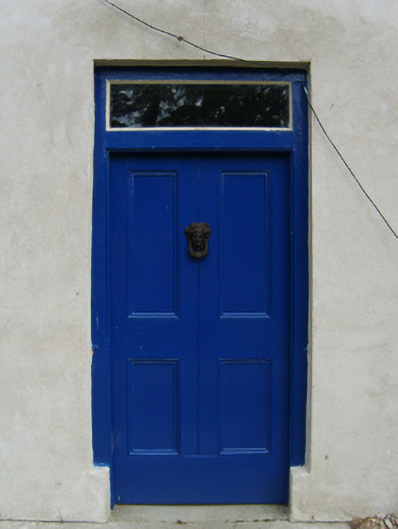
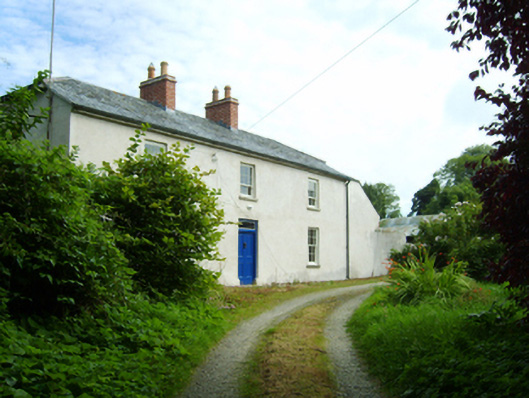
Detached three-bay two-storey part double-pile farmhouse, extant 1839, on a rectangular plan originally three-bay two-storey single-pile. Occupied, 1901; 1911. Restored, 2003. Replacement hipped gabled part double-pile (M-profile) slate roof with clay or terracotta ridge tiles, paired red brick Flemish bond central chimney stacks having stringcourses below capping supporting terracotta tapered pots, and cast-iron rainwater goods on rendered slate flagged eaves retaining cast-iron downpipes. Replacement rendered walls. Square-headed central door opening with threshold, and concealed red brick block-and-start surround framing timber panelled door having overlight. Square-headed window openings with cut-granite sills, and concealed dressings framing replacement six-over-six (ground floor) or six-over-three (first floor) timber sash windows having part exposed sash boxes replacing one-over-one timber sash windows. Square-headed window openings (side elevations) with cut-granite sills, and concealed dressings framing replacement six-over-six timber sash windows replacing one-over-one timber sash windows. Interior including (ground floor): central hall retaining carved timber surrounds to door openings framing timber panelled doors; reception room (west) retaining carved timber surround to door opening framing timber panelled door with carved timber surrounds to window openings framing timber panelled shutters on panelled risers, and moulded plasterwork cornice to ceiling; reception room (east) retaining carved timber surround to door opening framing timber panelled door with carved timber surround to window opening framing timber panelled shutters on panelled risers, and moulded plasterwork cornice to ceiling; and carved timber surrounds to door openings to remainder framing timber panelled doors with carved timber surrounds to window openings framing timber panelled shutters on panelled risers. Set in landscaped grounds with rendered piers to perimeter having lichen-spotted precast concrete capping supporting flat iron double gates.
Appraisal
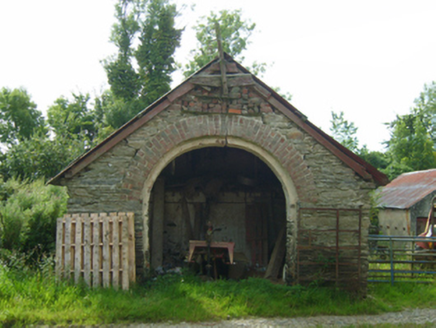
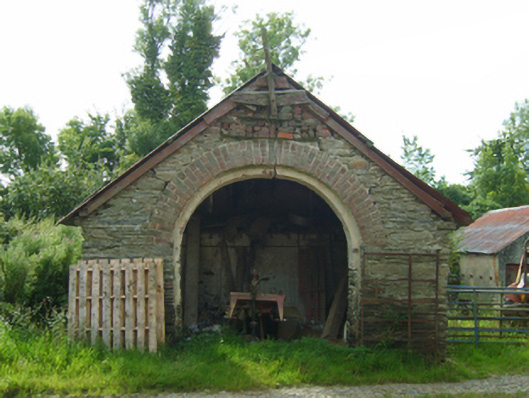
A farmhouse representing an integral component of the domestic built heritage of north County Wexford with the architectural value of the composition, one allegedly erected using compensation claimed for the destruction of an eighteenth-century hunting lodge during the 1798 Insurrection (Rowe and Scallan 2004, 180), suggested by such attributes as the compact plan form centred on a restrained doorcase showing a so-called "Anna Livia" door knocker; and the disproportionate bias of solid to void in the massing compounded by the diminishing in scale of the openings on each floor producing a graduated visual impression. Having been successfully restored with the financial assistance of a grant (2003) from The Heritage Council, the elementary form and massing survive intact together with quantities of the original or replicated fabric, both to the exterior and to the interior where contemporary joinery; and sleek plasterwork refinements, all highlight the modest artistic potential of the composition. Furthermore, adjacent outbuildings (extant 1839) continue to contribute positively to the group and setting values of a self-contained ensemble having historic connections with the Plummer family including William Plummer (1815-1866), 'Farmer late of Ballyrankin County Wexford' (Calendars of Wills and Administrations 1866, 280); and the Kidd family including Joseph Kidd (1842-1912) and Thomas Kidd (1852-1919), 'Farmer late of Ballyrankin County Wexford' (Calendars of Wills and Administrations 1920, n.p.).