Survey Data
Reg No
15700601
Rating
Regional
Categories of Special Interest
Architectural, Historical, Social
Original Use
Farm house
Date
1700 - 1777
Coordinates
306729, 165011
Date Recorded
26/09/2007
Date Updated
--/--/--
Description
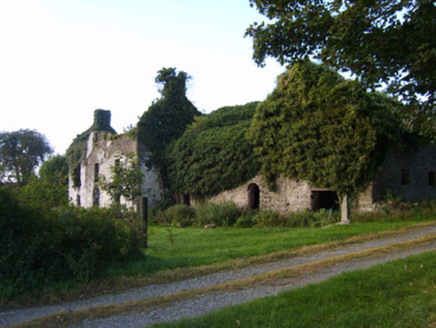
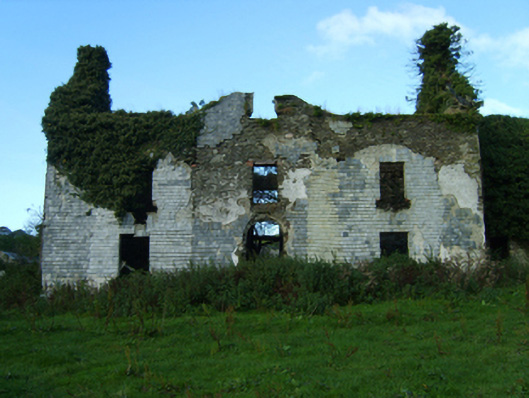
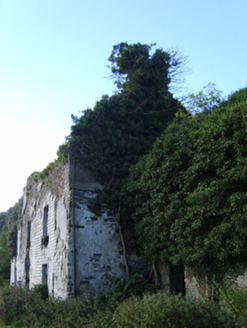
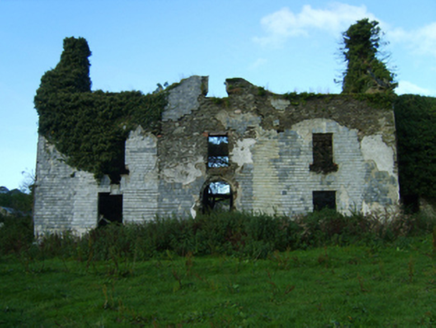
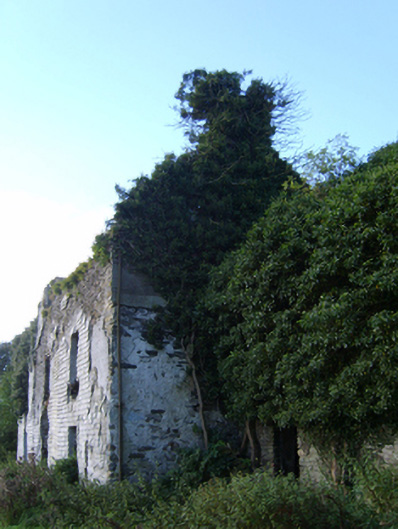
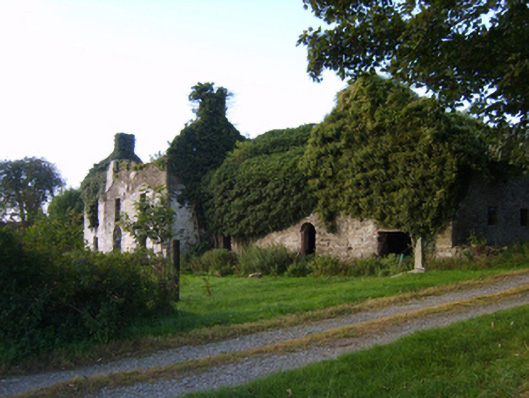
Detached three-bay two-storey farmhouse with half-dormer attic, extant 1777, on a T-shaped plan with shell of single-bay (single-bay deep) full-height central return (west). Occupied, 1901; 1911. Sold, 1980. Now in ruins. Remains of pitched slate roof on a T-shaped plan centred on pitched (gabled) slate roof, lichen-covered concrete or rendered coping to gables with overgrown chimney stacks to apexes, and no rainwater goods surviving on slate flagged eaves retaining cast-iron octagonal or ogee hoppers and downpipes. Slate hung lime rendered battered walls; rendered, ruled and lined surface finish (gables). Round-headed central door opening with no fittings surviving. Square-headed window openings with cut-granite sills now missing, and concealed dressings including timber lintels on red brick imposts with fittings now missing. Interior in ruins. Set in unkempt grounds.
Appraisal
A farmhouse representing an integral component of the eighteenth-century domestic built heritage of the rural environs of Monaseed with the architectural value of the composition, one annotated by "Buckstown [of] Swan Esquire" by Taylor and Skinner (1778, pl.146), suggested by such attributes as the symmetrical footprint originally centred on a Classically-detailed doorcase; the disproportionate bias of solid to void in the massing compounded by the very slight diminishing in scale of the openings on each floor producing a feint graduated visual impression; and the high pitched roofline. Although reduced to ruins following a prolonged period of neglect in the late twentieth century, the elementary form and massing survive intact together with remnants of the original fabric including a slate hung surface finish widely regarded as an increasingly endangered hallmark of the architectural heritage of County Wexford. Furthermore, adjacent outbuildings (extant 1839) continue to contribute positively to the group and setting values of a progressively obscure estate having historic connections with the Doyle family including John "Big John" Doyle (1839-77); Patrick Doyle (----), 'Farmer' (NA 1901; NA 1911); and Captain James "Séamus" Doyle TD (1885-1971) who, with Captain Seán Redmond Etchingham (1868-1923), travelled to Dublin under military escort to get confirmation from Patrick Pearse (1879-1916) that the 1916 Rising had failed and that the leaders in Enniscorthy were to surrender.