Survey Data
Reg No
15613005
Rating
Regional
Categories of Special Interest
Architectural, Artistic, Historical, Social
Original Use
Presbytery/parochial/curate's house
In Use As
Presbytery/parochial/curate's house
Date
1895 - 1900
Coordinates
312236, 134192
Date Recorded
08/03/2007
Date Updated
--/--/--
Description
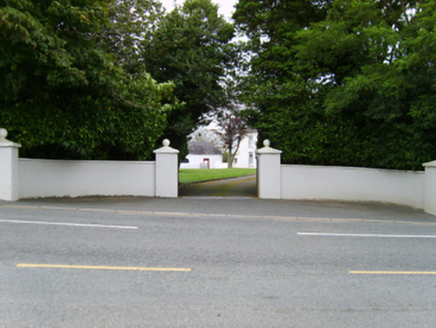
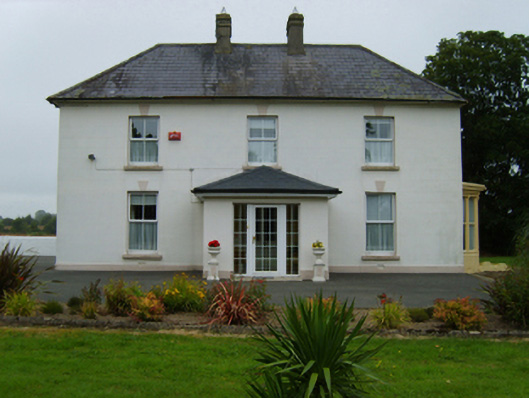
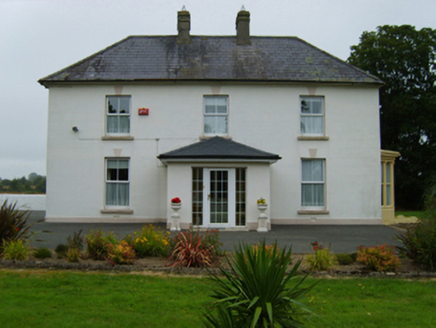
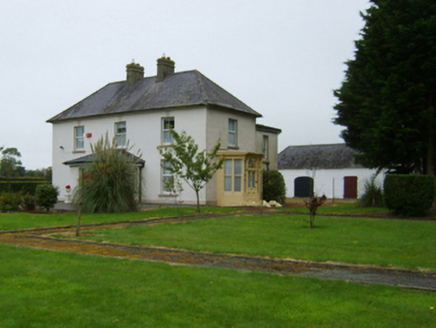
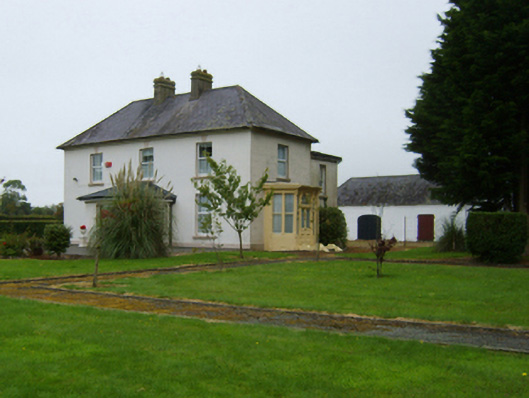
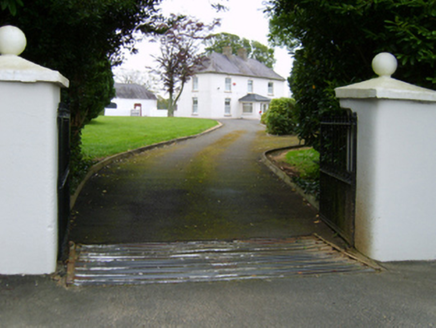
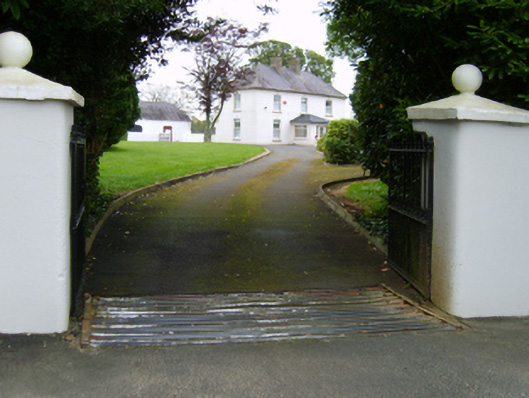
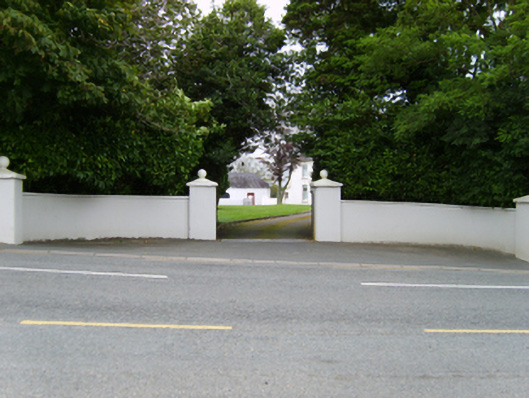
Detached three-bay two-storey parochial house, built 1898, on a T-shaped plan with single-bay two-storey side elevations; single-bay (single- or two-bay deep) two-storey lower central return (north). Refenestrated, ----. Hipped slate roof on a T-shaped plan centred on pitched slate roof (south), clay ridge tiles, paired rendered central chimney stacks having stringcourses below stepped capping supporting terracotta pots, and cast-iron rainwater goods on rendered stepped eaves retaining cast-iron downpipes. Rendered, ruled and lined walls on rendered plinth. Central door opening into parochial house with concealed dressings framing glazed timber panelled double doors. Square-headed window openings with cut-granite sills, and concealed dressings centred on "bas-relief" keystones framing replacement uPVC casement windows replacing two-over-two timber sash windows. Square-headed window openings (south) with cut-granite sills, and concealed dressings framing two-over-two timber sash windows behind wrought iron bars. Interior including (ground floor): central hall retaining carved timber surrounds to door openings framing timber panelled doors. Set in landscaped grounds with rendered piers to perimeter having ball finial-topped shallow pyramidal capping supporting cast-iron double gates.
Appraisal
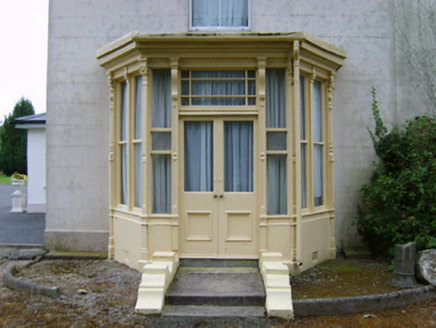
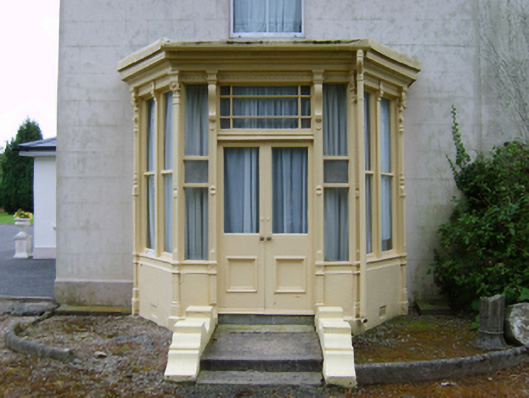
A parochial house erected under the aegis of Reverend Edward Aylward PP (1848-1912; fl. 1898-1912) representing an important component of the late nineteenth-century built heritage of County Wexford with the architectural value of the composition, one evoking favourable comparisons with the contemporary parochial house (occupied 1901) in Oulart (see 15702115), confirmed by such attributes as the compact plan form centred on a restrained doorcase, albeit one largely concealed by a later porch; and the diminishing in scale of the openings on each floor producing a graduated visual impression with the principal "apartment" or reception room defined by a Classically-detailed polygonal bay window. Having been well maintained, the elementary form and massing survive intact together with quantities of the original fabric, both to the exterior and to the interior: the introduction of replacement fittings to most of the openings, however, has not had a beneficial impact on the character or integrity of a parochial house forming part of a neat self-contained group alongside the nearby Saint Brigid's Catholic Church (see 15613003) with the resulting ecclesiastical ensemble making a pleasing visual statement in a rural village setting.