Survey Data
Reg No
15505057
Rating
Regional
Categories of Special Interest
Architectural
Original Use
House
In Use As
House
Date
1885 - 1895
Coordinates
305048, 121325
Date Recorded
05/07/2005
Date Updated
--/--/--
Description
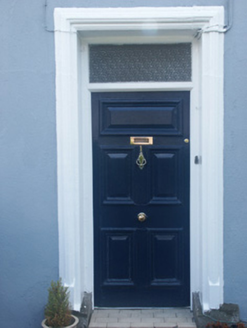
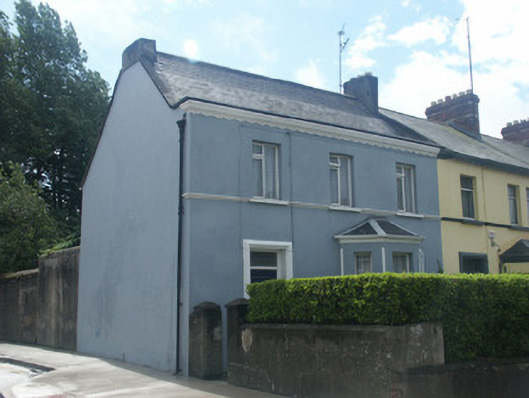
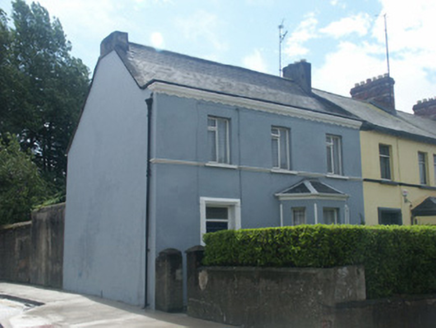
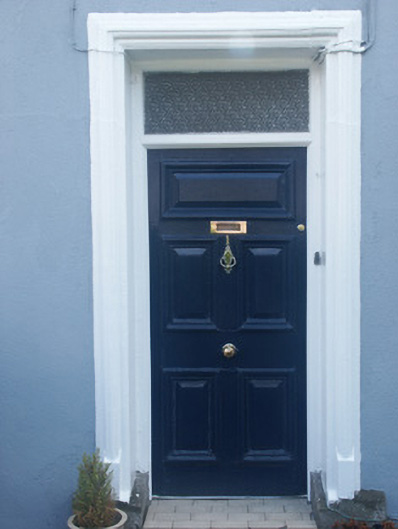
End-of-terrace three-bay two-storey house, built 1890, on a corner site with canted bay window to right ground floor. Part refenestrated, pre-1992. One of a group of five. Pitched slate roof behind parapet (half-polygonal slate roof to bay window) with clay ridge tiles (rolled lead ridges to bay window), rendered squat chimney stacks, rendered coping, and concealed rainwater goods having cast-iron ogee hopper and downpipe. Rendered walls on rendered plinth with bull-nose corners to bay window rising to moulded cornice, moulded stringcourse to first floor, and moulded cornice to parapet on profiled course having rendered coping. Square-headed window openings with cut-granite sills forming part of stringcourse to first floor, and one-over-one timber sash windows having replacement timber casement windows, pre-1992, to first floor with two-over-two timber sash windows to rear (south-east) elevation. Square-headed door opening with cut-granite padstones supporting moulded rendered surround, and timber panelled door having overlight. Set back from line of street in own grounds on a corner site with rendered boundary wall to forecourt having coping probably supporting iron railings, rendered piers having capping, and iron (flat iron) gate [VO].
Appraisal
A modest-scale house forming part of a larger ensemble alongside four later (1909) units (15505058 - 61) with discrepancies including the slightly varied roofline behind a parapet, and so on, all indicating the slightly earlier provenance of the composition: meanwhile, exhibiting a somewhat sophisticated design ethos, the architectural value of the house is established by attributes redolent of the period of construction including the compact plan form, the slight diminishing in scale of the openings on each floor, the expressed bay window, the subtle rendered accents with particular emphasis on a Classical doorcase, and so on. Having been reasonably well maintained, the house remains as the last in the group to present an early aspect with the elementary composition surviving in place together with substantial quantities of the historic or original fabric, thus making a positive impression on the streetscape aesthetic of King Street Upper.