Survey Data
Reg No
15504012
Rating
Regional
Categories of Special Interest
Architectural, Artistic, Historical, Social
Original Use
Country house
Historical Use
Building misc
In Use As
Office
Date
1785 - 1795
Coordinates
304220, 121452
Date Recorded
06/07/2005
Date Updated
--/--/--
Description
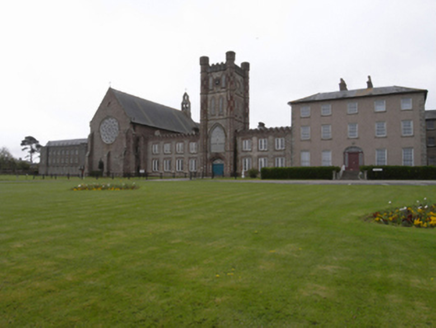
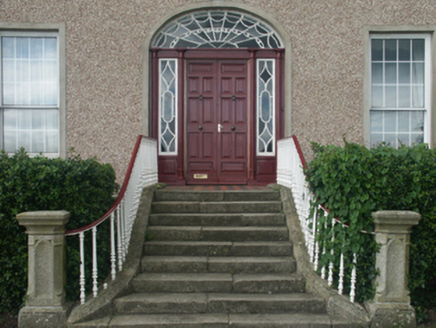
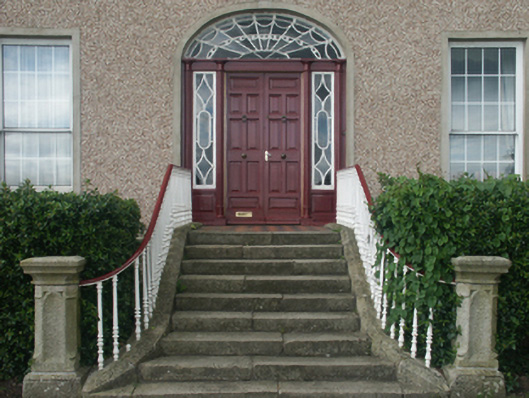
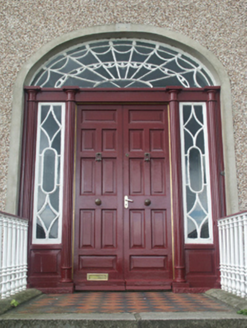
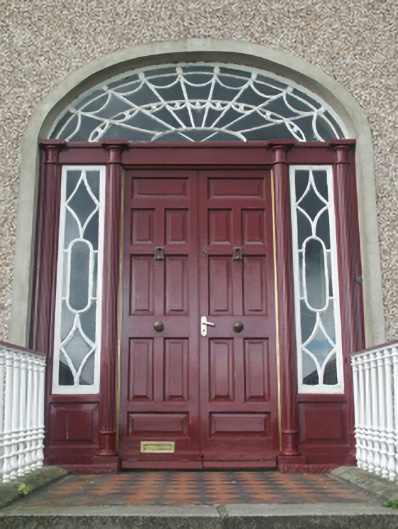
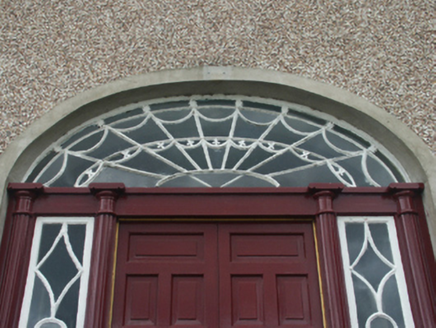
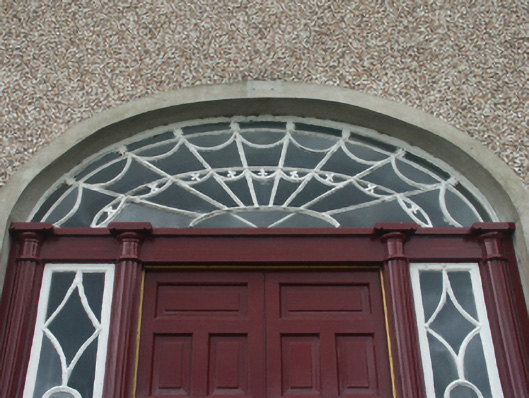
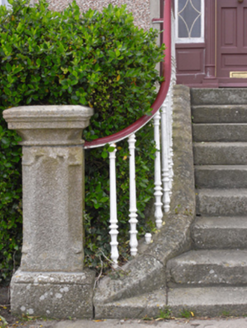
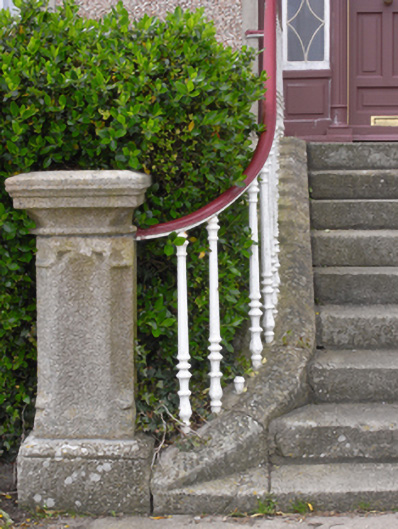
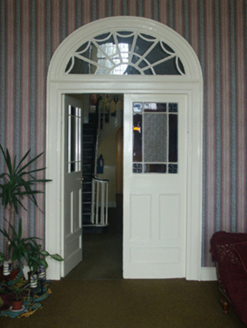
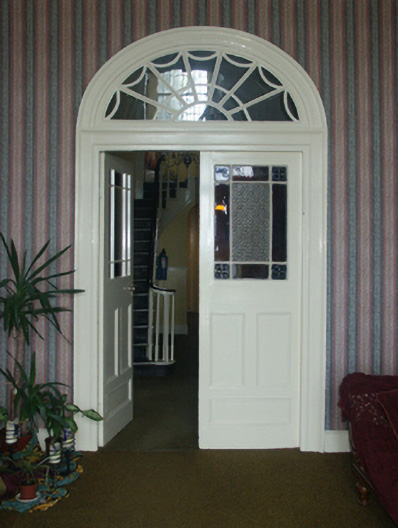
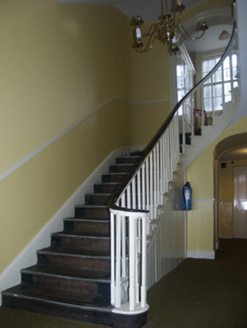
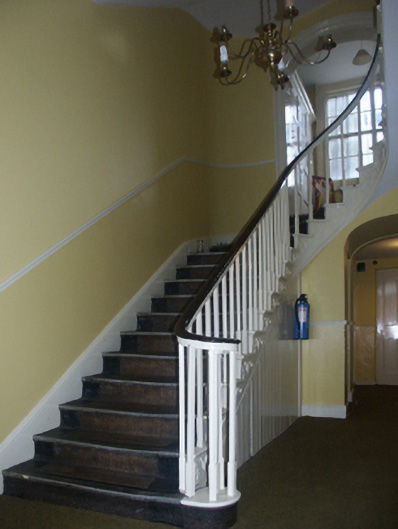
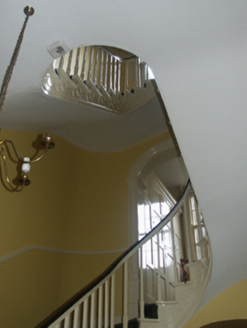
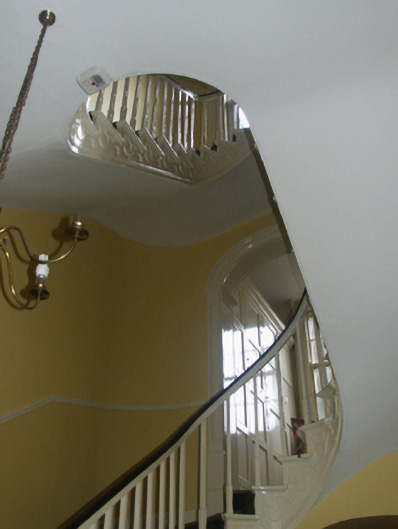
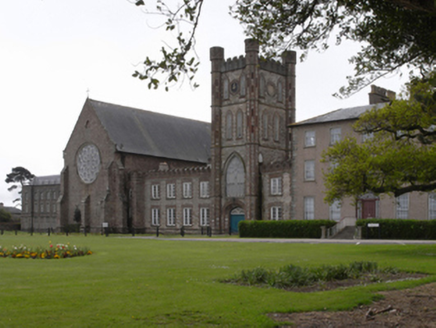
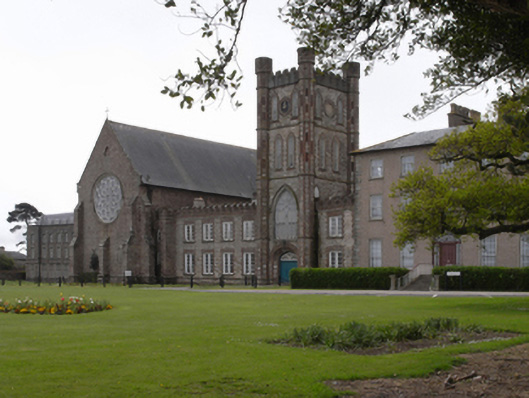
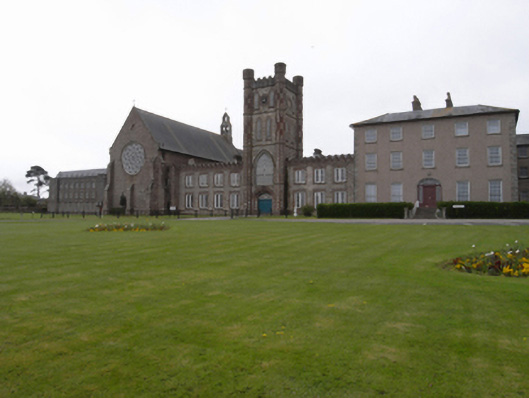
Attached five-bay three-storey over part raised basement country house, built 1790, on a rectangular plan with three-bay (south) or two-bay (north) full-height side elevations. Sold, 1818, to accommodate alternative use. Renovated, ----, to accommodate continued alternative use. Hipped slate roof on a quadrangular plan with clay ridge tiles, paired cement rendered central chimney stacks having cut-granite capping supporting yellow terracotta square profile pots, and cast-iron rainwater goods on slate flagged eaves retaining cast-iron downpipes. Replacement gritdashed roughcast wall to front (east) elevation on cut-granite moulded cushion course on gritdashed roughcast base with rusticated cut-granite quoins to corners; fine roughcast surface finish (remainder). Segmental-headed central door opening approached by flight of nine cut-granite steps between cast-iron "spindle" railings, timber doorcase with engaged fluted colonettes supporting shallow cornice on blind frieze, and rendered "bas-relief" surround framing timber panelled double doors having sidelights on panelled risers below fanlight. Square-headed window openings with cut-granite sills, and rendered "bas-relief" surrounds framing four-over-eight (basement), twelve-over-eight (ground floor), eight-over-eight (first floor) or four-over-eight (top floor) uPVC sash windows without horns. Interior including (ground floor): central entrance hall retaining carved timber surrounds to door openings framing timber panelled doors, and plasterwork cornice to ceiling; segmental-headed door opening into staircase hall with carved timber surround framing glazed timber panelled double doors having fanlight; staircase hall retaining carved timber surrounds to door openings framing timber panelled doors, timber boarded or tongue-and-groove timber panelled staircase on a dog leg plan with timber "match stick" balusters supporting carved timber banister terminating in volute, carved timber surrounds to window openings to half-landings, carved timber surrounds to door openings to landings framing timber panelled doors, and plasterwork cornice to ceiling; and carved timber surrounds to door openings to remainder framing timber panelled doors with carved timber surrounds to window openings framing timber panelled shutters. Set in landscaped grounds.
Appraisal
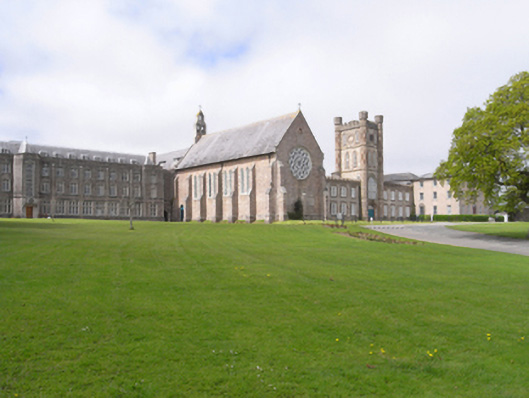
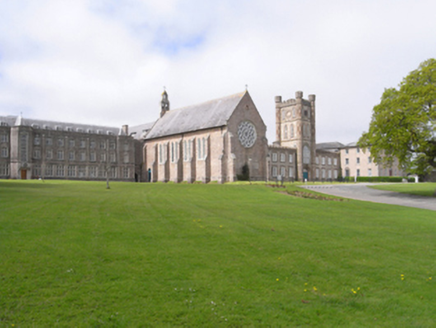
A country house representing an important component of the late eighteenth-century built heritage of County Wexford with the architectural value of the composition, one '[presenting] the appearance of a large mansion-house [and] containing accommodation for a president, six professors, and thirty resident pupils' (Lewis 1837 II, 711), confirmed by such attributes as the deliberate alignment maximising on panoramic vistas overlooking the town with glimpses of Wexford Harbour in the near distance; the compact rectilinear plan form centred on a Classically-detailed doorcase not only demonstrating good quality workmanship, but also showing a pretty fanlight; and the diminishing in scale of the openings on each floor producing a graduated visual impression with the principal "apartments" originally showing so-called "Wexford Window" sash-and-overlight glazing patterns. Having been well maintained, the elementary form and massing survive intact together with substantial quantities of the original fabric, both to the exterior and to the interior where contemporary joinery; Classical-style chimneypieces; and plasterwork refinements, all highlight the artistic potential of the composition: however, the introduction of replacement fittings to most of the openings has not had a beneficial impact on the character or integrity of a country house forming part of a self-contained ecclesiastical ensemble making a pleasing visual statement in a suburban setting.