Survey Data
Reg No
15504008
Rating
Regional
Categories of Special Interest
Architectural
Original Use
House
In Use As
House
Date
1950 - 1955
Coordinates
304550, 121507
Date Recorded
06/07/2005
Date Updated
--/--/--
Description
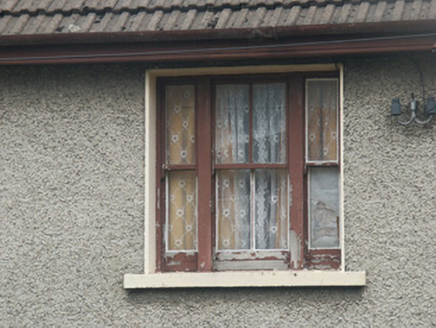
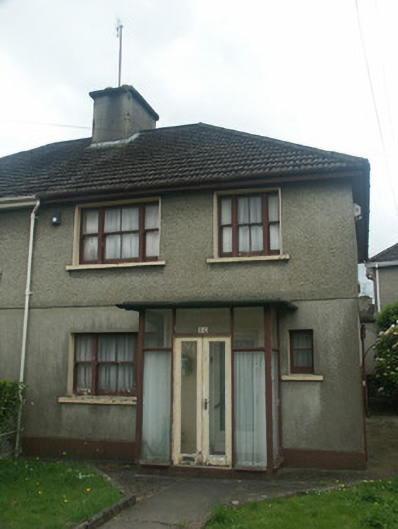
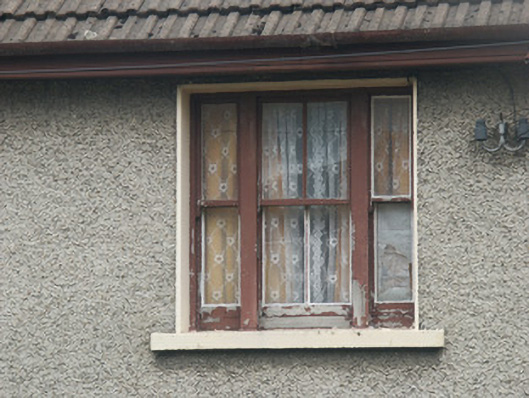
Semi-detached two-bay two-storey house, built 1952. Renovated, c.1975, with single-bay single-storey flat-roofed projecting glazed porch added to right ground floor. One of a pair forming part of a group of fourteen. Pitched and hipped (shared) concrete tile roof with concrete ridge tiles, rendered (shared) chimney stack, and aluminium rainwater goods on timber eaves (flat bitumen felt roof to porch with plastic rainwater goods on overhanging eaves). Rendered walls to ground floor on rendered plinth supporting pebbledashed or roughcast walls to first floor. Square-headed window openings in tripartite arrangement with concrete sills, and two-over-two timber sash windows having one-over-one sidelights (one square-headed window opening to ground floor with concrete sill, and fixed-pane timber window). Square-headed openings to porch with fixed-pane timber windows, and glazed timber double doors having overlight. Square-headed door opening into house with replacement glazed timber door, c.1975. Set back from street in own grounds with rendered boundary wall having rounded coping, rendered piers having profiled capping, and wrought iron (flat iron) gate [VO].
Appraisal
A pleasant small-scale house built as one of a pair (second in pair not included in survey) forming part of a larger group of fourteen identical units (including 15504007, 09) established on a site originally donated by Jim Corry (n. d.) representing an element of the continued development of the outskirts or suburbs of Wexford Town in the mid twentieth century. Exhibiting modest architectural aspirations recalling the economic measures put in place during the construction of contemporary local authority-sponsored schemes in the area (see 15507024 - 27), the external expression of the house is nevertheless enlivened by elegant attributes including Wyatt-influenced tripartite openings, and so on. Having been well maintained, the house remains as one of the last in the group to present an early aspect with most of the original fabric surviving in place, thus upholding some of the character or integrity of the collective ensemble in the local landscape.