Survey Data
Reg No
15504006
Rating
Regional
Categories of Special Interest
Architectural
Original Use
House
In Use As
House
Date
1935 - 1940
Coordinates
304605, 121440
Date Recorded
06/07/2005
Date Updated
--/--/--
Description
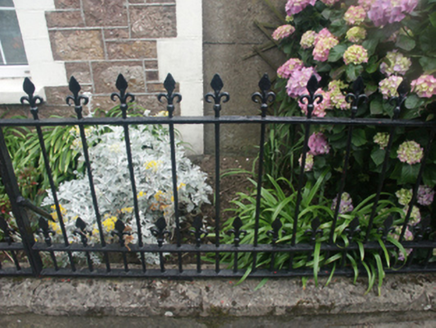
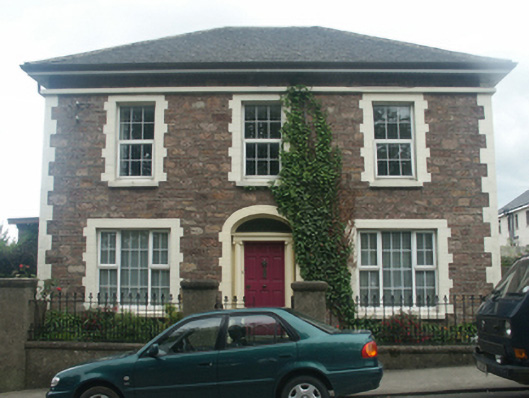
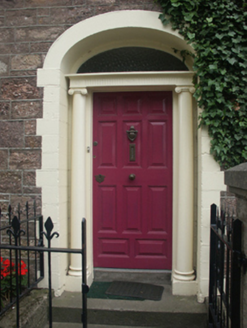
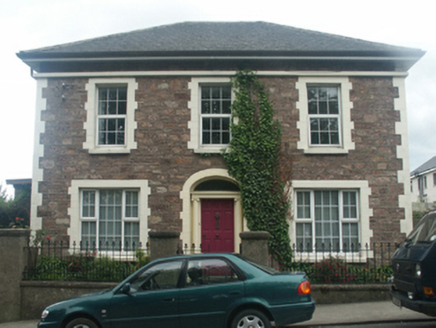
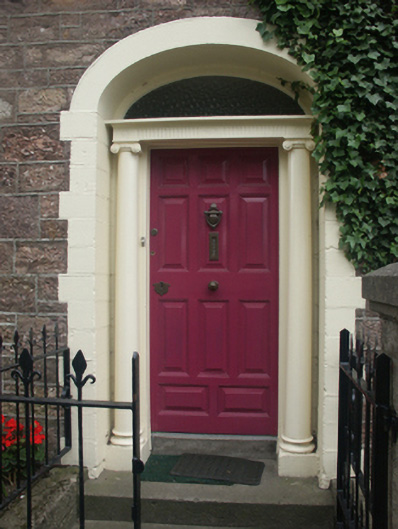
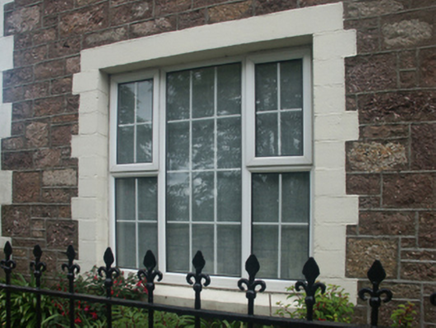
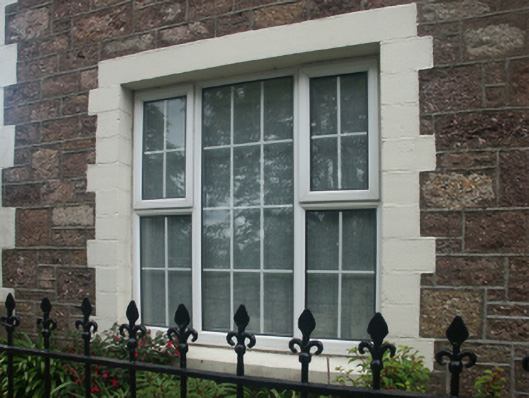
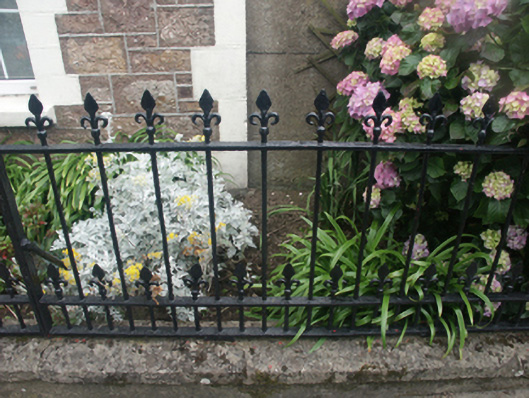
Detached three-bay two-storey house, built 1937, on a rectangular plan. Renovated, ----. Replacement hipped fibre-cement slate roof with concrete ridge tiles, red brick Running bond chimney stacks having stepped capping supporting yellow terracotta tapered pots, and uPVC rainwater goods on boxed eaves. Part creeper- or ivy-covered tuck pointed coursed or snecked "Old Red Sandstone" walls on mass concrete plinth with precast concrete quoins to corners supporting parapet on precast concrete stringcourse. Segmental-headed central door opening approached by flight of three concrete steps, doorcase with Ionic columns on plinths supporting shallow cornice on "patera"-detailed fluted frieze, and precast concrete block-and-start surround framing timber panelled door having overlight. Square-headed flanking window openings originally in tripartite arrangement with concrete sills, and precast concrete block-and-start surrounds framing replacement uPVC casement windows replacing six-over-six timber sash windows having two-over-two sidelights. Square-headed window openings (first floor) with concrete sills, and precast concrete block-and-start surrounds framing replacement uPVC casement windows replacing six-over-six timber sash windows. Road fronted with rendered piers to perimeter having precast concrete capping supporting wrought iron double gates.
Appraisal
A house erected by Roger Alphonsus Synnott (----) representing an integral component of the twentieth-century domestic built heritage of Wexford with the architectural value of the composition suggested by such attributes as the compact rectilinear plan form centred on a Classically-detailed doorcase; the construction in a ruby-coloured "Old Red Sandstone"; and the diminishing in scale of the openings on each floor producing a graduated tiered visual effect with the principal "apartments" originally showing conservative Wyatt-style tripartite glazing patterns. Having been well maintained, the elementary form and massing survive intact together with quantities of the original fabric: however, the introduction of replacement fittings to most of the openings has not had a beneficial impact on the external expression or integrity of a house making a pleasing visual statement in Grogan's Road.