Survey Data
Reg No
15401106
Rating
Regional
Categories of Special Interest
Architectural, Social, Technical
Original Use
Mill (water)
In Use As
Outbuilding
Date
1800 - 1840
Coordinates
231709, 260787
Date Recorded
05/11/2004
Date Updated
--/--/--
Description
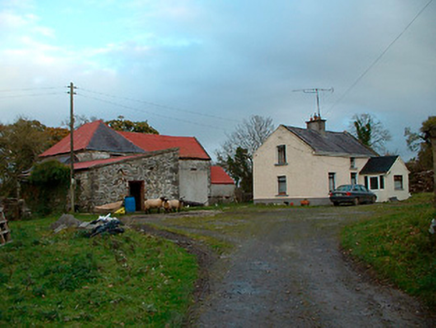
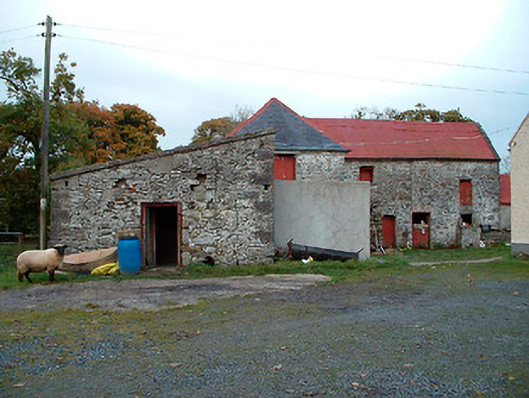
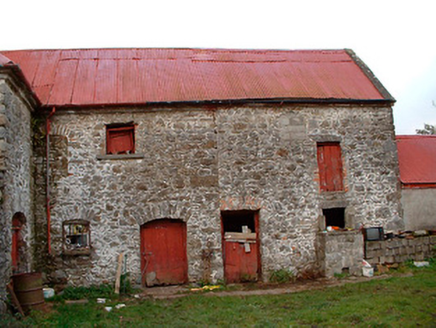
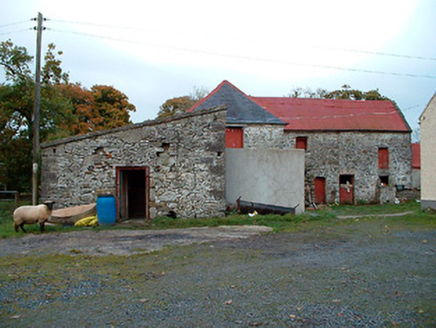
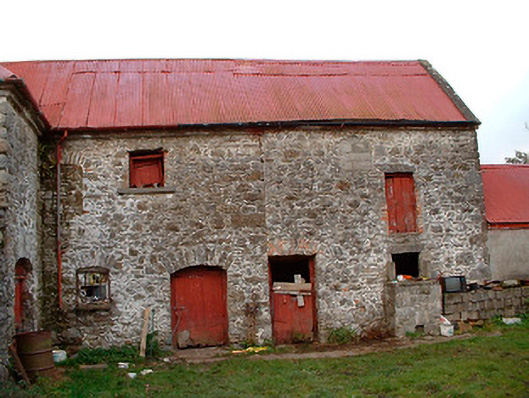
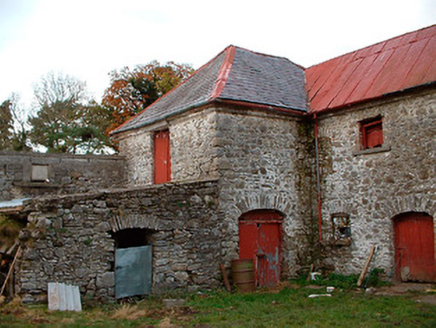
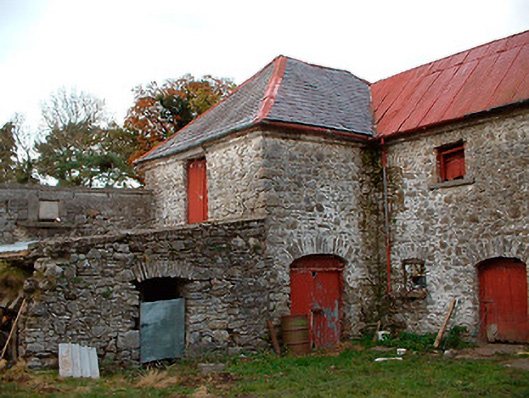
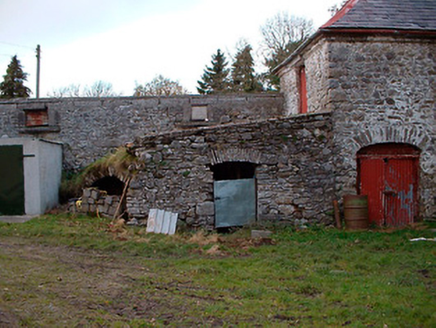
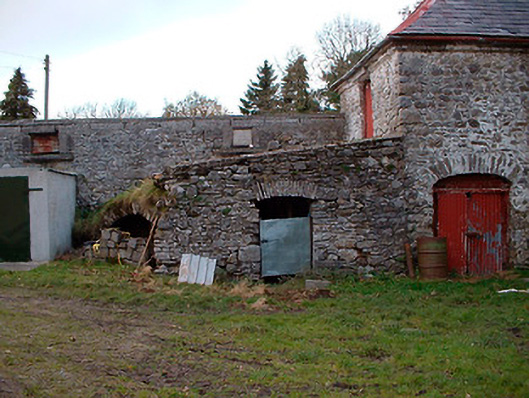
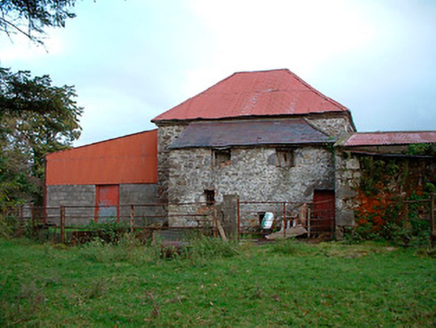
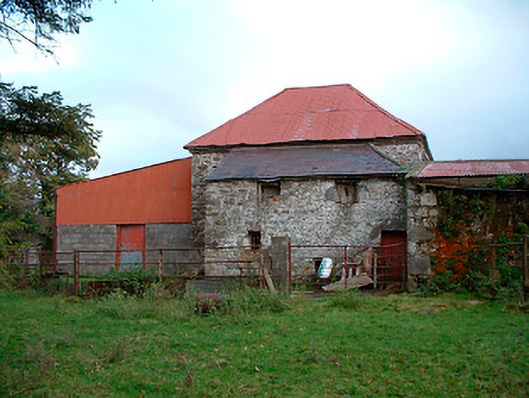
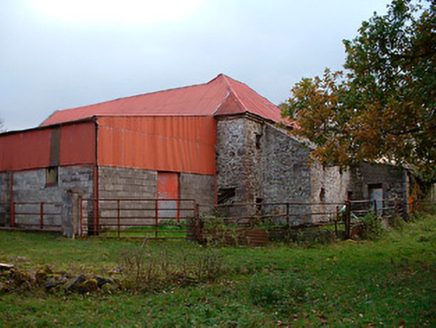
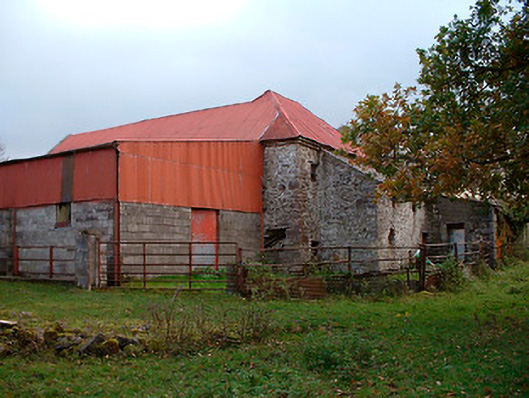
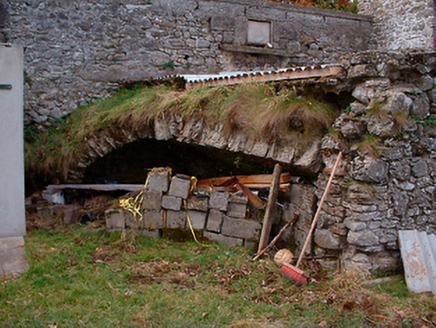
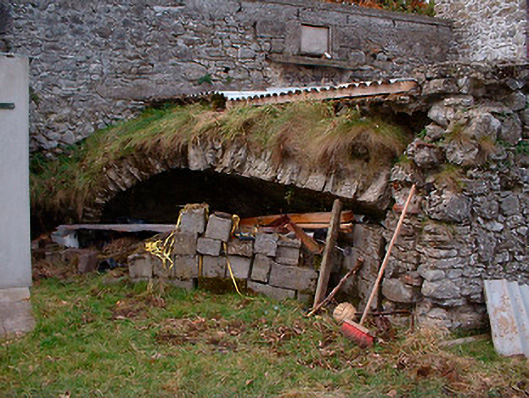
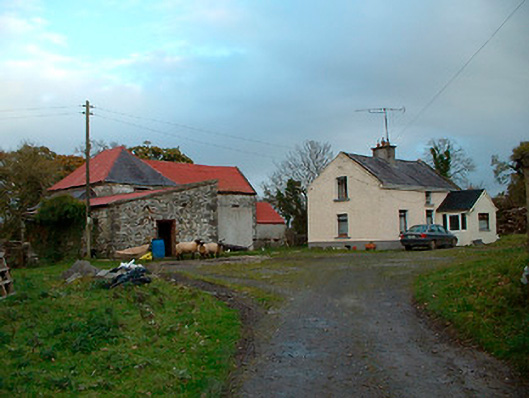
Attached two-storey former corn mill complex on L-shaped plan, built c.1820. Now derelict and in use as domestic/agricultural outbuildings. Pitched and gabled roofs with combination of corrugated-iron and natural slate roof covering. Cast-iron rainwater goods throughout. Constructed of rubble stone with stone quoins to a number of the corners. Combination of irregularly spaced square-headed and shallow segmental-headed window openings, some with red brick surrounds and a number with surviving cut stone sills. Window openings now mostly contain battened timber shutters. Combination of square-headed and segmental-headed door openings with timber sheeted or corrugated-iron doors. Square-headed loading bays at first floor level to entrance facades (southwest). Loading ramp to southwest corner gives access to first floor loading bay. Set back from road to rear of farmhouse. Building abutted by numerous sheds of varying dates. Possible remains of corn drying kilns to southeast.
Appraisal
An interesting vernacular (former) corn mill complex, which retains its early form and character despite being no longer in its original use. It was extended and altered at various times throughout the nineteenth century, a common feature of industrial structures of this nature. Although this modest structure retains little evidence of the early machinery, mill wheel and mill race (originally ran southeast to northwest to north of mill), it remains an interesting insight into the industrial past in Ireland's rural countryside and is an historical reminder of the boom experienced by the Irish corn milling industry during the late eighteenth and early-nineteenth centuries. This mill was in the ownership of a James West Esq. (of Rath House, Cumminstown) and is recorded as having two mill stones and a thirteen foot in diameter water wheel c.1840 (Valuation Office Mill Book for Westmeath).