Survey Data
Reg No
15317062
Rating
Regional
Categories of Special Interest
Architectural, Artistic, Social
Original Use
House
In Use As
Building misc
Date
1800 - 1820
Coordinates
219079, 238478
Date Recorded
19/08/2004
Date Updated
--/--/--
Description
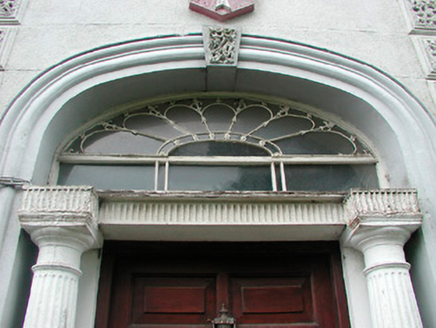
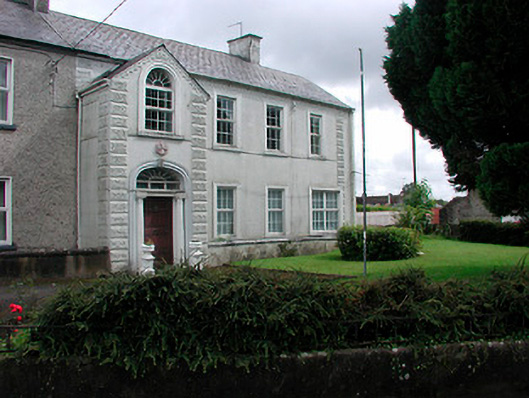
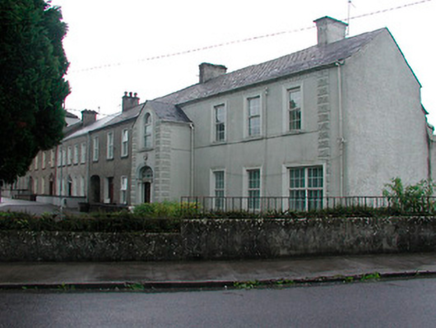
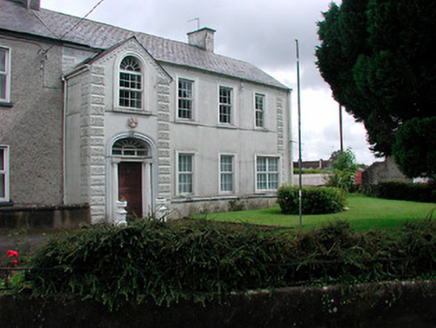
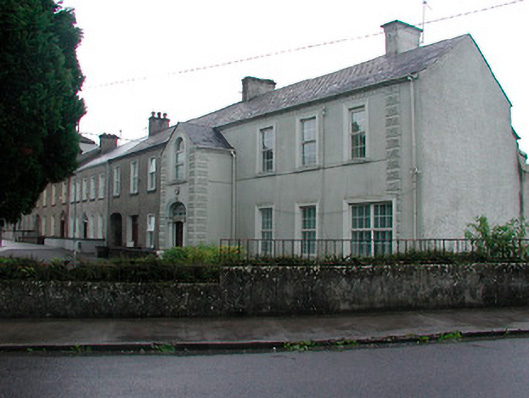
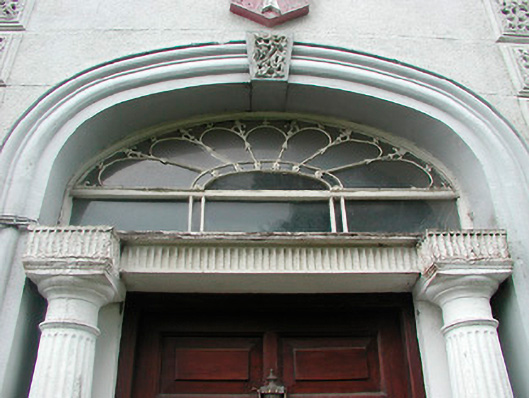
End-of-terrace four-bay two-storey house, built c.1810 and altered c.1880, having a projecting gable-fronted single-bay two-storey section to the north end of the front façade (west). Now in use as a charity health centre. Pitched slate roof having two decorated rendered chimneystacks and cast-iron rainwater goods. Ruled-and-line rendered walls with decorative render detail to the eaves and having vermiculated block quoins to the corners of the main part of the building and to the projecting bay. Square-headed window openings with cut stone sills, moulded surrounds and replacement windows. Paired square-headed window opening to the south end of the front façade at ground floor level. Round-headed window opening to the projecting bay at first floor level having a cast-iron petal fanlight to head. Segmental-headed doorcase to the front face of projecting bay (west) having moulded surround with vermiculated keystone over, a pair of fluted Doric columns supporting a fluted lintel over and a timber panelled door with a petal fanlight above. Plaque of St. John’s Ambulance over door. Located to the east side of the Newtown Suburb to the northeast side of Moate.
Appraisal
An interesting end-of-terrace building, which retains its early character and importance to the streetscape. The front façade is enhanced by the good quality doorcase, which has a delicate fanlight, and by the extensive rendered detailing. This building was originally constructed at the start of the nineteenth century, a period of relative prosperity and expansion in Moate. It was probably one of the buildings constructed in the Newtown suburb by William Handcock, Lord Castlemaine of Moydrum Castle (15402917), in the first years of the century. This building was altered sometime later, probably in the late nineteenth-century, by the addition of extensive rendered detailing. It is likely the projecting bay was added at this time also. The wide ground floor window to south end bay of the main facade is also a later addition and may have originally contained an entrance. This fine structure serves to terminate the terrace in an effective manner and makes an important contribution to the integrity of The Newtown.