Survey Data
Reg No
15314015
Rating
Regional
Categories of Special Interest
Architectural, Social
Original Use
Worker's house
In Use As
House
Date
1840 - 1880
Coordinates
209621, 246248
Date Recorded
22/07/2004
Date Updated
--/--/--
Description
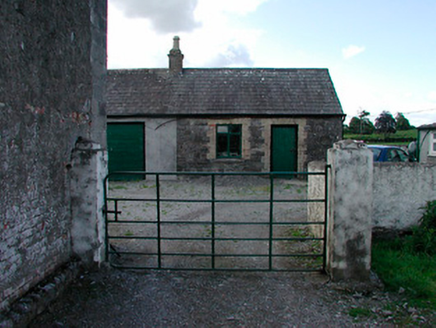
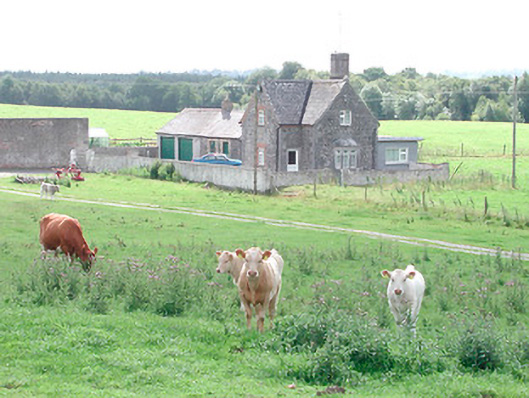
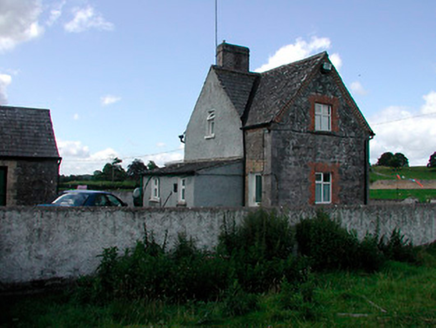
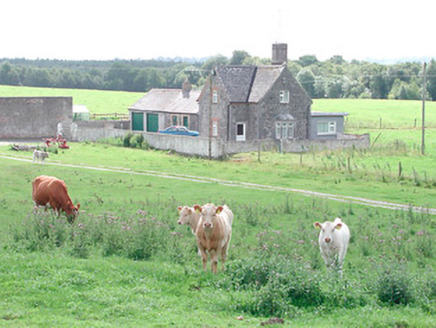
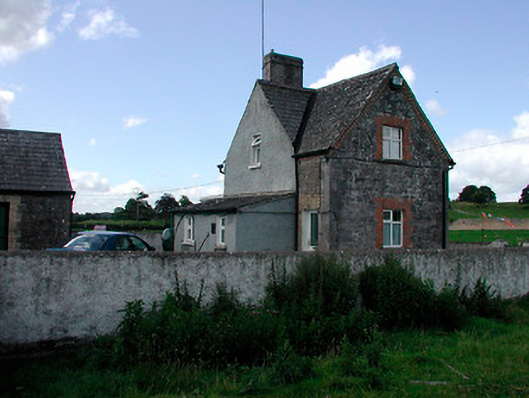
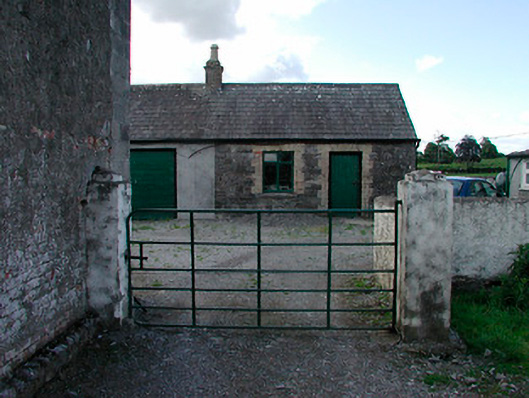
Detached two-bay two-storey former estate worker's house on L-shaped plan, built c.1860, having gable-fronted single-bay two-storey sections to both the south and west facing elevations. Now in use as a private dwelling with modern single-storey flat-roofed extensions to the east and the north. Pitched natural slate roofs with clay ridge tiles, a projecting brick eaves course to the west-facing gable, a central brick chimneystack and cast-iron rainwater goods. Cut stone final to projecting gable-fronted section to the south. Constructed of rubble limestone with flush dressed stone quoins to the corners and brick dressing to the openings. Square-headed window openings with cut stone sills and replacement windows. Canted window opening to south gable-fronted section. Square-headed door opening with replacement door to west elevation. Set in own grounds to south of remains of walled garden (15314016) and to northeast of the remains of Waterstown House (15314014) in a slight depression in the landscape. Single-storey rubble limestone outbuildings having a pitched natural slate roof and square-headed openings with brick dressings rear (east).
Appraisal
A nicely proportioned, modestly scaled building that is of significance through its connection with the Waterstown House Estate. Well-built, this building retains much of its early character despite modern alterations. The location of this building close to the remains of the extensive walled gardens indicates that this structure may have been built as the head gardener’s house. The combination of local limestone stone and the brick dressings to the openings creates an interesting appearance and enhances the main façades. The cut-stone finial to the gable and the polychromatic brick cornice lend this building a strong presence above its modest size. This building forms part of an important group of demesne-related structures within the former Waterstown House Estate and is an interesting addition to the built heritage of the Glassan area.