Survey Data
Reg No
15313002
Rating
Regional
Categories of Special Interest
Architectural, Artistic
Original Use
Gates/railings/walls
In Use As
Gates/railings/walls
Date
1815 - 1880
Coordinates
260188, 253192
Date Recorded
28/07/2004
Date Updated
--/--/--
Description
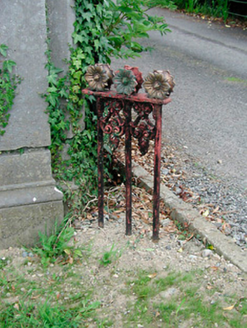
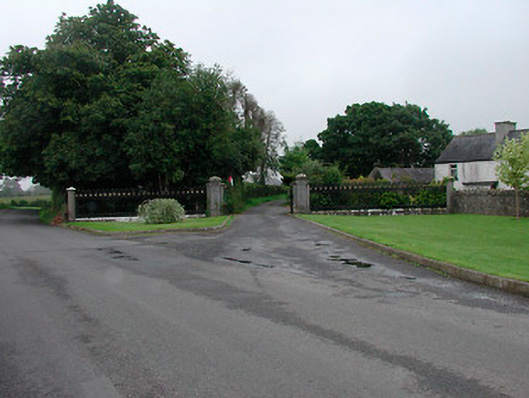
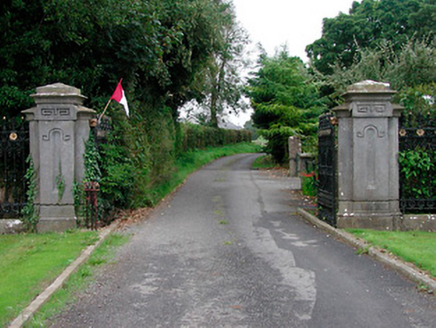
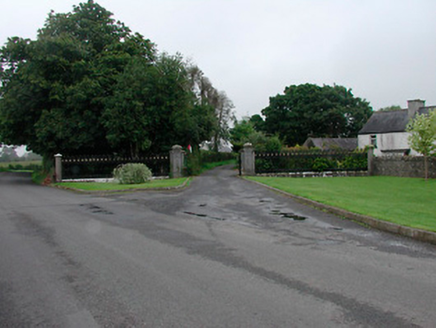
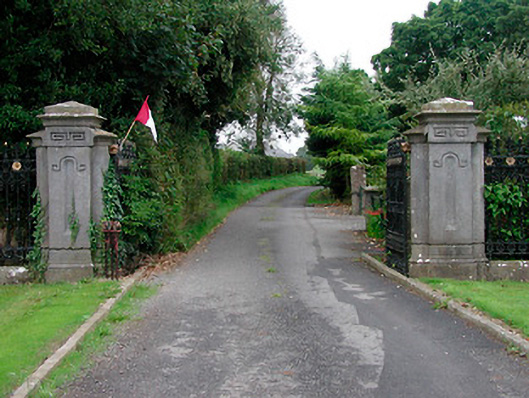
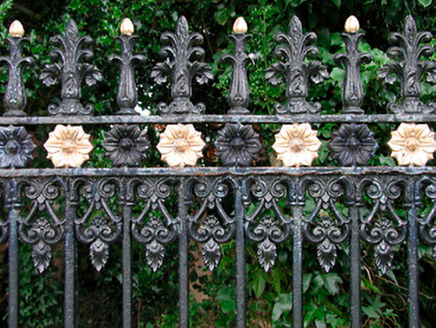
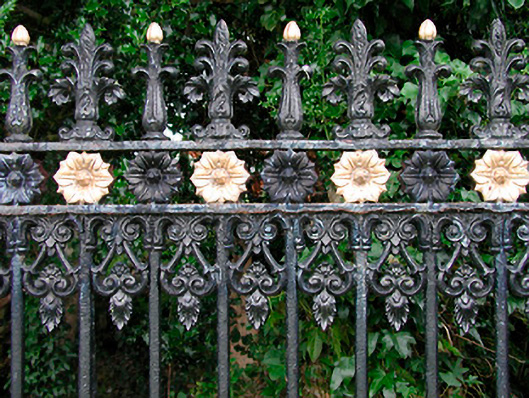
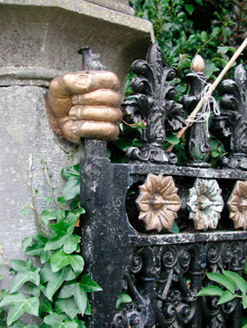
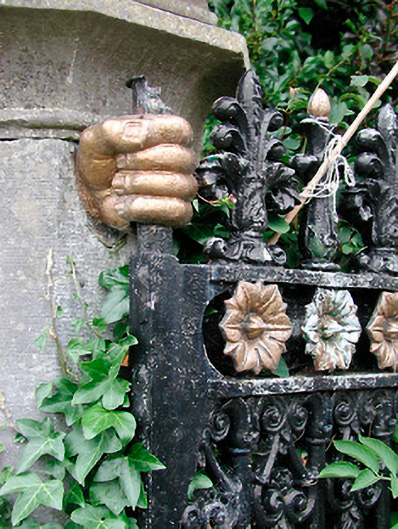
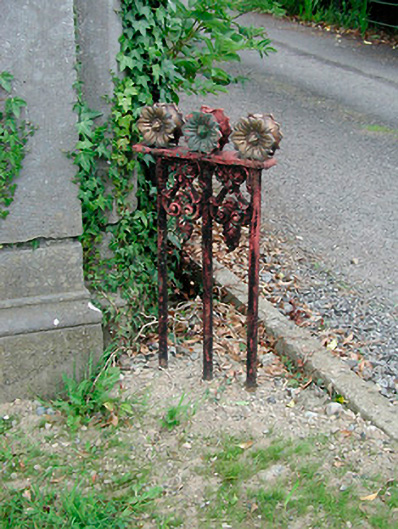
Entrance gates and screen serving Grange More House (15402104), erected c.1820 and altered c.1870, comprising a pair of ashlar limestone gate piers (on octagonal plan with moulded capstones over) having incised geometric Grecian decoration, supporting a pair of decorative cast-iron gates with decorative finials and Tudor-style flower decoration. Gates hung on decorative brackets in the form of clenched fists. Gate pier to the west side has a freestanding cast-iron wheel guard to either side. Main entrance gates flanked to either side (east and west) by low ashlar limestone plinth walls having decorative cast-iron railings over (same style as gates) and terminated by ashlar limestone gate posts on octagonal-plan with moulded capstones over. Former gate lodge located to the east side. Rubble limestone boundary walls run away to the north and the south. Located to the southwest of Grange More House (15402104) and to the north end of Raharney.
Appraisal
A very high quality entrance gate and entrance screen associated with Grange More House (15402104), which lies in ruins to the northeast. The very fine ashlar limestone gate piers were clearly the work of expert masons and are among the best of their type still extant in Westmeath. The richly ornate cast-iron gates, which have an unusual variety of decorative motifs, further embellish this high quality composition. The cast-iron clenched fist brackets are a noteworthy and unusual feature. This gateway may be of two distinct periods. The gate piers have an early nineteenth-century appearance and may date to the initial construction of Grange More House (c.1815) while the cast-iron work appears to be late nineteenth-century in date, c.1870. This gateway is located in a prominent position to the north of Raharney and is a significant addition to the built heritage of Westmeath. The rubble limestone boundary walls complete the setting.