Survey Data
Reg No
13402720
Rating
Regional
Categories of Special Interest
Architectural
Original Use
Outbuilding
In Use As
Outbuilding
Date
1740 - 1820
Coordinates
217336, 255642
Date Recorded
28/07/2005
Date Updated
--/--/--
Description
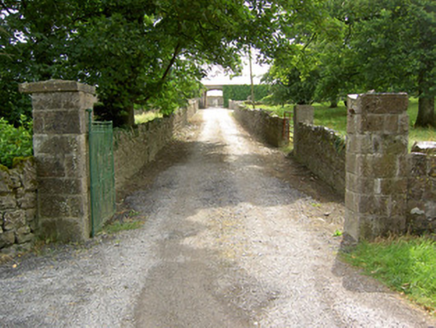
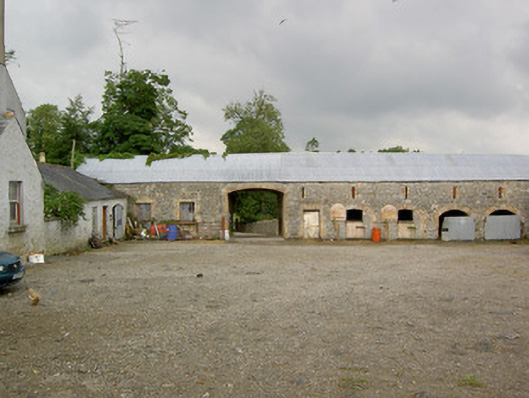
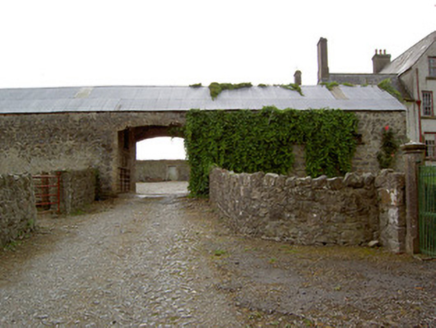
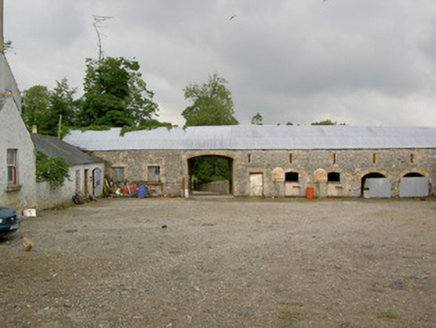
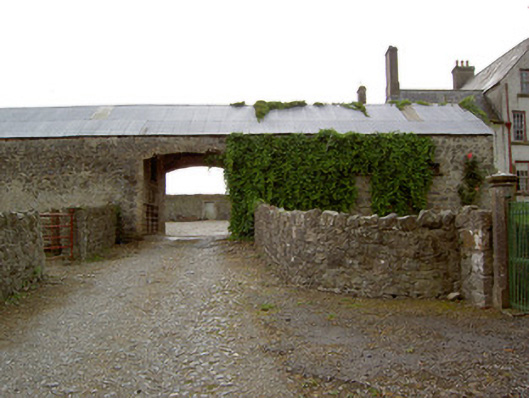
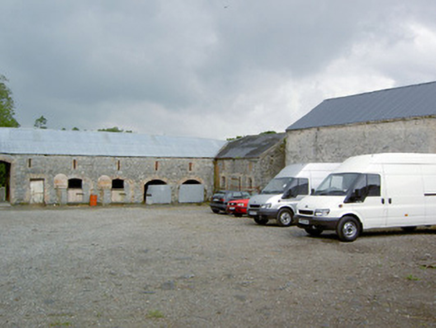
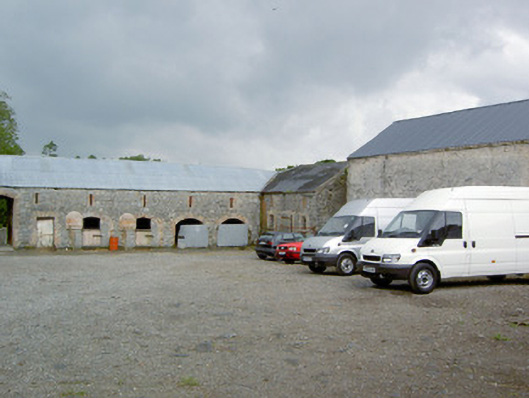
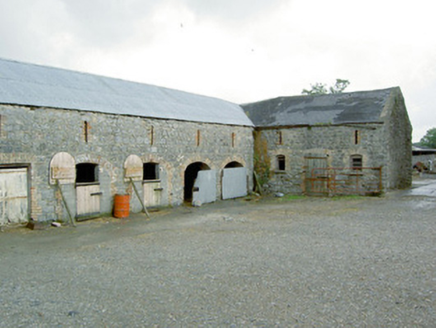
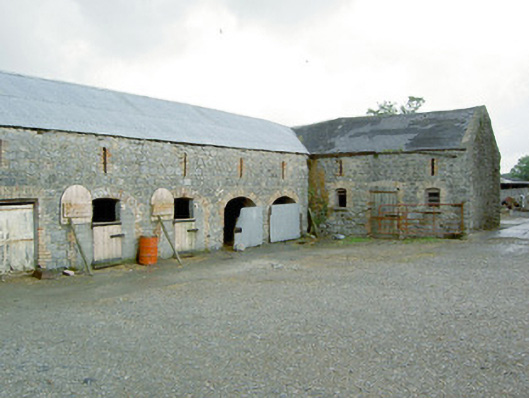
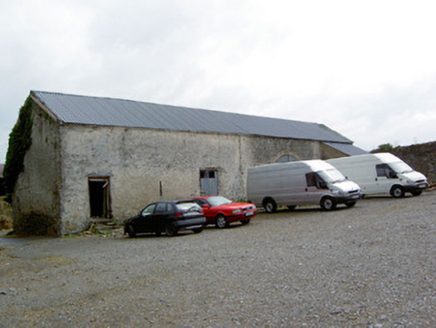
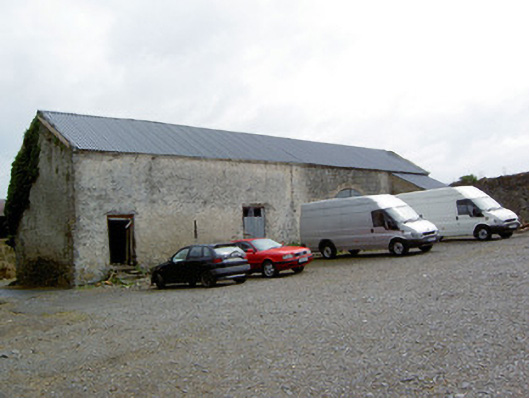
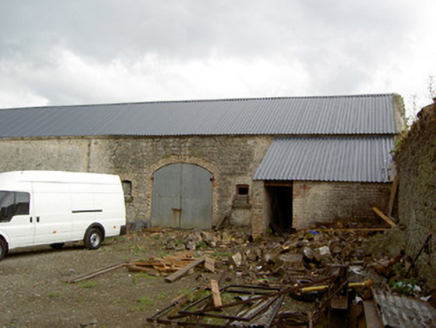
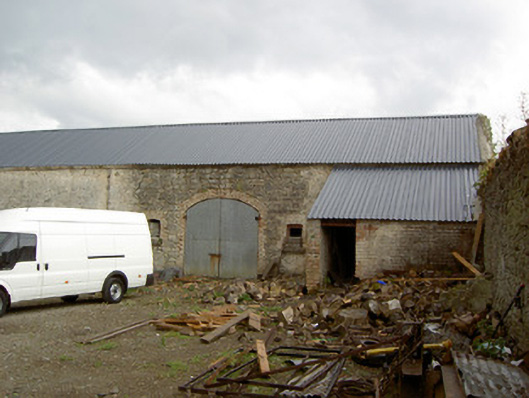
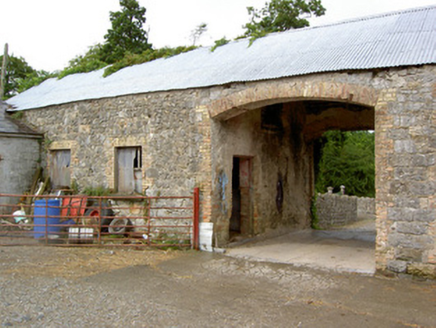
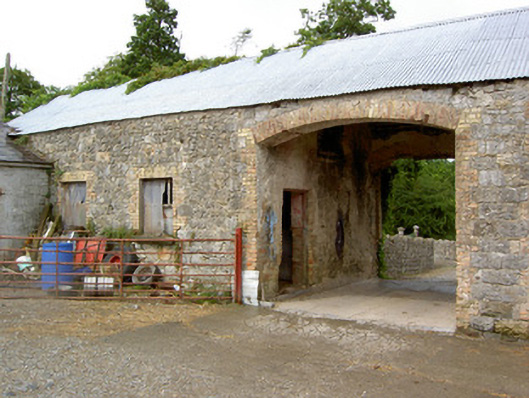
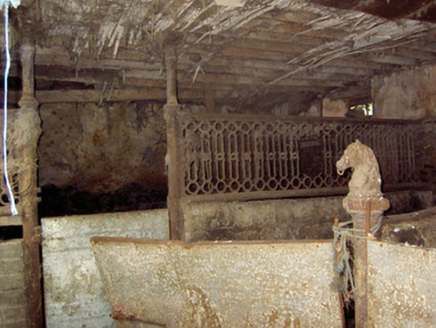
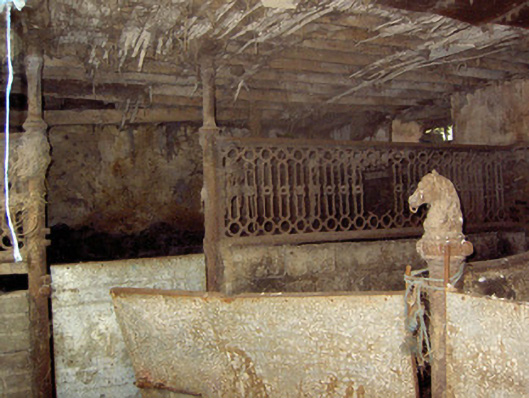
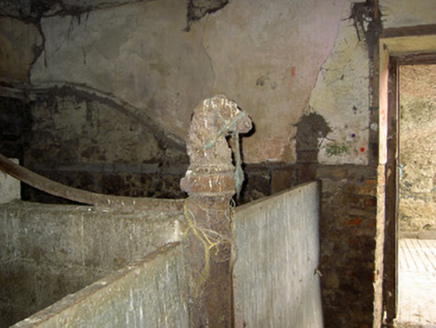
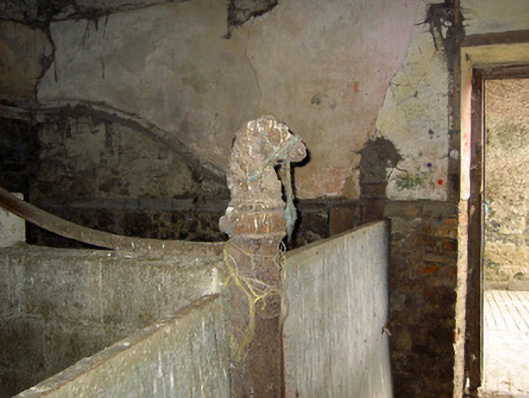
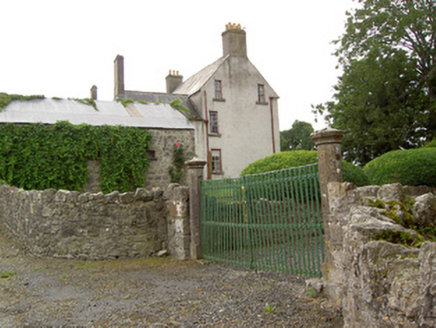
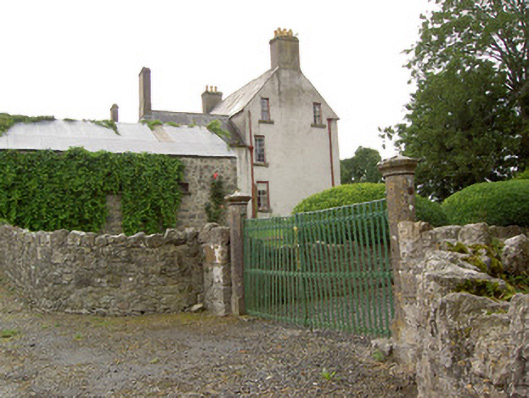
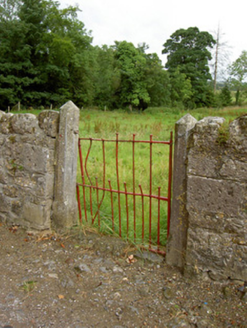
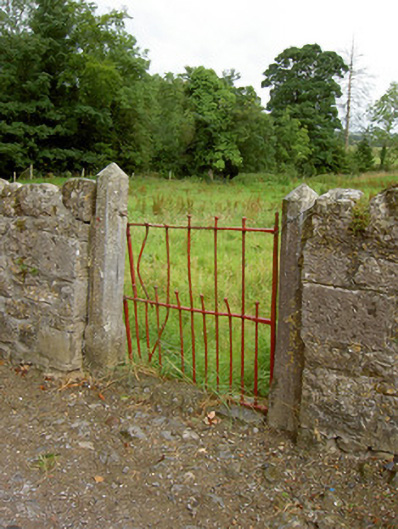
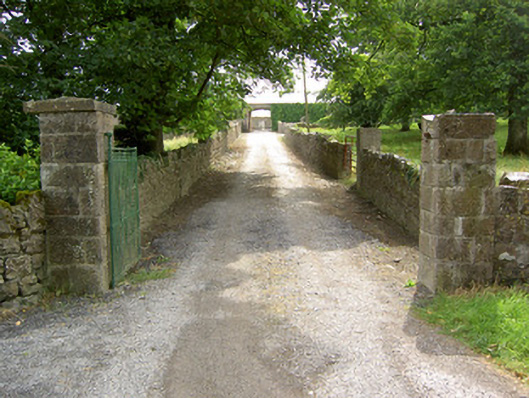
Detached complex of outbuildings to the rear (southeast) of Creevaghmore House (13402719), built c. 1750 and altered c. 1820, comprising a multiple-bay two-storey former stable block on L-shaped plan to the northeast and a detached multiple-bay two-storey outbuilding to the southeast. Pitched corrugated-metal roof to northwest end of L-shaped former stable block; pitched natural slate roof to section to the southeast end. Raised rendered verges to a number of the gable ends and some remaining sections of cast-iron rainwater goods. Rubble limestone walls, formerly rendered. Loop hole openings to upper storeys to L-shaped outbuilding having brick block-and-start surrounds. Segmental-headed door openings and carriage arches at ground floor having red brick block-and-start surrounds. Some openings now partially infilled with modern blockwork having timber doors. Stables to interior with decorative cast-iron panels and cast-iron horse head motifs to stall dividers. Double-height segmental-headed carriage arch to the northwest end having brick voussoirs to arch. Shallow segmental-headed openings to section to the southeast end of L-shaped block at ground floor level having brick block-and-start surrounds, stone sills and remains of timber fittings to window openings, and a central doorway with battened timber door. Detached multiple-bay outbuilding to southeast having single-bay single-storey lean-to brick addition with square-headed doorway attached to the south end of the main elevation (northwest). Pitched corrugated-metal roof raised verges to gable ends (northeast and southwest). Roughcast rendered walls, render now removed to places exposing rubble stone construction. Square-headed door openings with remains of timber fittings. Segmental-headed window openings having brick block-and-start surrounds and remains of timber fittings. Segmental-headed carriage arch with brick block-and-start surround and voussoirs; and corrugated-metal doors. Arranged around a courtyard to the rear (southeast) of Creevaghmore House (13402719). Rubble limestone boundary wall to the south and southwest side of yard, the boundary wall of a former walled garden. Approach avenue to courtyard to the north having rubble limestone boundary walls flanking avenue. Gateway to house (13402719) to the west side of approach avenue having a pair of cut limestone gate posts (on octagonal-plan/square-plan with chamfered corners) having hipped/pyramidal heads with moulded detailing and a pair of wrought-iron flat bar gates. Pedestrian gateway to site comprising a pair of cut limestone gate posts (on octagonal-plan/square-plan with chamfered corners) having hipped/pyramidal heads and a wrought-iron gate. Gateway to the north end of approach avenue to house comprising a pair of dressed ashlar limestone gate piers (on square-plan) having wrought-iron flat bar gate. Set well back from road to the southwest of Ballymahon.
Appraisal
This substantial complex of outbuildings adds considerably to the historic setting and context of Creevaghmore House (13402719). They probably originally date to the middle of the eighteenth century but the brick surrounds to the openings suggests that they were extensively altered during the nineteenth century. These outbuildings survive in good condition and retain their early form and character. The scale of these structures provides an interesting historical insight into the extensive resources required to run and maintain a middle-sized country estate in Ireland during the eighteenth and nineteenth centuries. Of particular note is the survival of the cast-iron grills and cast-iron horse head motif/finials to the stables, which are interesting and unusual features that add an element of decorative interest and indicate the attention afforded to even the most mundane of features on country estates at the time of the construction. These cast-iron features are probably later additions, perhaps added during the middle of the nineteenth century. This complex of outbuilding forms part of an interesting group of related sites at Creevaghmore along with main house (13402719) and the gateway (13402718) to the northwest, which together form an attractive grouping in the rural landscape to the southwest of Ballymahon. The rubble stone walls, the remains of the walled garden to the southwest, the cut limestone gate posts and the wrought-iron gates to site add to the setting and complete this composition.