Survey Data
Reg No
13402718
Rating
Regional
Categories of Special Interest
Architectural, Artistic
Original Use
Gates/railings/walls
Date
1750 - 1790
Coordinates
217084, 255686
Date Recorded
28/07/2005
Date Updated
--/--/--
Description
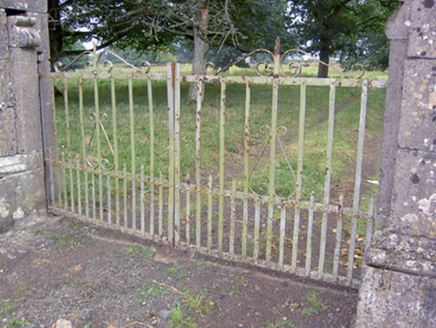
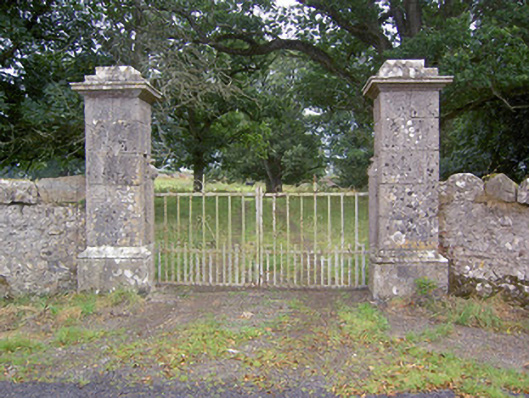
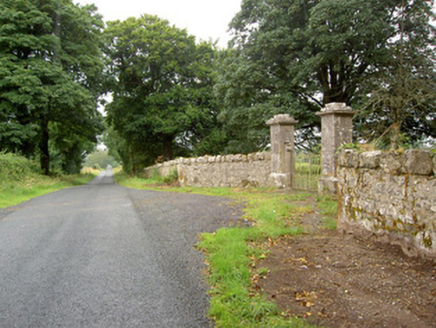
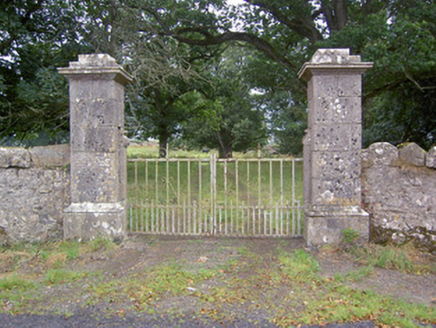
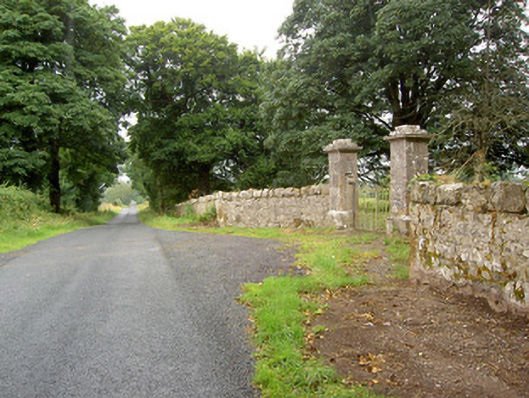
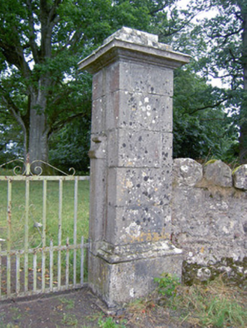
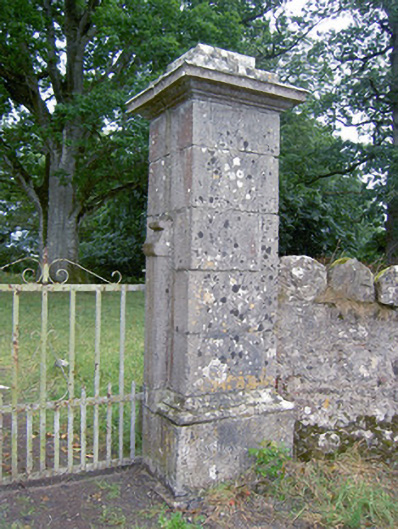
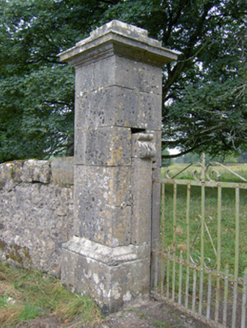
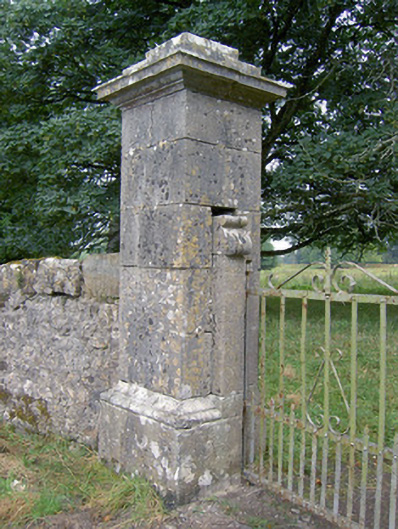
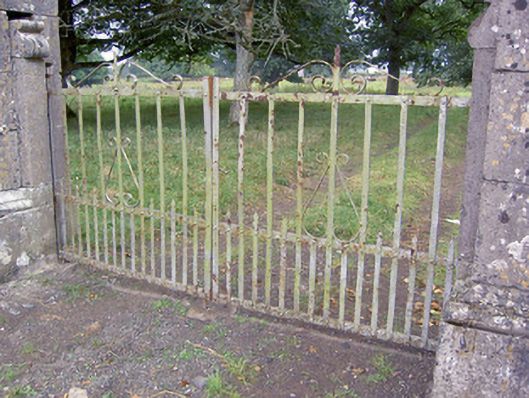
Entrance gateway serving Creevaghmore House (13402719), built c. 1770, comprising a pair of ashlar limestone gate piers (on square-plan) having moulded limestone plinths, carved limestone mouldings to inner face of each pier, and stepped carved limestone capping with moulded cornice. Gateway no longer in use. Pair of modern wrought-iron flat bar gates. Sections of partially roughcast rendered rubble stone boundary wall to either side of gate (northeast and southwest) having rubble stone coping over. Set slightly back from the road to the southeast of Ballymahon and to the west of Creevaghmore House (13402719).
Appraisal
These robust but elegant gate piers form part of an important collection of structures associated with Creevaghmore House (13402719). They survive in good condition and retain their early form and character. The craftsmanship and quality of the stonework to the piers is of the highest standard and is of high artistic merit. The style of the gate piers suggests that they date to the mid-eighteenth century but the wrought-iron gates are relatively modern additions. The form and carved detailing to the piers is very similar to that found at a Clooncallow House (13402717), and it is possible that the gates at Clooncallow House formerly served another entrance to Creevaghmore House (possibly originally to the northeast of this gateway). Although now no longer in active use, this gateway forms an appropriately grand entrance to a building of the importance of Creevaghmore, and is an important element of the built heritage of the local area in its own right. The simple rubble stone boundary walls to either side add considerably to the historic setting and context. A gate lodge formerly stood to the south side of the gateway, inside the estate, but is now demolished (Ordnance Survey six-inch maps 1838 and 1914). It is probable that the original main entrance to the estate was a short distance to the northeast of this site where the boundary wall steps in (Ordnance Survey maps), and that this gateway was built later. A straight approach avenue from this probable former gateway would approach the front of the main house, a characteristic feature of gateways found at early eighteenth-century estates in Ireland.