Survey Data
Reg No
13402717
Rating
Regional
Categories of Special Interest
Architectural, Artistic
Original Use
Gates/railings/walls
In Use As
Gates/railings/walls
Date
1750 - 1790
Coordinates
217512, 256147
Date Recorded
28/07/2005
Date Updated
--/--/--
Description
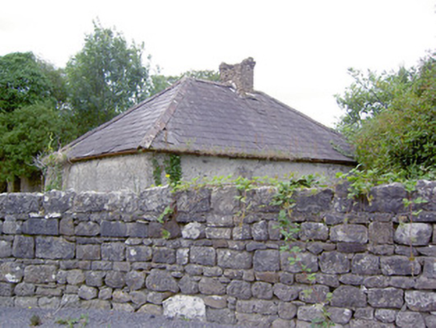
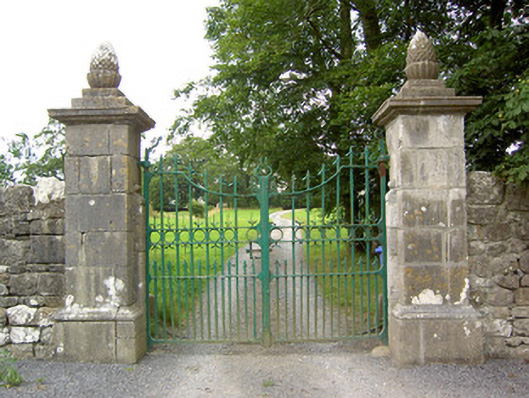
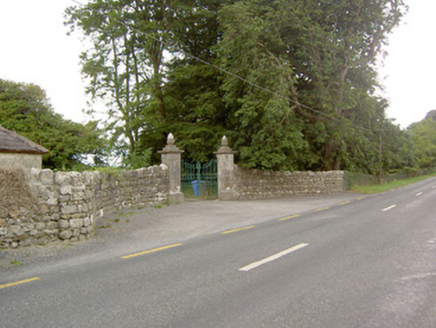
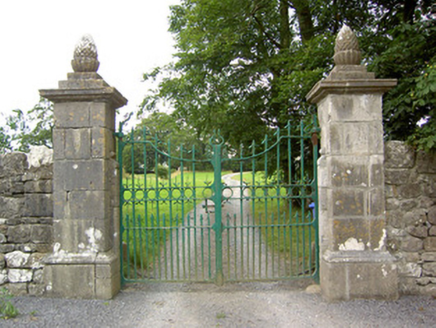
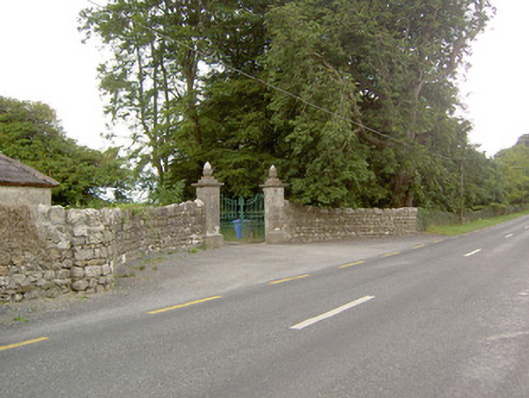
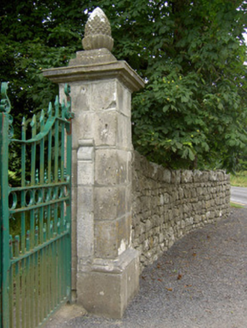
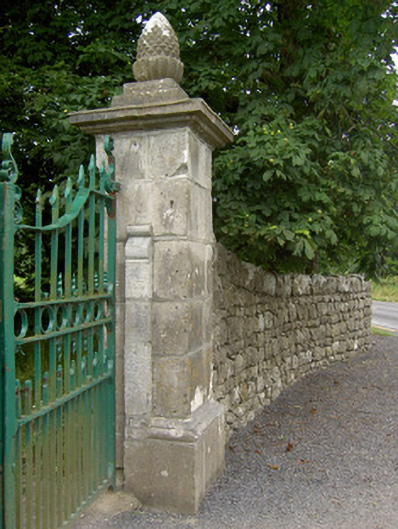
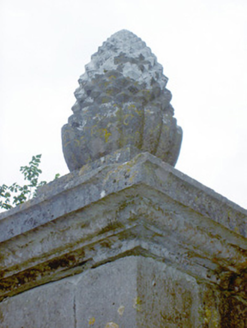
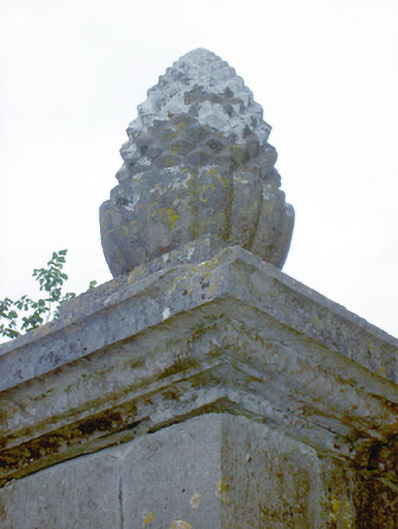
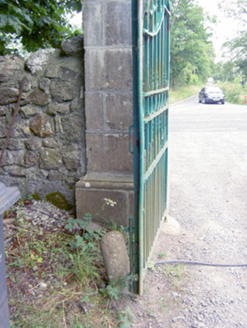
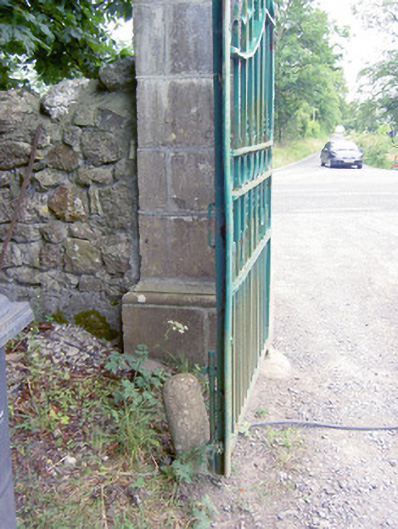
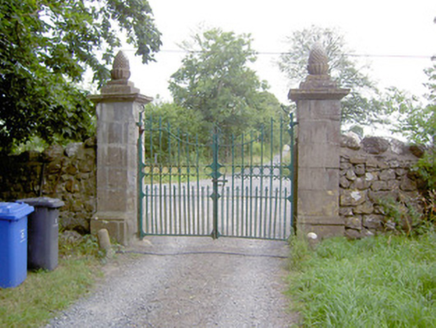
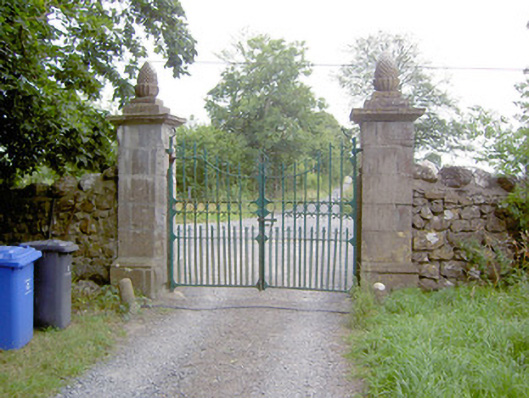
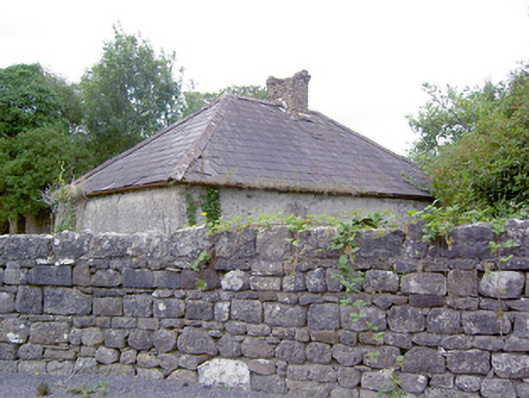
Entrance gateway serving Clooncallow House (13402716), built c. 1770, comprising a pair of ashlar limestone gate piers (on square-plan) having moulded limestone plinths, carved limestone mouldings to inner face of each pier (stopping gates from swinging out), and stepped carved limestone capping with moulded cornice and carved limestone pineapple finials. Gateway probably moved here from another location. Elaborate wrought-iron double gates with spear finials. Cut limestone wheel guards adjacent to piers to north side of gate. Sections of coursed rubble stone boundary wall to either side of gate (east and west). Disused single-storey gate lodge to the northwest side of gates, built c. 1800, having hipped natural slate roof with brick chimneystack, roughcast rendered walls and square-headed openings. Set slightly back from road to the southwest of Clooncallow House and to the southeast of Ballymahon.
Appraisal
This imposing but elegant gateway is an important element of the built heritage of the Ballymahon area. The craftsmanship and quality of the stonework to the piers is of the highest standard and is of high artistic merit. The good quality wrought-iron gates are among the best surviving examples of early ironmongery in Longford and add considerably to this appealing composition. This gateway is arguably too grand for a house such as Clooncallow (13402716), which suggests that it was originally built to serve another house and that it was moved to its present location at a later date. The style of the gate piers suggests that they date from the mid-eighteenth century, which also suggests that they originally served a different house. The form and carved detailing to the piers is very similar to that found at a now disused gateway (13402718) serving Creevaghmore House (13402719), which is located a short distance to the south of Clooncallow, hinting that these piers may have originally served an entrance to this fine estate. They are also similar in form to the secondary gateway (13402713) serving Newcastle House to the northeast. The pineapple finials surmounting the piers are well-carved and are an unusual feature. It was apparently a seventeenth and eighteenth-century tradition for soldiers/sailors/gentlemen etc. to place/impale fresh pineapples to the gates of their house on returning from trips to exotic locations overseas. This tradition later developed into a fashion for cut stone pineapple motifs being used as architectural details on buildings, gateways etc. (the pineapple has been interpreted as a symbol of hospitality and high status). The simple single-storey gate lodge to the north adds to the setting and completes this interesting and appealing composition.