Survey Data
Reg No
13402716
Rating
Regional
Categories of Special Interest
Architectural, Artistic, Historical
Original Use
Country house
In Use As
Country house
Date
1780 - 1820
Coordinates
217639, 256251
Date Recorded
28/07/2005
Date Updated
--/--/--
Description
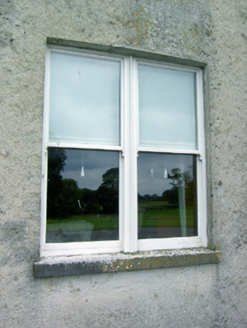
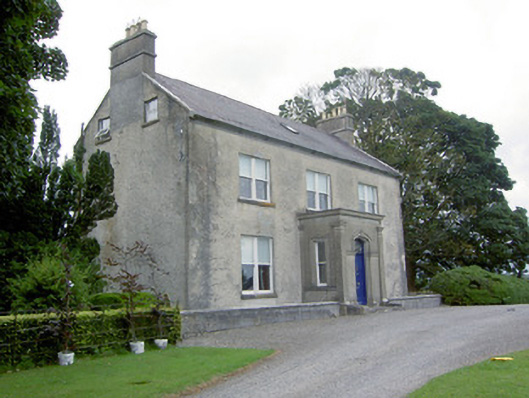
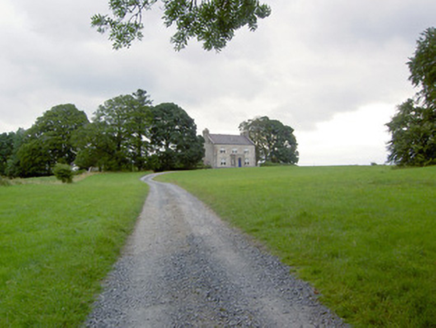
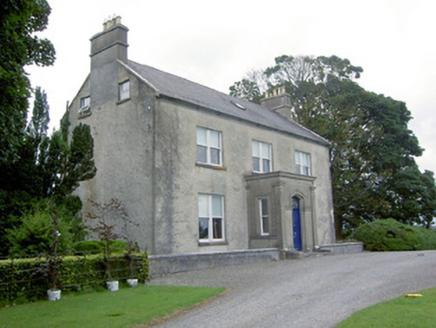
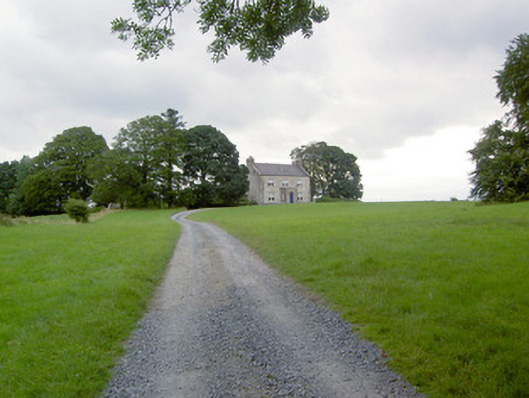
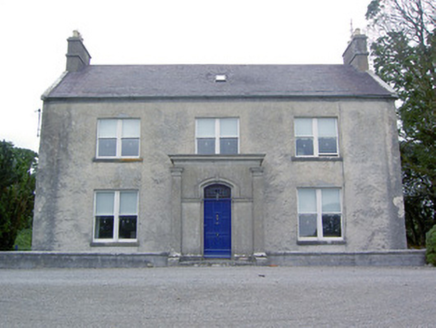
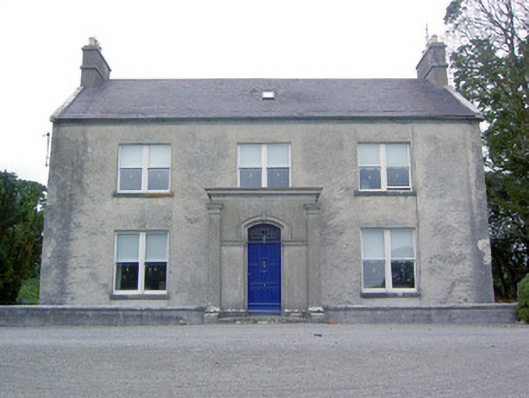
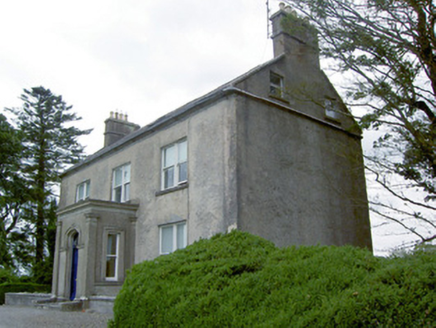
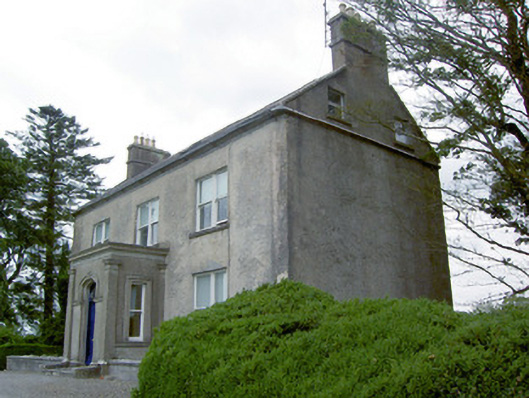
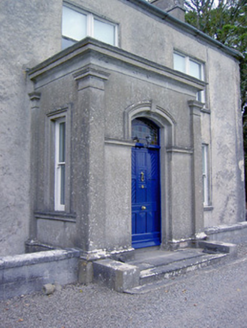
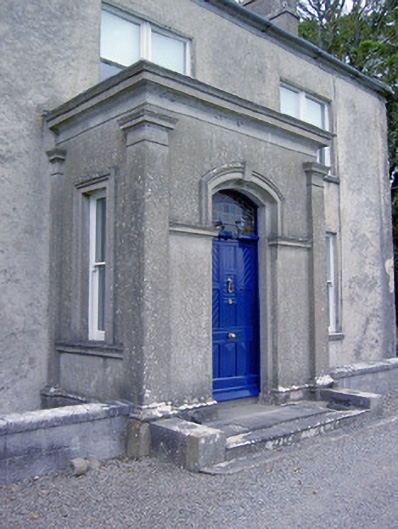
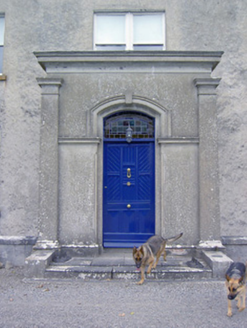
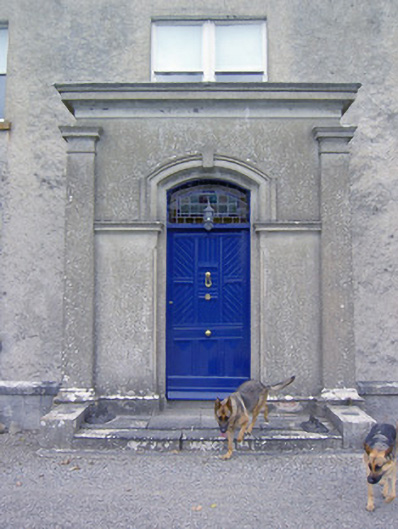
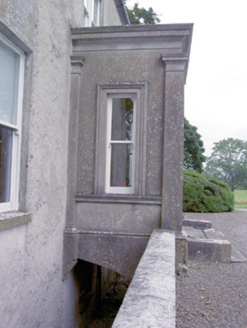
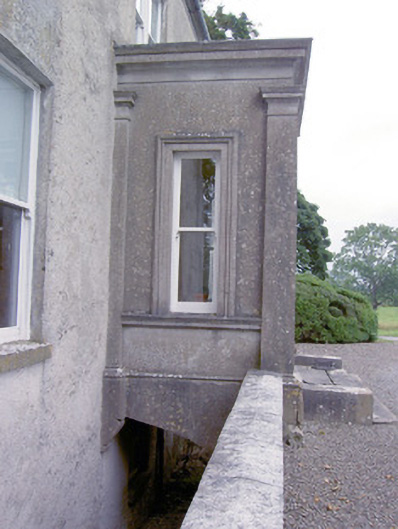
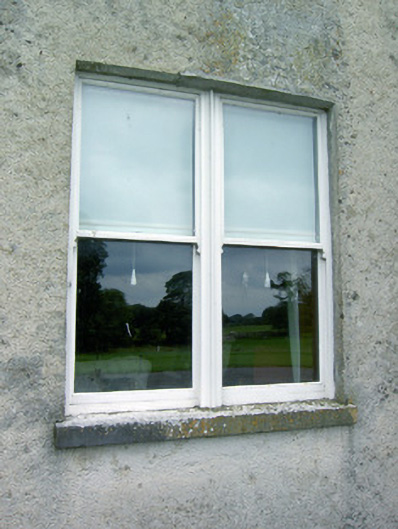
Detached three-bay two-storey over basement house (with attic level) on L-shaped plan, built c. 1800 and altered c. 1880, having two-storey return to the centre of the rear elevation (north) and single-bay single-storey flat-roofed entrance porch to the centre of the front elevation (south). Single-storey lean-to extension to the west side of rear return. Pitched natural slate roof with rendered brick chimneystacks with terracotta pots to gable ends (east and west) and cast-iron rainwater goods. Raised cut stone verges to gable ends. Rendered parapet to porch, roof material not visible. Roughcast rendered walls with cut limestone eaves course. Smooth rendered finish to porch with render Doric pilasters to corners and moulded rendered string course at door lintel level. Square-headed windows with paired one-over-one pane timber sliding sash windows and tooled limestone sills. Rendered surrounds to window openings to side elevations of porch (east and west). Shallow segmental-headed door opening to front face of porch (south) with moulded rendered surround to head having keystone detail, timber door and leaded glass overlight with coloured glass panels. Moulded limestone step to entrance; moulded limestone plinth course/plinth wall. Dressed ashlar limestone plinth wall with cut limestone coping over basement level to front of building (south). Rubble limestone boundary wall over basement level to west. Wrought-iron railings to site; rubble limestone boundary walls to rear (north). Set back from road in extensive mature grounds with gravel forecourt to the south. Main entrance gate (13402717) to the south, complex of outbuildings (13402715) and walled garden to the rear (north and northwest), and tower-like structure (13402736) adjacent to the west of the house. Located to the east of Ballymahon.
Appraisal
This well-proportioned and interesting house retains its early character and form. The form of this building - having pitched roof with attic storey, the relatively narrow plan, chimneystacks to gable ends, built over a basement and the fact that it is built over a basement - suggests that it dates to c. 1800, or perhaps slightly earlier. However, it was extensively altered at a later date, perhaps, c. 1880 (perhaps when John Shaw moved here in 1880 - see below), when the windows were widened and a new entrance porch was added to the front of the building. The impressive and well-detailed entrance porch provides a central focus and lends interest to the otherwise plan front elevation. This building forms the centrepiece of a group of related structures along with the main entrance gate (13402717) to the south, complex of outbuildings (13402715) and walled garden to the rear (north and northwest), and the tower-like structure (13402736) adjacent to the west of the house. This group forms an interesting group in the landscape to the east of Ballymahon and is an integral element of the built heritage of the local area. This building has historic connections with the Murray family, and there are references to the Murray family of Clooncallow dating back to the mid-eighteenth century (there is a memorial to Bryan Murry/Murray ‘late of Clooncallow’, who died in 1778 at the age of 78, at Forgney Church of Ireland church (13402721) to the east). However, it is not clear if the present house dates to this time. There is a lease for the lands of Clooncallow dated 1743, which hints that a house may have been built shortly after this time. A Daniel Murray (1750 to 1830) of Clooncallow, son of Bryan, served as High Sheriff of Longford in 1808 and as a Grand Juror for the county from 1809 to c. 1814. Clooncallow was the home of a William. T. Murray, Esq. in 1837 (Lewis) and a William Murry/Murray in 1846 (Slater’s Directory), who served as a Grand Juror for County Longford in the 1830s. The house may have been sold in 1859/1860 (references to insolvency case in the Landed Estate Courts involving Murray family of Clooncallow). Clooncallow was later the residence of a John Shaw Esq., J. P., in 1881 (Slater’s Directory). John Shaw (1838 – 1899), born at Rath Lodge (13402714) a short distance to the northeast, was an interesting character who served as Governor of Lagos, West Africa, in 1874 - 5; Colonial Treasurer and Justice of the Peace for Sierra Leone between 1876 and 1880.