Survey Data
Reg No
13402711
Rating
Regional
Categories of Special Interest
Architectural, Technical
Original Use
Kiln
Date
1800 - 1850
Coordinates
218893, 256865
Date Recorded
27/08/2005
Date Updated
--/--/--
Description
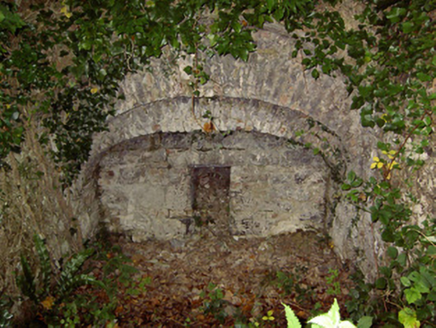
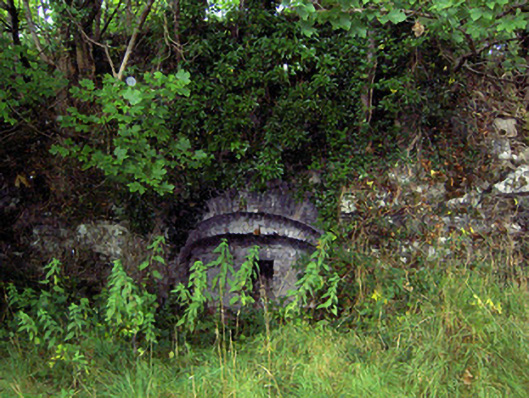
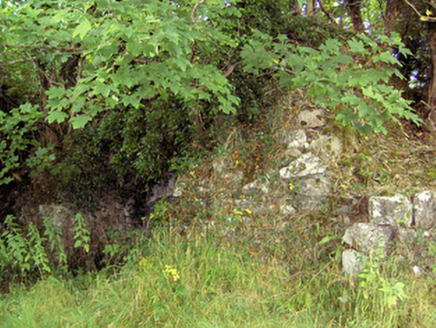
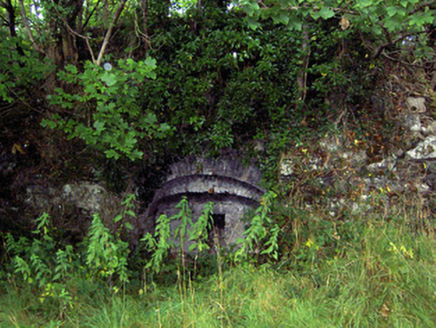
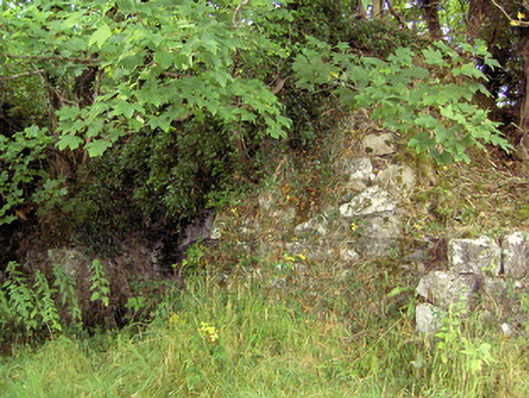
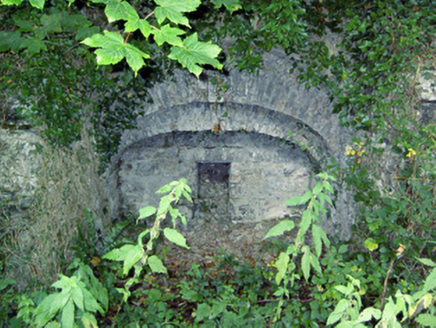
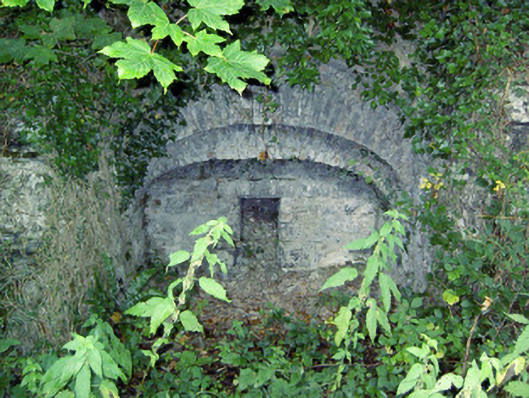
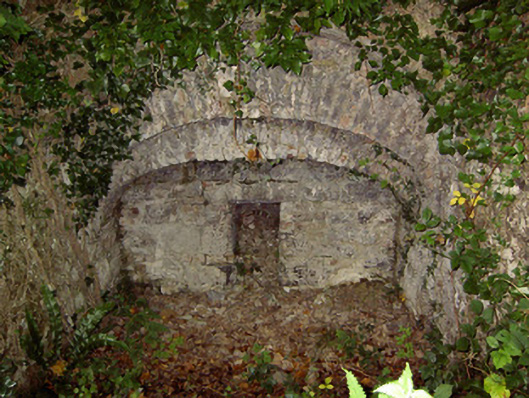
Freestanding single-bay lime kiln, built c. 1825, on a square-plan with splayed projecting walls to the front (south). Now out of use and overgrown. Constructed of random rubble stone. Stepped segmental-headed arches to front (south) having brick voussoirs to arches. Square-headed opening to front, the former oven aperture, having rubble stone surround. Former loading bay to top of kiln, now overgrown. Earth embankment to rear (north). Located in the grounds of Newcastle Demesne, to the east of the main house (13402709) and to the south of complex of outbuildings/stable block (13402710), and to the east of Ballymahon.
Appraisal
The interesting survival of a former lime kiln, probably built in the early nineteenth-century, which is of technical merit. It is well-built using local limestone and is an appealing and unassuming element of the agricultural/industrial and social heritage of County Longford. It is located on the former Newcastle House (13402709), and was probably used to provide fertilizer and/or building material (see blow) for use on the estate. The embankment to the rear was built to allow for the easy loading of limestone through an opening/aperture in the roof structure. Lime kilns appear to have come into popular use in Ireland during the eighteenth century and were once quite a common feature in the rural landscape. They were used to burn limestone to produce lime, which was used in construction/building as a mortar and a render, or to produce a fertilizer, which was then spread on agricultural land. Lime was also used for lime-washing buildings, particularly farm buildings, as it was regarded as a cleansing agent at the time. Small rural lime kilns started to go out of common usage during the late nineteenth-century with the advent of industrial-scale lime production facilities and improvements in the transport network, particularly the development of the railways.